📜 History
Events from this day
⚡ Bowie
Moments & milestones
✍️ Word of the Day
Language & Etymology
📜 On This Day in History — 21 October
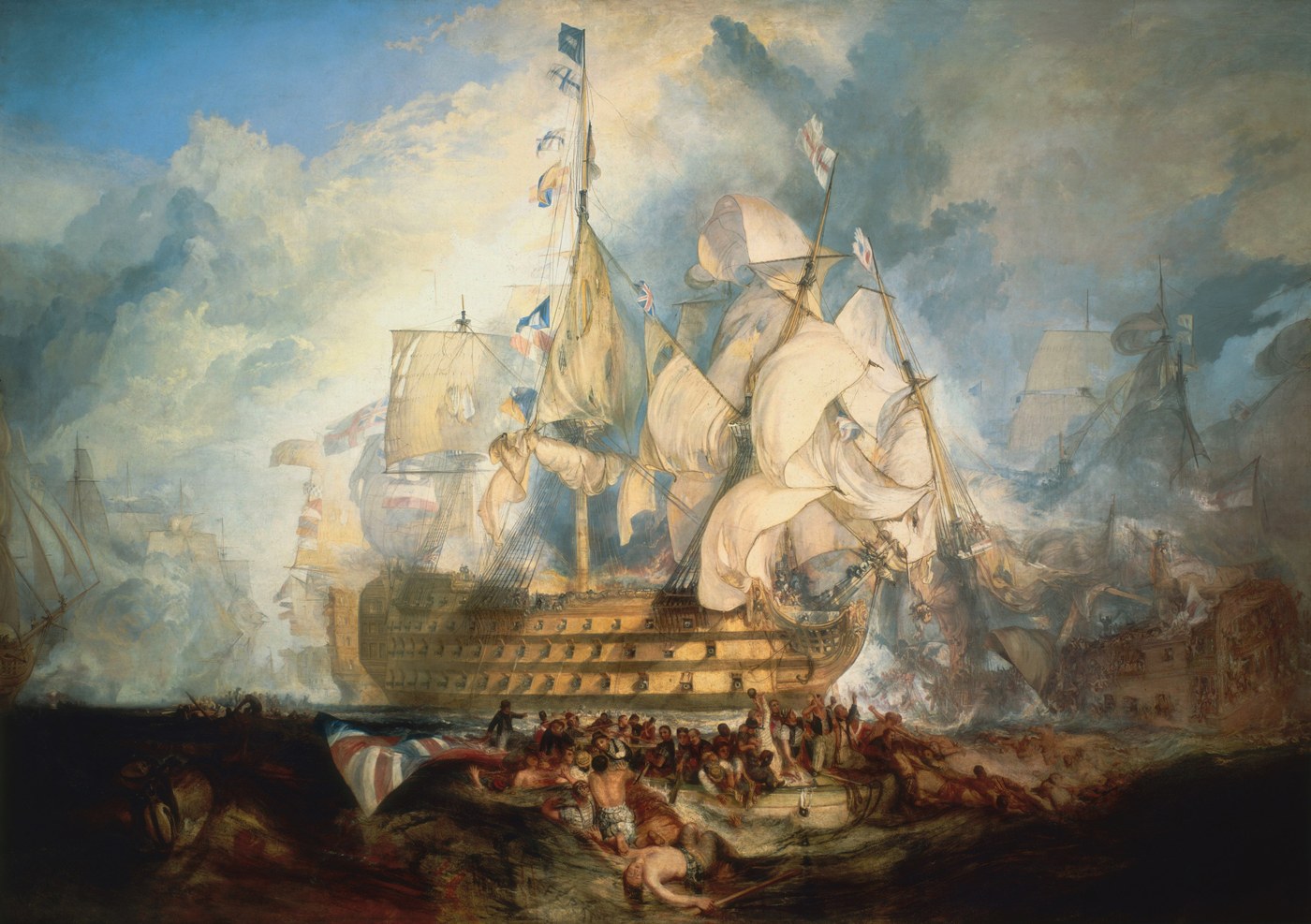
1805: Victory and loss at Trafalgar.
On 21 October, the Royal Navy met the combined French and Spanish fleet off Cape Trafalgar, near Spain’s Atlantic coast. Vice-Admiral Horatio Nelson commanded from HMS Victory, with Cuthbert Collingwood leading the other British column in HMS Royal Sovereign.
The British approached in two columns, aiming to break through the opposing line and fight at close quarters. It exposed the leading ships to heavy fire, but disrupted the allied formation and brought the crews into the sort of combat Nelson wanted.
The battle brought a decisive British victory, but Nelson was shot during the fighting and died below decks. Trafalgar became inseparable from his public legend; the war itself continued for another decade.
J. M. W. Turner’s painting alongside was made years afterwards, in 1822–24. It brings several moments of the battle together in one dramatic scene: an interpretation of the event, rather than an eyewitness snapshot.
Sources: National Museum of the Royal Navy · Painting details and image source.
⚡ On This Day in Bowie History — 21 October
2022: A 1971 performance gets a fresh hearing.
On 21 October 2022, a previously unreleased live recording of “Oh! You Pretty Things” appeared as a digital single ahead of the Divine Symmetry collection.
The performance had been recorded at Friars in Aylesbury on 25 September 1971. Today’s anniversary is the release date: the tape takes us back to the period before Hunky Dory appeared and before Ziggy became Bowie’s public face.
Aylesbury mattered to Bowie. Four months after that September appearance, he returned to the town for the launch of what became the Ziggy Stardust tour. The official announcement also points listeners towards a Monty Python reference in the recording’s introduction.
Listen to the Aylesbury recording through the official release link. The companion player alongside is the song’s official live video; it is not footage of the Aylesbury recording.
Sources: Official David Bowie announcement.
✍️ Word of the Day — 21 October
Palimpsest (noun; PAL-imp-sest)
Originally, a writing surface reused after its earlier text had been erased. Traces of the old writing could remain beneath the new — invaluable to scholars trying to recover lost works.
The word reaches us through Latin from Greek palimpsēstos, meaning “scraped again”. It can also describe something with earlier layers still visible beneath later ones: a city, a landscape, or even a much-revised piece of writing.
In a sentence: “The old station was a palimpsest of bricked-up windows, faded signs and modern extensions.”
Sources: Merriam-Webster.
📜 History
Events from this day
⚡ Bowie
Moments & milestones
✍️ Word of the Day
Language & Etymology
📜 On This Day in History — 20 October
2020: A brief touch brings an asteroid a little closer to Earth.
On 20 October, NASA’s OSIRIS-REx spacecraft reached out its sampling arm and touched asteroid Bennu. The manoeuvre was called TAG — “Touch-And-Go” — and its purpose was to collect loose rock and dust for scientists back on Earth.
At the site named Nightingale, a burst of nitrogen stirred material into the collector. Bennu’s boulder-strewn surface had made choosing a safe sampling spot a challenge; this was a carefully planned encounter with a very small target.
The precious cargo did not come home that day. Its return capsule landed in Utah on 24 September 2023, delivering 121.6 grams of asteroid material — more than twice the mission’s minimum target. A handful of dust and pebbles can carry clues to the Solar System’s distant past.
The silent sequence alongside shows the actual encounter through the spacecraft’s SamCam camera. It is an extraordinary view: a robot briefly touching another world, then backing away with a sample.
Sources: NASA mission history · NASA mission timeline.
⚡ On This Day in Bowie History — 20 October
1972: Ziggy lands on the Californian airwaves.
Bowie and the Spiders From Mars played the Santa Monica Civic Auditorium on 20 October, during the first American leg of the Ziggy Stardust tour. Broadcast by Los Angeles station KMET, the concert reached listeners well beyond the people in the hall.
The recording became a much-loved bootleg, preserving a band in full flight: Mick Ronson on guitar, Trevor Bolder on bass, Woody Woodmansey on drums, and Mike Garson on piano alongside Bowie.
The set moved between the acoustic drama of “My Death”, the expansive “The Width of a Circle”, and the punch of the Ziggy songs. It also included “The Jean Genie”, pointing towards Bowie’s next chapter.
The EMI edition Live Santa Monica ’72 arrived in 2008. The player alongside is the officially released audio of “Ziggy Stardust” from that concert, with album artwork rather than concert footage.
Sources: Official David Bowie archive.
✍️ Word of the Day — 20 October
Susurrus (noun; soo-SUR-us)
A soft, continuous whispering or rustling sound: leaves moving in a breeze, a quiet crowd, or pages turning in a reading room.
It comes from the Latin susurrus, meaning a hum or whisper. Say it quietly and its repeated sibilants seem to imitate the sound it describes.
In a sentence: “Between the songs, a susurrus of conversation drifted across the room.”
Sources: Merriam-Webster.
📜 History
Events from this day
⚡ Bowie
Moments & milestones
✍️ Word of the Day
Language & Etymology
📜 On This Day in History — 19 October
1781: The British surrender at Yorktown. On 19 October, the British garrison marched out to lay down its arms after the siege by American and French forces. The surrender was a decisive moment in the American War of Independence.
It did not formally end the war: peace followed in 1783. Negotiations over the surrender terms had taken place at the Moore House on 18 October.
Source: US National Park Service.
⚡ On This Day in Bowie History — 19 October
1973: Pin Ups is released. Bowie’s album of cover versions arrived on 19 October 1973, revisiting music from the London club scene of the 1960s.
It was a look back through other people’s songs at a time when Bowie was changing direction himself. The album reached No.1 in the UK; its release also coincided with the three-day filming of The 1980 Floor Show.
Source: Official David Bowie website.
✍️ Word of the Day — 19 October
Serendipity (noun; seh-ren-DIP-i-tee)
The happy discovery of something worthwhile when you were looking for something else.
Horace Walpole coined the word in the eighteenth century, drawing on the tale The Three Princes of Serendip. It is particularly useful for those unplanned finds that make a diversion worthwhile.
“I went in for a cheap CD and found a Bowie rarity: pure serendipity.”
Source: Merriam-Webster.
📜 History
Events from this day
⚡ Bowie
Moments & milestones
✍️ Word of the Day
Language & Etymology
📜 On This Day in History — 18 October
1867: Alaska changes hands. On 18 October, Alaska was formally transferred from Russia to the United States. The purchase price was $7.2 million. The treaty had been signed in March; today marks the transfer, rather than the agreement to buy it.
The transaction ended Russia’s territorial presence in North America and gave the United States a vast stretch of the northern Pacific coast.
Source: US Office of the Historian.
⚡ On This Day in Bowie History — 18 October
1973: The 1980 Floor Show begins filming. Bowie returned to London’s Marquee Club for a television spectacular filmed over 18–20 October. Despite the title, this was very much 1973: an elaborate piece of glam theatre recorded for the American programme The Midnight Special.
The recording dates and the broadcast date are different: American viewers saw the programme on 16 November 1973.
Source: David Bowie News.
✍️ Word of the Day — 18 October
Petrichor (noun; PET-ri-kor)
That distinctive earthy scent when rain reaches dry ground, particularly after warm weather.
Australian scientists Isabel Joy Bear and Richard Thomas introduced the word in 1964. It combines elements meaning stone and ichor, the mythical fluid of the gods.
“After the long dry spell, the first shower filled the garden with petrichor.”
Source: Merriam-Webster.
📜 History
Events from this day
⚡ Bowie
Moments & milestones
✍️ Word of the Day
Language & Etymology
📜 On This Day in History — 17 October
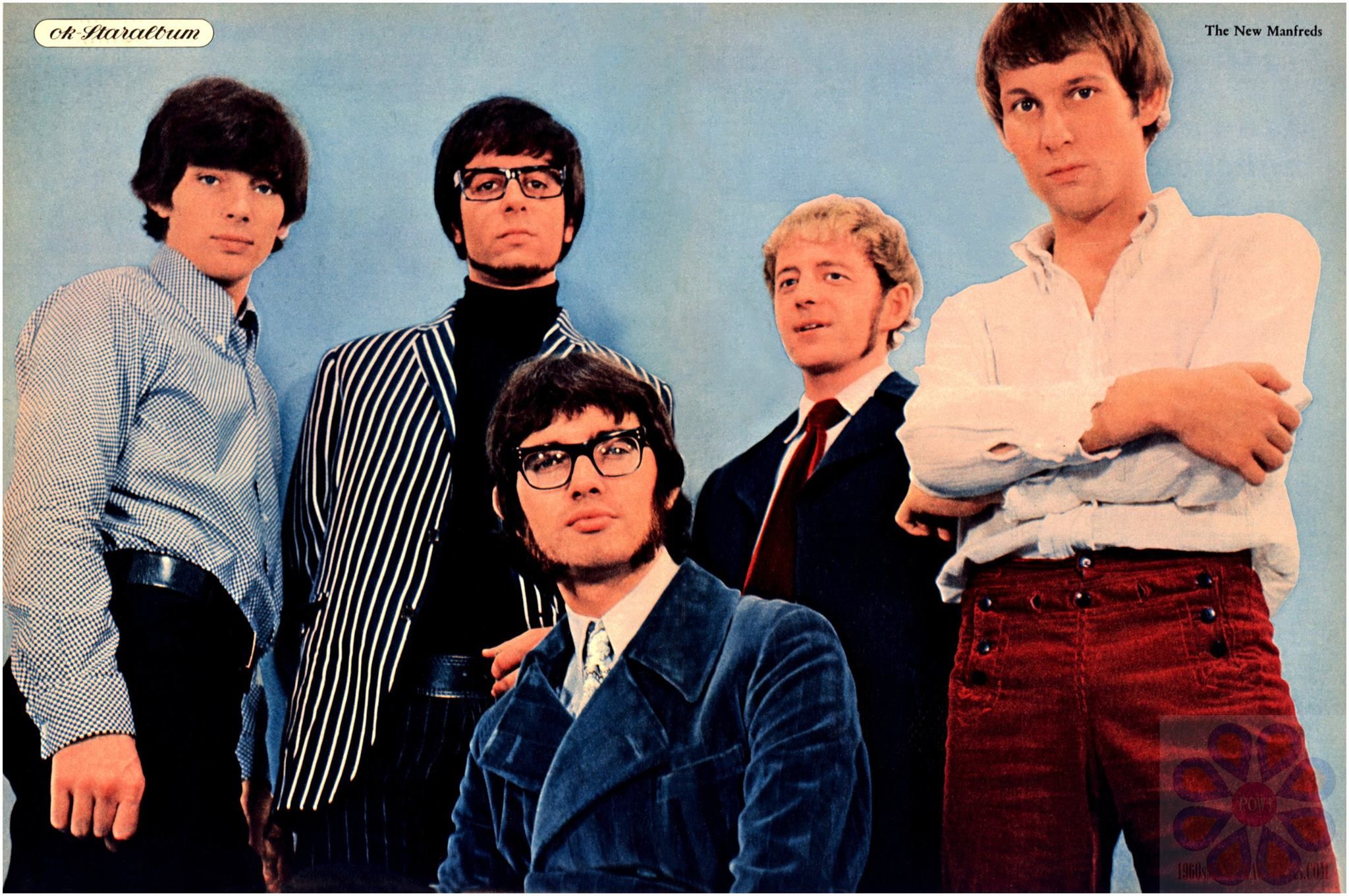
1964: Manfred Mann begin a two week run at No.1 in the US with Do Wah Diddy Diddy.
Manfred Mann started a two week run at No.1 on the US singles chart with 'Do Wah Diddy Diddy', possibly the first No.1 with a Nonsense Song Title.
Also a No.1 in the UK.
The song was a cover version, and was first released in 1963 by the US group The Exciters.
⚡ On This Day in Bowie History — 17 October
2003: Bowie Appears on The Harald Schmidt Show, Germany.
Bowie appeared on the Friday night slot of the Harald Schmidt Show on this day in 2003
During the show he performed two songs, 'Never Get Old', and 'New Killer Star' from the Reality album.
There was also a brief interview with Bowie on-stage.

✍️ Word of the Day — 17 October
Lily-Livered
weak or lacking in courage
Lily-livered describes someone who is cowardly or easily intimidated. The phrase comes from an old belief that the liver was the seat of courage, with a pale or "lily-white" liver suggesting it was lacking. A lily-livered person might talk a big game, but they tend to shrink away when the pressure is on.
📜 History
Events from this day
⚡ Bowie
Moments & milestones
✍️ Word of the Day
Language & Etymology
📜 On This Day in History — 16 October
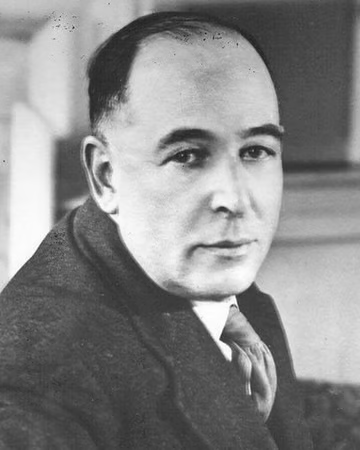
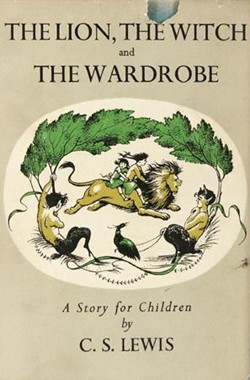
1950: The First Edition of 'The Lion, The Witch and The Wardrobe' is released in London.
C.S. Lewis was a British writer, best known for his series "The Chronicles of Narnia", who also wrote as an Anglican lay theologian. Alongside these roles, he held teaching positions in English literature at Oxford and Cambridge.
'The Lion, The Witch, and The wardrobe' was the first of The Chronicles of Narnia to be written and published, but is marked as volume two in recent editions that are sequenced according to the stories' internal chronology.
TMost of the novel is set in Narnia, a land of talking animals and mythical creatures that is ruled by the evil White Witch. The beginning is set in England, where four English children are relocated to a large, old country house following a wartime evacuation. The youngest, Lucy, visits Narnia three times via the magic of a wardrobe in a spare room. Lucy's three siblings are with her on her third visit to Narnia. In Narnia, the siblings seem fit to fulfil an old prophecy and find themselves adventuring to save Narnia and their own lives. The lion Aslan gives his life to save one of the children; he later rises from the dead, vanquishes the White Witch, and crowns the children Kings and Queens of Narnia.
In 2003, The Lion, the Witch and the Wardrobe was ranked ninth on the BBC's The Big Read poll. Time magazine included the novel in its list of the 100 Best Young-Adult Books of All Time, as well as its list of the 100 best English-language novels published since 1923.
⚡ On This Day in Bowie History — 16 October
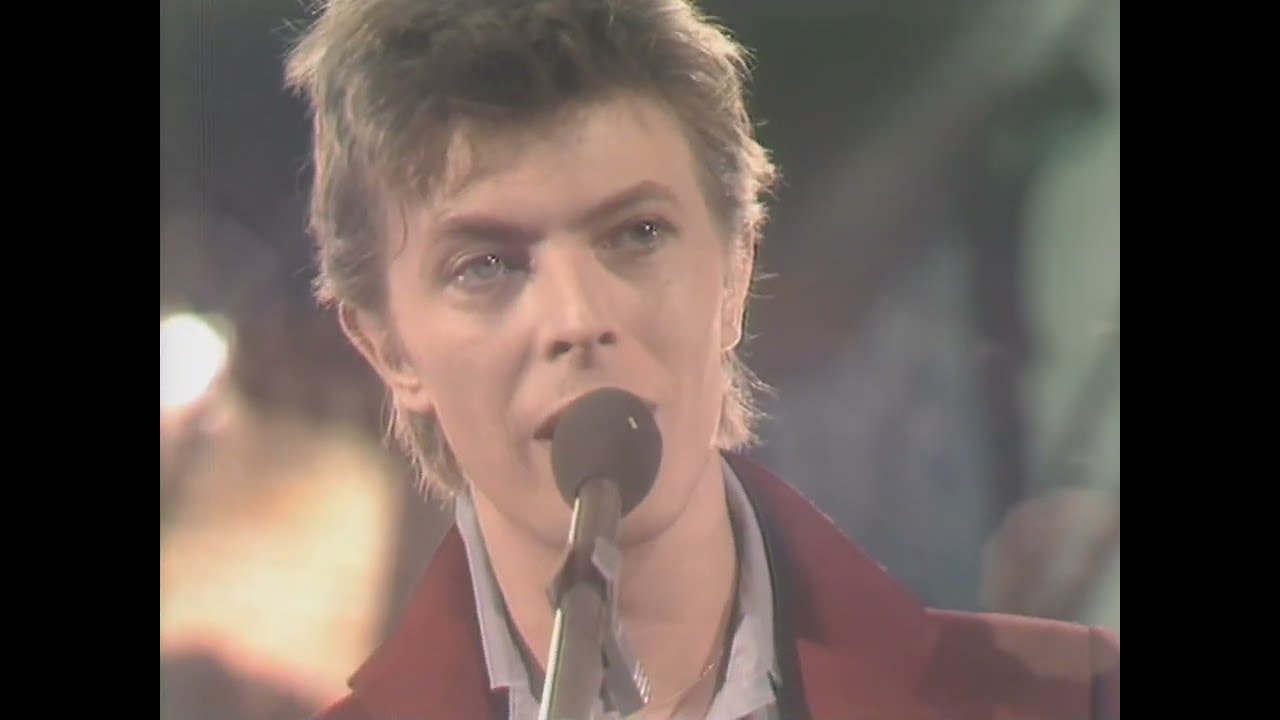
1997: Bowie Interviewed for French TV
Bowie appeared on Michel Drucker’s Le Rendez-Vous du Dimanche, performing “Heroes” with a live vocal and giving an interview.
✍️ Word of the Day — 16 October
Sippet
a small piece of bread or the like for dipping in liquid food
A sippet is a small piece of food used for dipping into soup, broth, or another liquid dish. It's more likely than not to be made of bread, like a toast point or a chunk of crusty sourdough. With a sippet in hand, you know exactly what to do with that last bit of flavor left in the bowl.
📜 History
Events from this day
⚡ Bowie
Moments & milestones
✍️ Word of the Day
Language & Etymology
📜 On This Day in History — 15 October
1951: Birth Control in a Pill
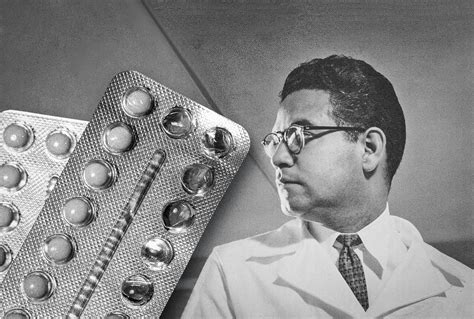
On October 15, 1951, Luis E. Miramontes, a chemist working in Mexico City at the pharmaceutical company Syntex, took a monumental step forward in a chemical synthesis process that would ultimately change birth control—and the world.
Miramontes was working to make a synthetic form of progesterone, a hormone that can be used to treat gynecological conditions such as irregular periods and endometriosis. With the assistance of chemists and mentors Carl Djerassi and George Rosenkranz, he successfully generated norethindrone (norethisterone), a synthetic progestin hormone that could be taken orally. The discovery solved a deceptively difficult chemical problem.
There were issues, however, because the form of progesterone he was working will was absorbed too quickly. He added a carbon-carbon triple bond to the chemical’s steroid structure and adapted the chemical recipe to suit Mexico City’s high altitude, using toluene instead of benzene as a solvent.
Norethynodrel was selected for use in Enovid, which in 1960 became the first oral contraceptive approved by the U.S. Food and Drug Administration.
The pill’s consequences were immensely far-reaching. With reliable oral contraception, women had unprecedented control over their decision to become pregnant. This ability influenced all aspects of women’s lives—from reproductive health to family planning to educational and economic opportunities. Oral contraception also fueled long-standing debates over reproductive rights and sexual freedom.
⚡ On This Day in Bowie History — 15 October
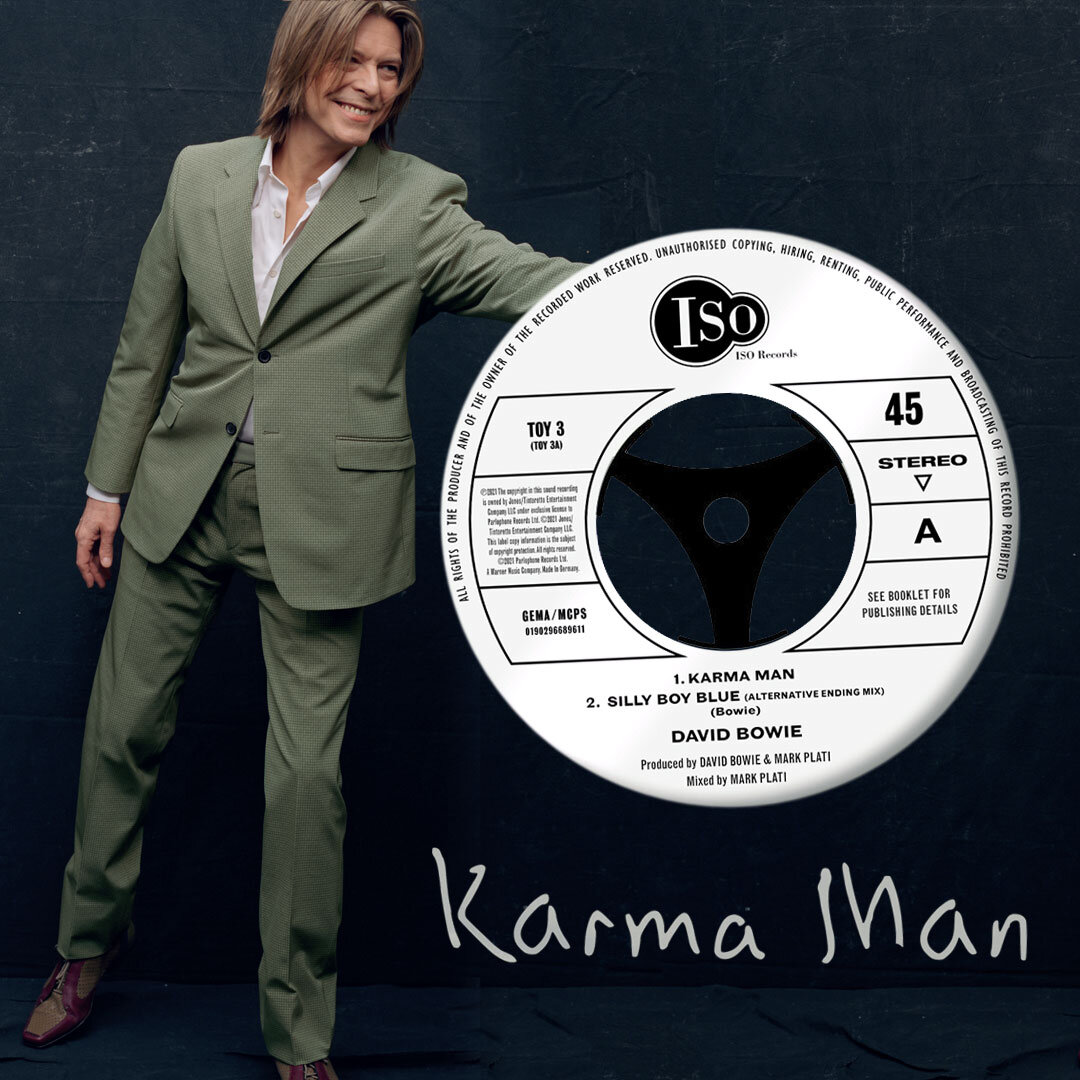
2001: Karma Man b/w Silly Boy Blue re-recordings released
"Karma Man" is a song written and recorded by the English singer-songwriter David Bowie. It was recorded on 1 September 1967 at Advision Studios, based in London, and marked the beginning of Bowie's working relationship with producer Tony Visconti, which would last for the rest of the artist's career.
Bowie remade the song during the sessions for the Toy project in mid-2000, along with other tracks he wrote and recorded during the mid-1960s, including the song's original intended A-side "Let Me Sleep Beside You". The remake saw an official release in 2021 with the entire project as part of the Brilliant Adventure (1992–2001) box set.
The lineup consisted of the members of Bowie's then-touring band: guitarist Earl Slick, bassist Gail Ann Dorsey, pianist Mike Garson, musician Mark Plati and drummer Sterling Campbell. With co-production from Bowie and Plati, the band rehearsed the songs at Sear Sound Studios in New York City before recording them as live tracks. Plati stated that he refused to listen to Bowie's original recordings of the tracks, as so to prevent the originals from influencing his playing on the new versions. Overdubs were recorded at New York's Looking Glass Studios.
On 29 September 2021, Warner Music Group announced that Toy would get an official release on 26 November as part of the box set Brilliant Adventure (1992–2001) through ISO and Parlophone. "Karma Man" and an "alternative ending mix" of "Silly Boy Blue" were released as a single ahead of the release on 15 October. Plati said about the release: 'Karma Man' is notable for Cuong Vu's opening and closing lines, and especially the glorious backing vocals from Holly Palmer, Emm Gryner, and Lisa Germano. [...] When I re-listened to these tracks, the sound of fall 2000 came flooding out of the speakers, from a song I'd not heard since then. I'm not too proud to say I shed a bit of a tear, something that happened a few times while mixing it.
✍️ Word of the Day — 15 October
floccinaucinihilipilification
the estimation of something as valueless
Floccinaucinihilipilification is the act of considering something to be worthless. At 29 letters long, floccinaucinihilipilification is quite the mouthful and is a very rarely used word. If it is mentioned at all, it is almost always in the context of very long English words.
For fans of sesquipedalianism (using long words)
📜 History
Events from this day
⚡ Bowie
Moments & milestones
✍️ Word of the Day
Language & Etymology
📜 On This Day in History — 14 October
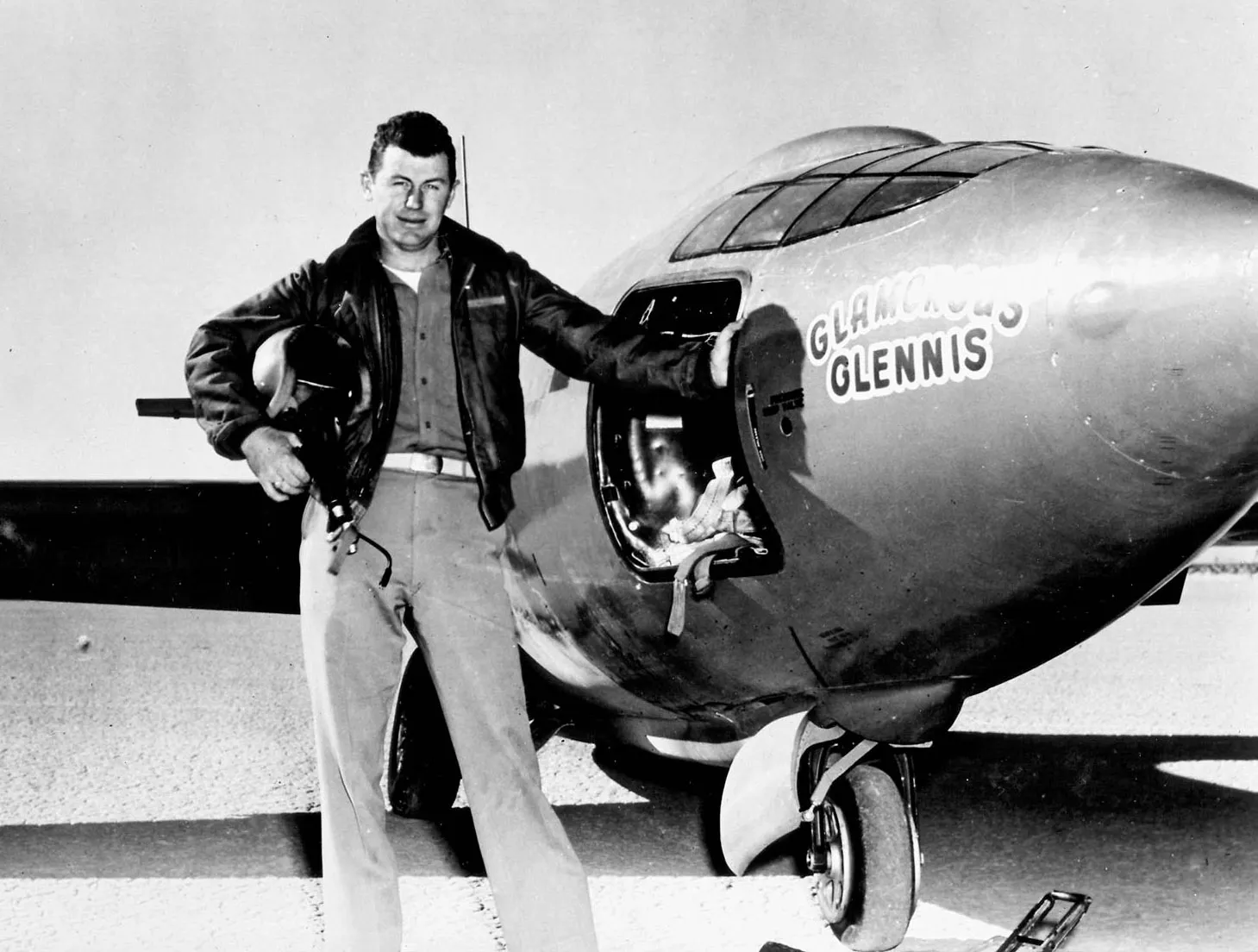
1947: Chuck Yeager breaks the sound barrier
Chuck Yeager (born February 13, 1923, Myra, West Virginia, U.S.—died December 7, 2020, Los Angeles, California) was an American test pilot and U.S. Air Force officer who was the first man to exceed the speed of sound in flight.
Yeager was chosen from several volunteers to test-fly the secret experimental X-1 aircraft, built by the Bell Aircraft Company to test the capabilities of the human pilot and a fixed-wing aircraft against the severe aerodynamic stresses of sonic flight.
On October 14, 1947, over Rogers Dry Lake in southern California, he rode the X-1, attached to a B-29 mother ship, to an altitude of 25,000 feet (7,600 metres). The X-1 then rocketed separately to 40,000 feet (12,000 metres), and Yeager became the first man to break the sound barrier, which was approximately 662 miles (1,066 km) per hour at that altitude.
The feat was not announced publicly until June 1948. Yeager continued to make test flights, and on December 12, 1953, he established a world speed record of 1,650 miles (2,660 km) per hour in an X-1A rocket plane.
⚡ On This Day in Bowie History — 14 October
1977: Bowie releases the "Heroes" album
“Heroes” was the second part of the so-called ‘Berlin trilogy’ made with Tony Visconti and Brian Eno, and the only one of the three to be fully recorded in the German city.
It was backed by a strong promotional campaign from RCA, which used the slogan “There’s New Wave, there’s Old Wave, and there’s David Bowie.” The statement cleverly positioned Bowie as in a class of his own, creating timeless music untouched by prevailing fashions.
Bowie said: The only reason I’ve decided to do these interviews is to prove my belief in the album. Both Low and “Heroes” have been met with confused reactions. That was to be expected, of course. But I didn’t promote Low at all, and some people thought my heart wasn’t in it. This time I wanted to put everything into pushing my new album. I believe in the last two albums, you see, more than anything I have done before. I mean I look back on a lot of my earlier work, and although there’s much that I appreciate about it, there is not a great deal that I actually like. I don’t think they are very likeable albums at all. There is a lot more heart and emotion in Low, and especially the new album. And, if I can convince people of that, I’m prepared to be stuck in this room on the end of a conveyor belt of questions that I’ll do my best to answer. David Bowie Melody Maker, 29 October 1977
✍️ Word of the Day — 14 October
Lamination
the act or process of arranging into thin layers
While you may associate lamination with protecting important documents, the term can describe any process that involves combining thin sheets or layers into a single structure. In baking, lamination involves folding butter and dough together to create the flaky texture found in croissants and other pastries. Next time you have a sweet treat for breakfast, you can thank lamination for each delicious bite.
📜 History
Events from this day
⚡ Bowie
Moments & milestones
✍️ Word of the Day
Language & Etymology
📜 On This Day in History — 13 October
2010: Copiapó Mine Rescue
A mining accident began on 5 August 2010 with a cave-in at the San José copper–gold mine in the Atacama Desert, 45 kilometers (28 mi) north of the regional capital of Copiapó, in northern Chile. Thirty-three men were trapped 700 meters (2,300 ft) underground and 5 kilometers (3 mi) from the mine's entrance.
The collapse occurred at 14:00 CLT on 5 August 2010 while 34 people were present. One miner escaped, but the remaining 33 were trapped. The group was forced to retreat to an emergency refuge after discovering a safety ladder, required by code, was missing.
After the state-owned mining company Codelco took over the rescue efforts from the mine's owners, exploratory boreholes were drilled. Seventeen days after the accident, a note was found taped to a drill bit retrieved to the surface: "Estamos bien en el Refugio los 33" ("We are well in the Refuge – the 33").
The rescue was a multinational effort involving three separate drilling rig teams, nearly every Chilean government ministry, the United States space agency NASA, and numerous international corporations. On 13 October 2010, the men were winched to the surface one at a time in a specially built capsule, as an estimated 5.3 million people watched via live video stream.


⚡ On This Day in Bowie History — 13 October
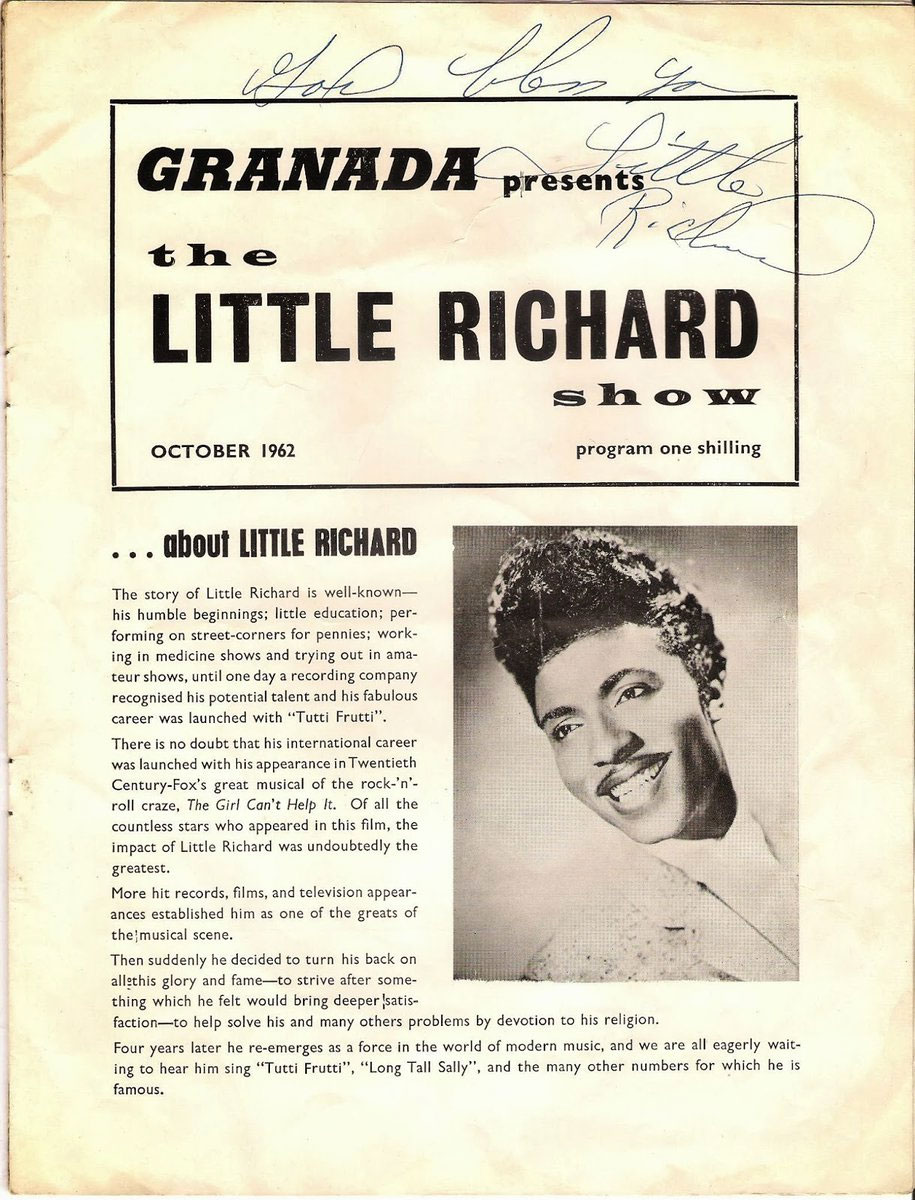
1962: A 15 year-old David Jones attends a Little Richard Concert
David Bowie watched a performance by Little Richard on Saturday 13 October 1962.
The show took place at the Woolwich Granada, London. Little Richard was backed by Sounds Incorporated, who also played their own set.
Also on the bill were Sam Cooke, Jet Harris & The Jetblacks, and the Breakaways. The compere was Bob Bain
✍️ Word of the Day — 13 October
Caprice
a sudden, unpredictable change, as of one's mind or the weather
Ever had an urge to change your plans for no particular reason? That could be a caprice, or a sudden, unpredictable change of mood or behavior. A caprice might inspire someone to rearrange their living room on a whim or decide to take a spontaneous weekend trip. It comes from an Italian word meaning "sudden start," suggesting that a caprice can come out of nowhere and leave you feeling a little stirred up.
📜 History
Events from this day
⚡ Bowie
Moments & milestones
✍️ Word of the Day
Language & Etymology
📜 On This Day in History — 12 October
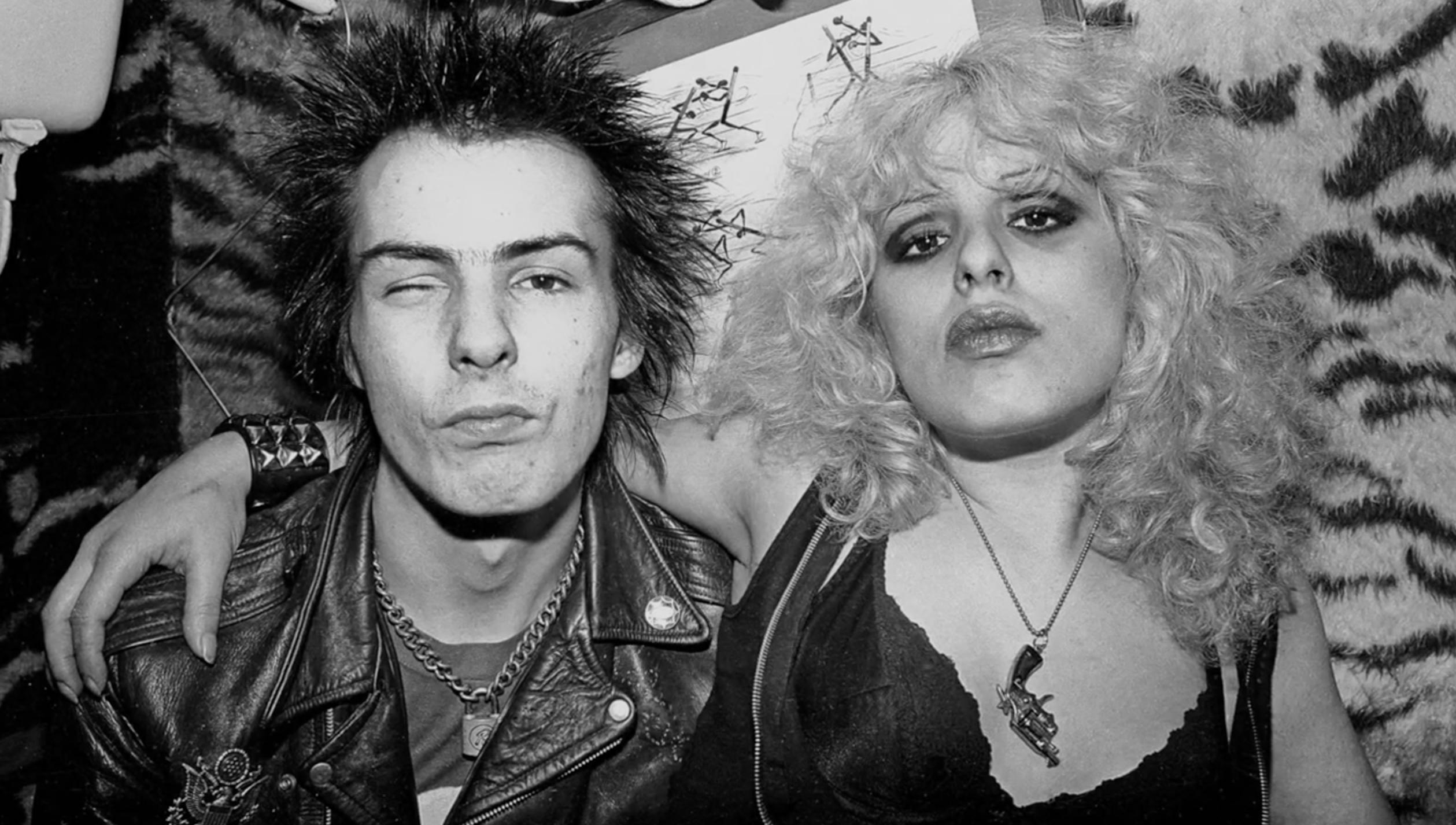
1978: Sid Vicious is charged with the murder of Nancy Spungen
Sid Vicious (born. John Simon Ritchie on May 10th 1957 was famuous (or infamous) as the bassist and vocalist for The Sex Pistols.
In 1973, John Beverley, as he was then known, met John Lydon at Hackney College where he had enrolled for a photography course. Subsequently the friends attended Kingsway College. Lydon introduced Beverley to his friends John Gray and John Wardle. The group became known amongst their peers as 'The Four Johns'.
Three of the four Johns took nicknames: Lydon nicknamed Ritchie "Sid Vicious" after Ritchie was bitten by Lydon's hamster Sid (named after Syd Barrett); Lydon was dubbed "Johnny Rotten" by his bandmate, guitarist Steve Jones; and Vicious nicknamed Wardle "Jah Wobble".
In June 1976, Vicious went to a Sex Pistols concert at the 100 Club. Nick Kent, who had played guitar with the Sex Pistols early on and had left music to become an NME music critic and champion of punk rock (and who was Hynde's boyfriend), was also there, and was apparently blocking Vicious's view. Vicious, high on speed, lashed Kent's head with a rusted motorcycle chain which, according to Hynde, he carried with him
In February 1977, Sex Pistols' manager McLaren announced that Glen Matlock had been "thrown out of the band" because "he liked the Beatles", and that he had been replaced by Vicious.
Also in 1977, Vicious met Nancy Spungen, an American groupie living in London, who had a life-long history of unstable mental behaviour and was also a heroin addict. Spungen, who had initially set her sights on Rotten and who supported herself by alternately dealing drugs and working as a topless dancer, made herself useful on the King's Road scene by procuring drugs for musicians. She and Vicious became inseparable, which caused problems with the band, whose members did not like her; McLaren admitted to planning to have her abducted and forced onto a plane back to the United States.
On the night of 11 October 1978, Vicious and Spungen hosted a party in their hotel room, during which Vicious took approximately 30 Tuinal tablets, and was comatose for the rest of the night while numerous people came and went. At about 11 a.m. the next day, hotel staff found Spungen dead on the bathroom floor, with a knife wound to her abdomen. Vicious was found wandering the hallway. He first claimed to have killed her, then said he remembered nothing. Two people who had been at the party stated that Spungen was alive at 5 a.m. The murder weapon was identified as a Jaguar K-11 hunting knife, which Spungen had purchased for Vicious a few days earlier. Vicious was arrested and charged with second-degree murder.
⚡ On This Day in Bowie History — 12 October
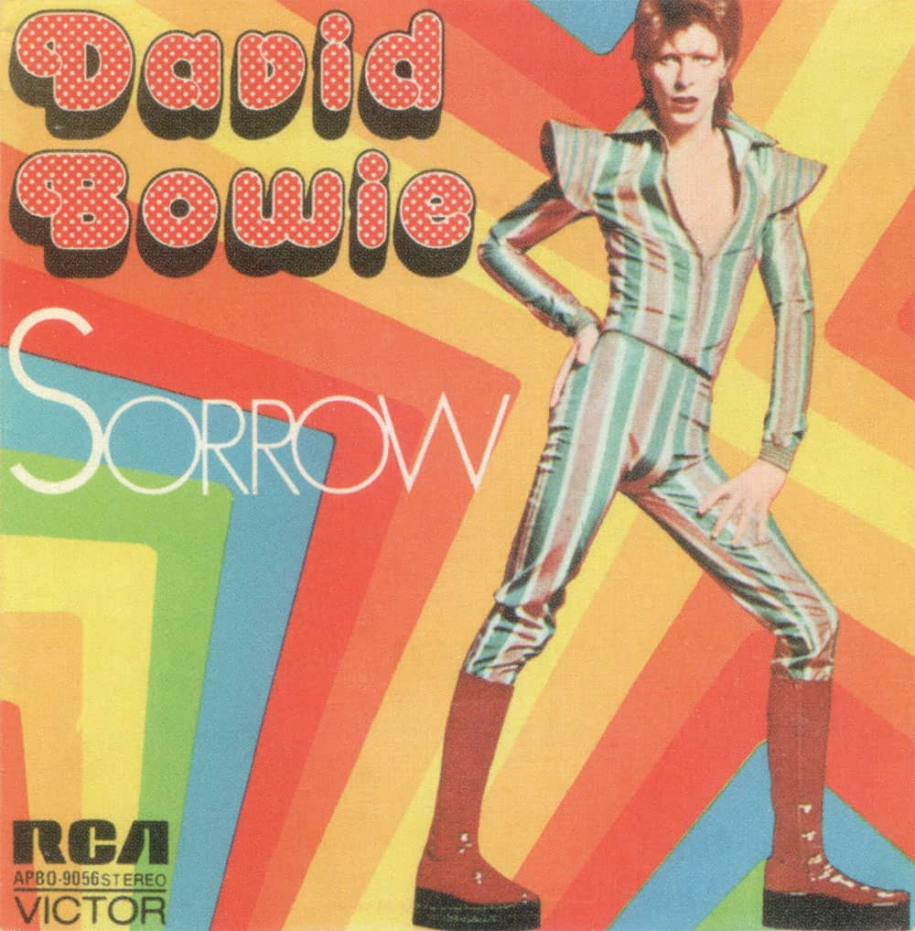
1973: "Sorrow" released as a single
David Bowie’s single ‘Sorrow’ was released in the US and UK on 12 October 1973. The single was delayed for two weeks, having originally been scheduled for release on 28 September.
"Sorrow" was the only single released from Pin Ups, Bowie’s seventh studio album.
The single’s b-side was a cover version of Jacques Brel’s ‘Amsterdam'.
‘Amsterdam’was, at one point destined to be the closing track on The Rise And Fall Of Ziggy Stardust And The Spiders From Mars.
In releasing the song alongside ‘Sorrow’, it became the only time Bowie released a single with a cover version on both sides.
Pin Ups was released on both sides of the Atlantic on Friday 19 October 1973, with advance sales of 150,000. Aided by the success of ‘Sorrow’, it became an instant best-seller, spending five weeks at number one in the UK – just as Aladdin Sane had done earlier in the year.
✍️ Word of the Day — 12 October
Promethean
creative or boldly original
Something Promethean is wildly innovative or groundbreaking. Think of a new invention that changes the game, turning what once seemed impossible into reality. With a Promethean idea, you might just be able to change the world for the better.
📜 History
Events from this day
⚡ Bowie
Moments & milestones
✍️ Word of the Day
Language & Etymology
📜 On This Day in History — 11 October
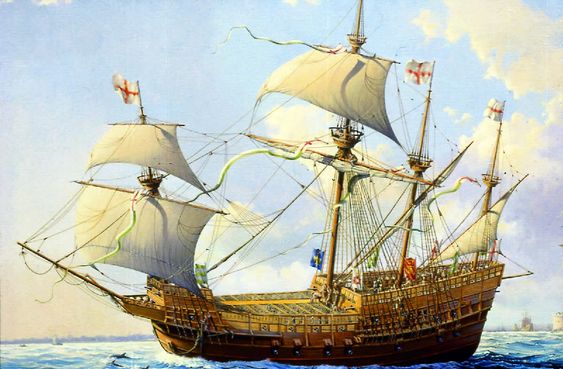
1982: Tudor Navy ship, the Mary Rose is raised.
The Mary Rose was a carrack in the English Tudor navy of King Henry VIII. She was launched in 1511 and served for 34 years in several wars against France, Scotland, and Brittany. After being substantially rebuilt in 1536, she saw her last action on 19 July 1545. She led the attack on the galleys of a French invasion fleet, but sank off Spithead in the Solent, the strait north of the Isle of Wight.
She was raised On This Day in 1982 in one of the most complex and expensive maritime salvage projects ever.
The excavation and raising of the Mary Rose was a milestone in the field of maritime archaeology, comparable in complexity and cost to the raising of the 17th-century Swedish warship Vasa in 1961
The finds include weapons, sailing equipment, naval supplies, and a wide array of objects used by the crew. Many of the artefacts are unique to the Mary Rose and have provided insights into topics ranging from naval warfare to the history of musical instruments.
Conserving the hull of the Mary Rose was the most complicated and expensive task for the project. In 2002 a donation of £4,800,000 (equivalent to £8,900,000 in 2025) from the Heritage Lottery Fund and equivalent monetary support from the Portsmouth City and Hampshire County Councils was needed to keep the work with conservation on schedule

⚡ On This Day in Bowie History — 11 October
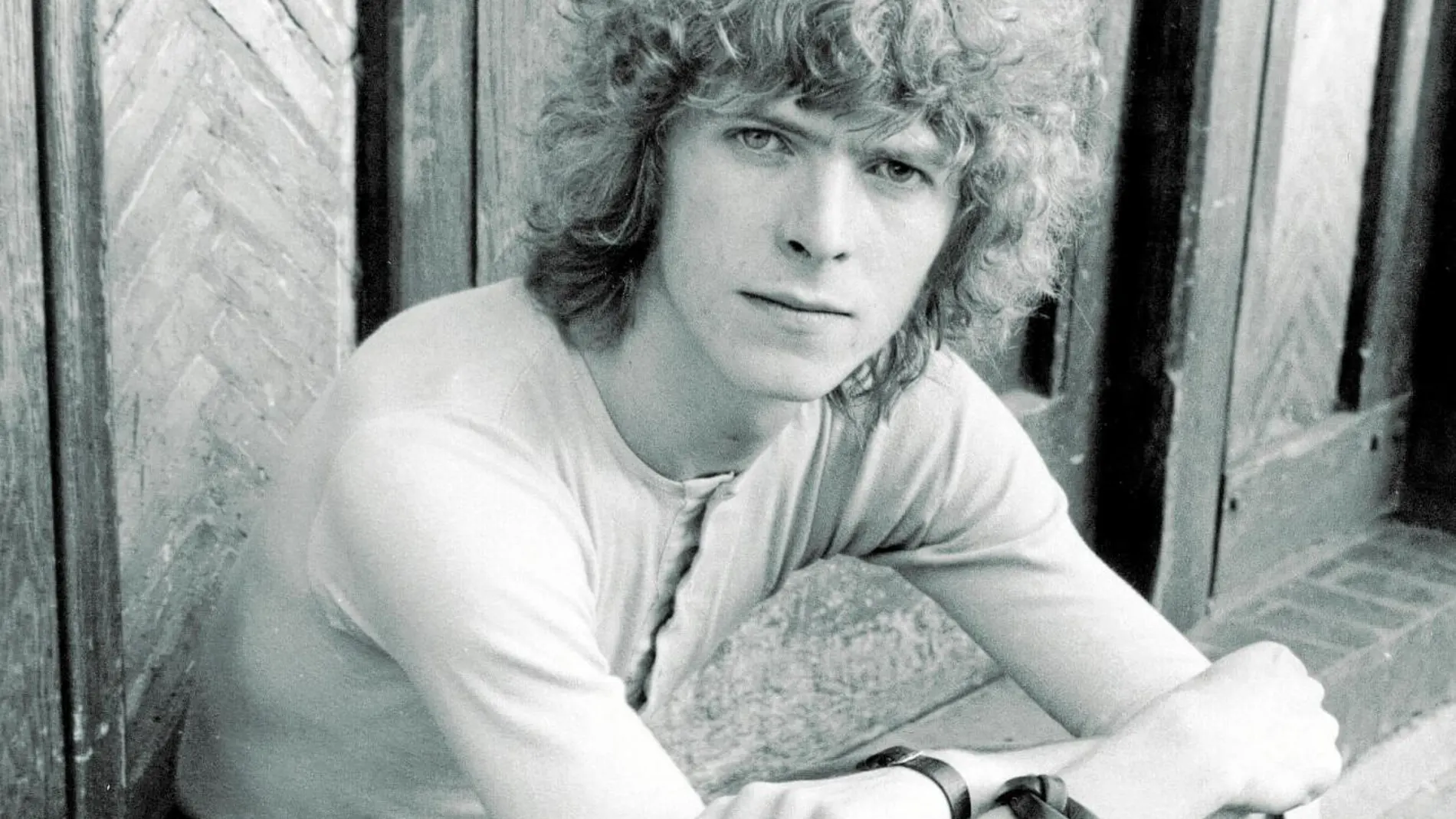
1969: Bowie gives an Interview to The Belgian Radio Service
Prior to his show at the Brighton Dome, in the afternoon of 11 October 1969 David Bowie gave an interview to the Belgian Radio Service.
The interview was conducted at the BBC’s Broadcasting House, London, by Ward Bogaert, who had met Bowie in Malta earlier in the year.
Ward Bogaert ended his broadcast with these words:
‘The boy is called David Bowie. We saw him as the symbol of the youth and the England and the World of tomorrow. With his fanatical following he reminds one of a prophet.’
The programme was transmitted on January 1, 1970.
Kenneth Pitt
The Pitt Report
✍️ Word of the Day — 11 October
Picayune
trifling, small, or of little value
Calling something picayune means it's trivial or of little value. The word originally referred to a small Spanish coin used in the American South and later developed its figurative sense of something small or trifling. Today, you might use it to describe a minor complaint or petty concern. In other words, if it's picayune, it's probably not worth making a big deal about.
📜 History
Events from this day
⚡ Bowie
Moments & milestones
✍️ Word of the Day
Language & Etymology
📜 On This Day in History — 10 October
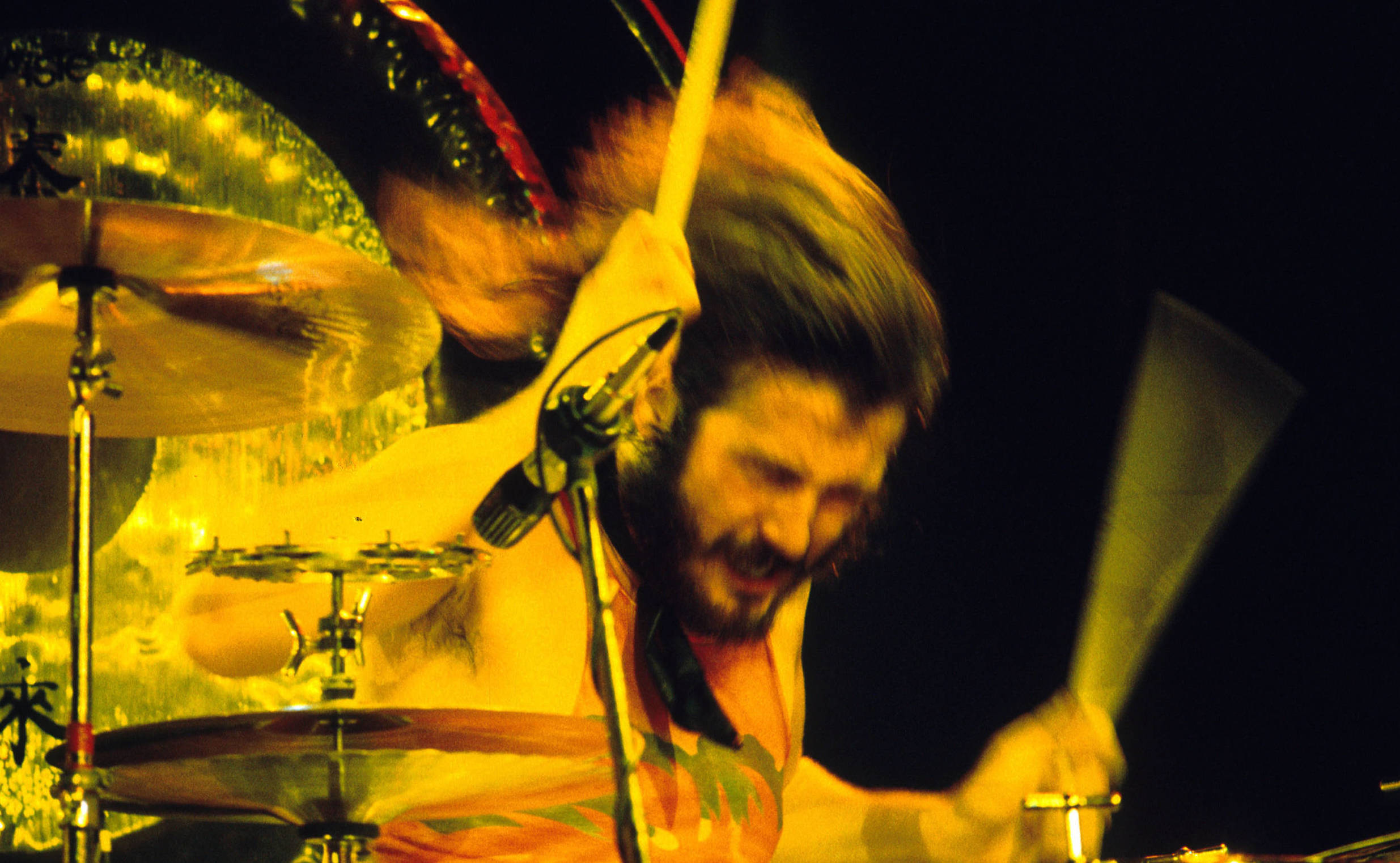
1980: John Bonham, the drummer from Led Zeppelin is buried.
On September 25th, 1980, John Bonham, drummer with Led Zeppelin, died aged 32 after a heavy drinking session. ‘Bonzo’ was found dead at guitarists Jimmy Page’s house of what was described as asphyxiation, after inhaling his own vomit after excessive vodka consumption, (40 shots in 4 hours).
John Henry Bonham, born in Redditch, Worcestershire in 1948. Best known as the drummer of Led Zeppelin, Bonham was esteemed for his speed, power, fast right foot, distinctive sound, and “feel” for the groove (he was, in fact, a soul drummer).
John Bonham first learned to play drums at the age of five, making a drum kit out of containers and coffee tins. He received his first proper drum kit from his father when he was 15.
Bonham’s now legendary drum solo “Moby Dick” (first entitled “Pat’s Delight” after his wife) was a highlight of their three-hour live shows. “Moby Dick” would often last for half an hour and regularly featured the use of Bonham’s bare hands to achieve different sound effects.
On 24 September 1980, Bonham was picked up by Led Zeppelin assistant Rex King to attend rehearsals at Bray Studios for an upcoming tour of the U.S., the band’s first since 1977. During the journey, Bonham had asked to stop for breakfast, where he drank four quadruple vodkas, continuing to drink heavily during rehearsals. The band retired to guitarist Page’s house near Windsor, where, after midnight, Bonham had fallen asleep, having been taken to bed and placed on his side. Zeppelin bassist John Paul Jones found him dead the next afternoon (Bonham had choked on his own vomit). He was 32 years old.
On This Day in 1980, John "Bonzo" Bonham was laid to rest at a parish church on the outskirts of Kidderminster.
⚡ On This Day in Bowie History — 10 October
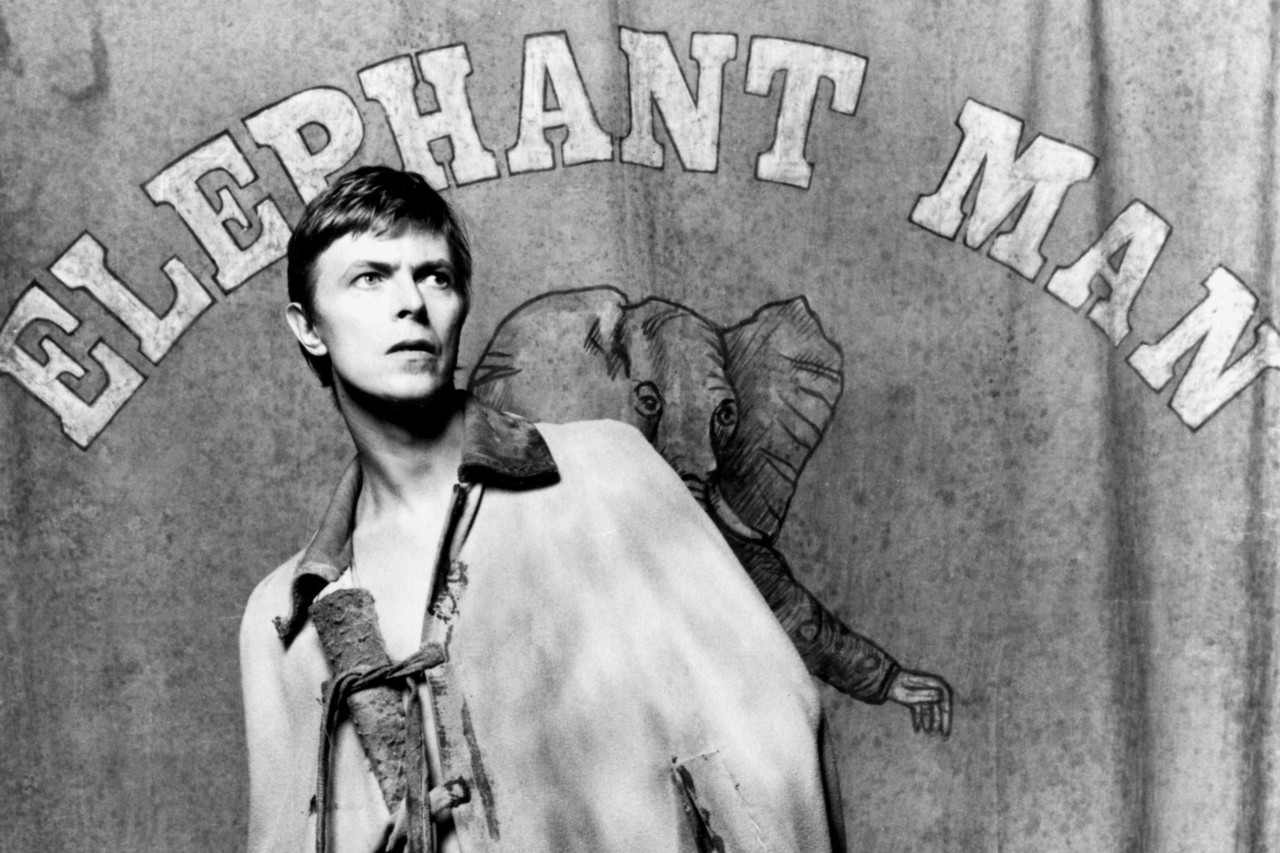
1980: Bowie is interviewed by Tim Rice for the BBC
Friday Night, Saturday Morning featured Bowie discussing his role in The Elephant Man on Broadway, alongside his music and Scary Monsters.
David Bowie played John Merrick at the Denver Centre For The Performing Arts (29th July - 3rd August), at the Blackstone Theatre, Chicago (5th August - 31st August), and on Broadway's Booth Theatre (23rd September - 3rd January). He was in the middle of the Broadway run when he was interviewed for the BBC.
✍️ Word of the Day — 10 October
Algid
cold or chilly
Algid describes something cold or frosty. You won't hear the word much today, but you were more likely to encounter it in the 1800s. So if you find yourself reaching for a coat — and an old-fashioned way to describe the cold — algid might be just the word.
📜 History
Events from this day
⚡ Bowie
Moments & milestones
✍️ Word of the Day
Language & Etymology
📜 On This Day in History — 09 October
1986: The Stage Musical, "Phantom Of The Opera" opens in London
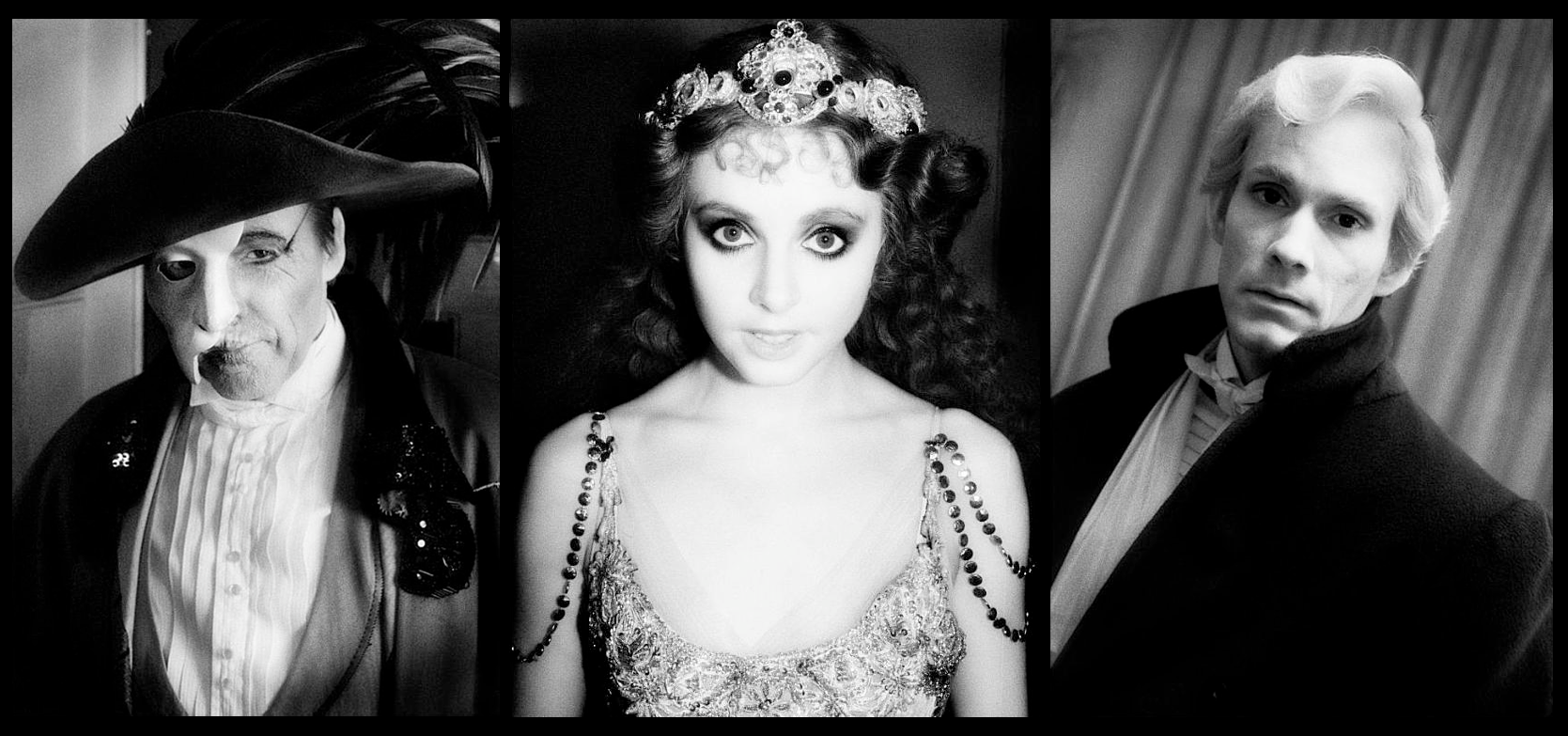
The Phantom of the Opera is a musical with music by Andrew Lloyd Webber, lyrics by Charles Hart, and additional lyrics by Richard Stilgoe, with a libretto by Lloyd Webber and Stilgoe, inspired by the 1910 novel by Gaston Leroux, it tells the tragic story of beautiful soprano Christine Daaé, who becomes the obsession of a mysterious and disfigured musical genius living in the subterranean labyrinth beneath the Paris Opera House.
The musical opened in London's West End in 1986 and on Broadway in New York in 1988, in a production directed by Harold Prince and starring English classical soprano Sarah Brightman (Lloyd Webber's then-wife) as Christine Daaé, screen and stage star Michael Crawford as the Phantom, and international stage performer Steve Barton as Raoul.
It won the 1986 Olivier Award and the 1988 Tony Award for Best Musical, with Crawford winning the Olivier and Tony for Best Actor in a Musical.[2] A film adaptation, directed by Joel Schumacher, was released in 2004.
The Phantom of the Opera is the longest running show in Broadway history, and celebrated its 10,000th performance on 11 February 2012, becoming the first Broadway production in history to do so.
The original West End production at His Majesty's Theatre, London, ended its run in March 2020, after 13,629 performances, due to the shutdown of theatres resulting from the COVID-19 pandemic.
In 1986, people had known Michael Crawford from the TV Programme, Some Mothers Do 'Ave 'Em, a completely different role entirely!
⚡ On This Day in Bowie History — 09 October
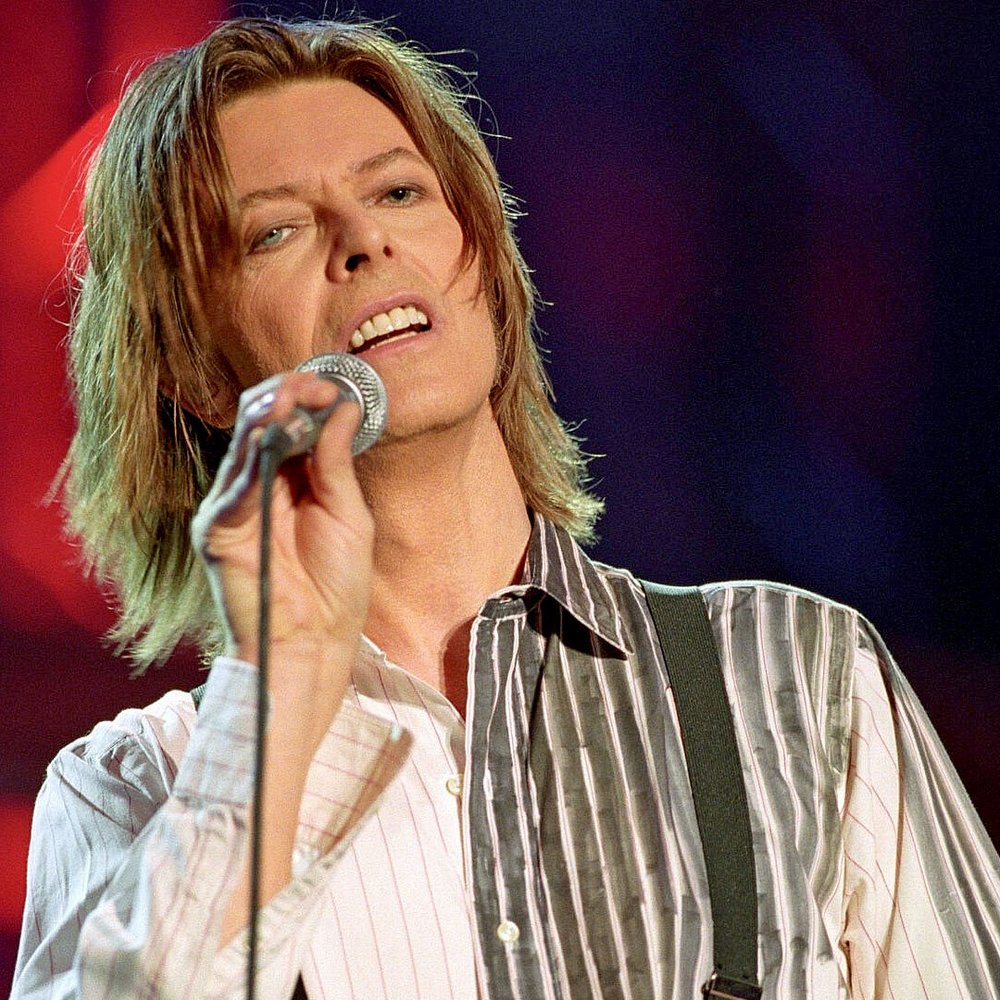
1999: Bowie performs at NetAid, Wembley Stadium, London
David Bowie appeared at the NetAid concert at London’s Wembley Stadium on 9 October 1999.
It was the second show of the nine-date Hours Tour, which lasted from August to December 1999.
NetAid was an anti-poverty initiative. There were concerts on 9 October at Wembley Stadium, Giants Stadium in New Jersey, and the Palais des Nations in Geneva.
Also performing at the Wembley show were Eurythmics, The Corrs, Catatonia, Bush, Bryan Adams, George Michael, Stereophonics, and Robbie Williams.
The Playlist: ‘Life On Mars?’ ‘Survive’ ‘China Girl’ ‘The Pretty Things Are Going To Hell’ ‘Drive-In Saturday’ ‘Rebel Rebel’
✍️ Word of the Day — 09 October
tintinnabulation
the act or an instance of the ringing or pealing of bells
📜 History
Events from this day
⚡ Bowie
Moments & milestones
✍️ Word of the Day
Language & Etymology
📜 On This Day in History — 08 October
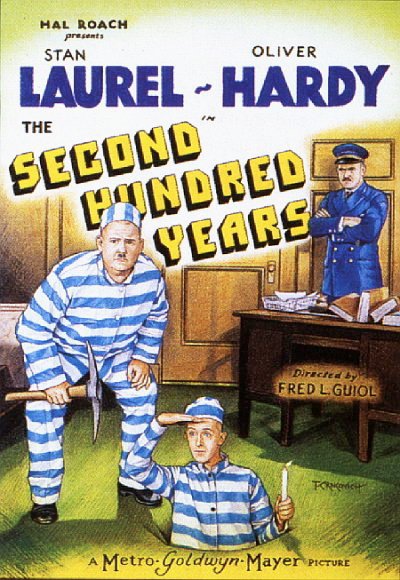
1927: The First Film with Stan & Oliver Working As A Duo
Stan Laurel (1890–1965) and Oliver Hardy (1892–1957) were established as film comedians prior to their teaming, with Laurel appearing in over 50 silent films and Hardy in over 250. (Hardy also appeared in three sound features without Laurel.)[3] Although they first worked together in the film The Lucky Dog (1921), this was a chance pairing and it was not until 1926 when both separately signed contracts with the Hal Roach film studio that they appeared in film shorts together.[4] Wes D. Gehring identifies their first "official" film together as Putting Pants on Philip (1927),[5] William K. Everson identifies The Second Hundred Years (1927) as the first "official" Laurel and Hardy film in which they are presented as a team.
The Second Hundred Years (a.k.a. The Second 100 Years) is a 1927 American silent comedy short film starring Stan Laurel and Oliver Hardy prior to their official billing as the duo Laurel and Hardy. William K. Everson identifies this as the first "official" Laurel and Hardy film in which they are presented as a team. The team appeared in a total of 107 films between 1921 and 1951.
Stan and Ollie are two inmates sharing a prison cell. Together, they devise a plan to escape by digging a tunnel. However, their escape attempt takes an unexpected turn when they accidentally emerge through the floor of the warden's office. After a brief pursuit, they are apprehended and returned to their cell. Undeterred, Stan and Ollie disguise themselves as painters and exit the prison during a meal break, posing as members of a painting crew. As they paint everything in sight, including a parked car and a passerby, they attract the attention of a vigilant policeman. In a bid to evade capture, they hijack a limousine and don the evening attire of its occupants, who happen to be French prison officials visiting the governor. Mistaken for the French dignitaries, Stan and Ollie attend a banquet hosted by the governor. Amidst comical mishaps, such as Stan's struggle with a wayward cherry, they manage to maintain their charade until they are recognized by their fellow inmates and the real French officials. A chase ensues, leading to their eventual return to prison.
⚡ On This Day in Bowie History — 08 October
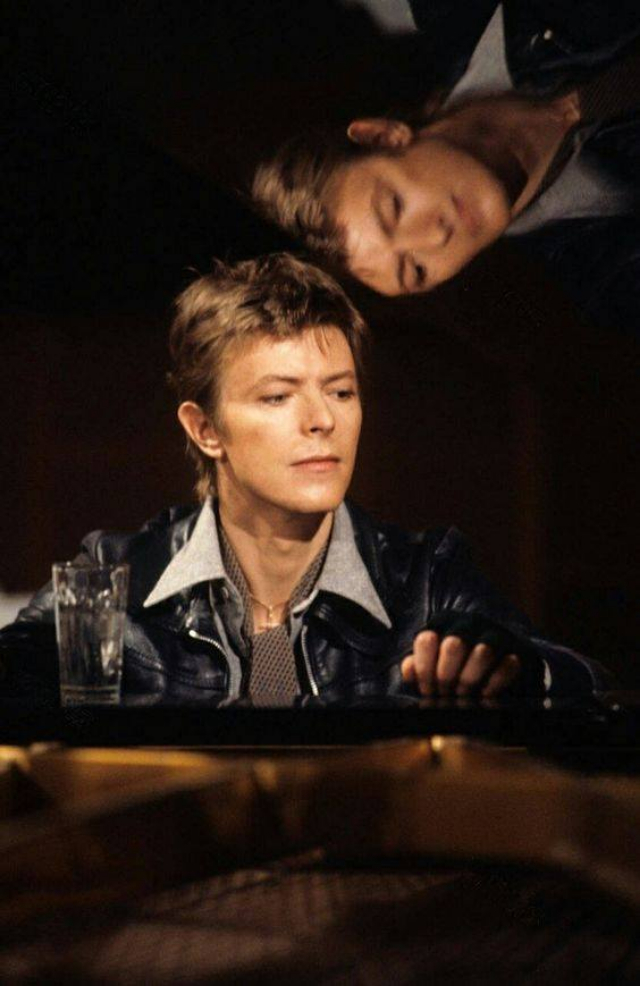
1977: Bowie records footage for an Italian TV show
In September and October of ’77, Bowie undertook a short promotional tour around Europe. Usually he performed “Heroes” – in some cases it was sung live, in others it was mimed. In the Odeon performance, he’s only miming. But on this show only, along with an almost complete version of “Heroes”, we additionally get a performance of Sense of Doubt.
Image: Piero Togni
✍️ Word of the Day — 08 October
Neologize
to make up or use new words
Have you ever come up with a new word and tried to get your friends to use it? That's neologizing! Every language needs new words to keep up with new ideas, inventions, and trends. So go ahead and neologize. Who knows — your word might catch on and end up in the dictionary someday!
📜 History
Events from this day
⚡ Bowie
Moments & milestones
✍️ Word of the Day
Language & Etymology
📜 On This Day in History — 07 October
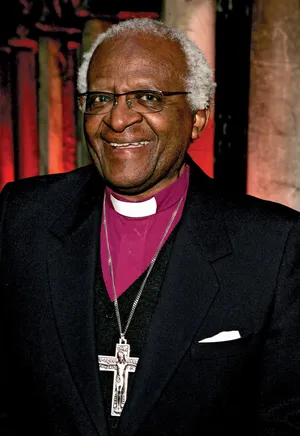
1931: Archbishop Desmond Tutu born on this day.
Desmond Tutu (born October 7, 1931, Klerksdorp, South Africa—died December 26, 2021, Cape Town) was a South African Anglican cleric who in 1984 received the Nobel Prize for Peace for his role in the opposition to apartheid in South Africa.
Tutu was born of Xhosa and Tswana parents and was educated in South African mission schools at which his father taught. Though he wanted a medical career, Tutu was unable to afford training and instead became a schoolteacher in 1955. He resigned his post in 1957. He then attended St. Peter’s Theological College in Johannesburg and was ordained an Anglican priest in 1961. In 1962 he moved to London, where in 1966 he obtained an M.A. from King’s College London. From 1972 to 1975 he served as an associate director for the World Council of Churches. He was appointed dean of St. Mary’s Cathedral in Johannesburg in 1975, the first Black South African to hold that position. From 1976 to 1978 Tutu served as bishop of Lesotho.
In 1978 Tutu accepted an appointment as the general secretary of the South African Council of Churches and became a leading spokesperson for the rights of Black South Africans. During the 1980s he played an unrivaled role in drawing national and international attention to the iniquities of apartheid. He emphasized nonviolent means of protest and encouraged the application of economic pressure by countries dealing with South Africa. The award of the 1984 Nobel Prize for Peace to Tutu sent a significant message to South African Pres. P.W. Botha’s administration. In 1985, at the height of the township rebellions in South Africa, Tutu was installed as Johannesburg’s first Black Anglican bishop, and in 1986 he was elected the first Black archbishop of Cape Town, thus becoming the primate of South Africa’s 1.6 million-member Anglican church. In 1988 Tutu took a position as chancellor of the University of the Western Cape in Bellville, South Africa.
Tutu retired from the primacy in 1996 and became archbishop emeritus. In July 2010 he announced his intention to effectively withdraw from public life in October, though he said he would continue his work with the Elders, a group of international leaders he cofounded in 2007 for the promotion of conflict resolution and problem solving throughout the world. On October 7, 2010—his 79th birthday—he began his retirement.
Tutu died on December 26th 2021, In Cape Town.
⚡ On This Day in Bowie History — 07 October
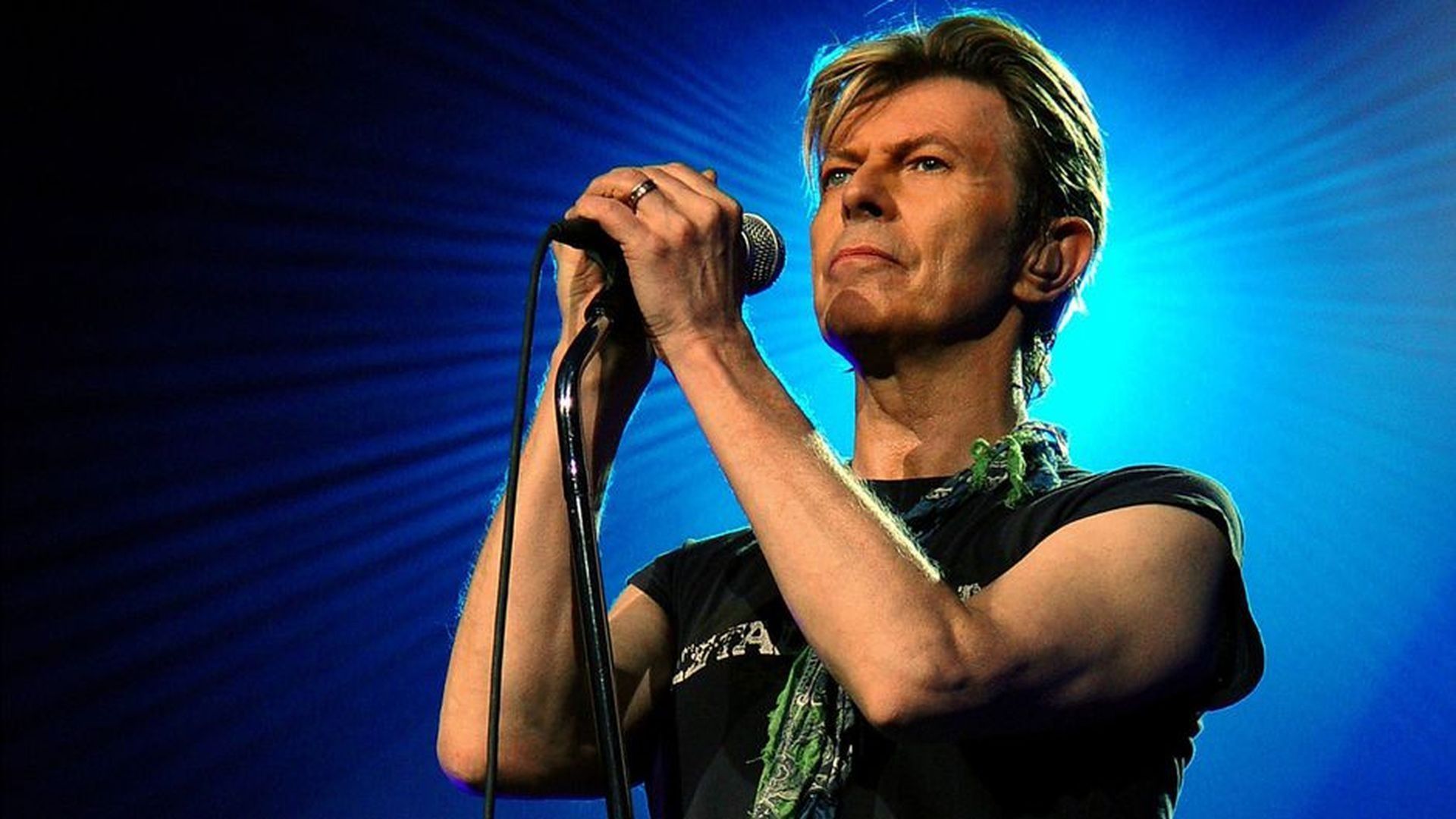
2003: Bowie kicks off the Reality Tour at the Forum København, Copenhagen
Earl Slick and Gerry Leonard played guitar, Gail Ann Dorsey was on bass guitar and vocals, and Mike Garson played keyboards and piano. Sterling Campbell was on drums, and Catherine Russell played keyboards, percussion, guitar and sang backing vocals.
The set list for the show is as follows: ‘New Killer Star’ ‘Afraid’ ‘Fame’ ‘Cactus’ ‘Battle For Britain (The Letter)’ ‘Fall Dog Bombs The Moon’ ‘Breaking Glass’ ‘Reality’ ‘Changes’ ‘The Man Who Sold The World’ ‘Hallo Spaceboy’ ‘Under Pressure’ ‘Sunday’ ‘Bring Me The Disco King’ ‘She’ll Drive The Big Car’ ‘Ashes To Ashes’ ‘Never Get Old’ ‘Pablo Picasso’ ‘Fantastic Voyage’ ‘I’m Afraid Of Americans’ ‘Rebel Rebel’ “Heroes” ‘Heathen (The Rays)’ ‘Slip Away’ ‘Hang On To Yourself’ ‘Let’s Dance’ ‘Ziggy Stardust’
✍️ Word of the Day — 07 October
Axiom
a self-evident truth that requires no proof
An axiom is a statement accepted as true without needing to be proved. The word comes from a Greek term meaning "something worthy" and is commonly used in logic, philosophy, and mathematics. When it comes to axioms, the truth speaks for itself.
📜 History
Events from this day
⚡ Bowie
Moments & milestones
✍️ Word of the Day
Language & Etymology
📜 On This Day in History — 06 October
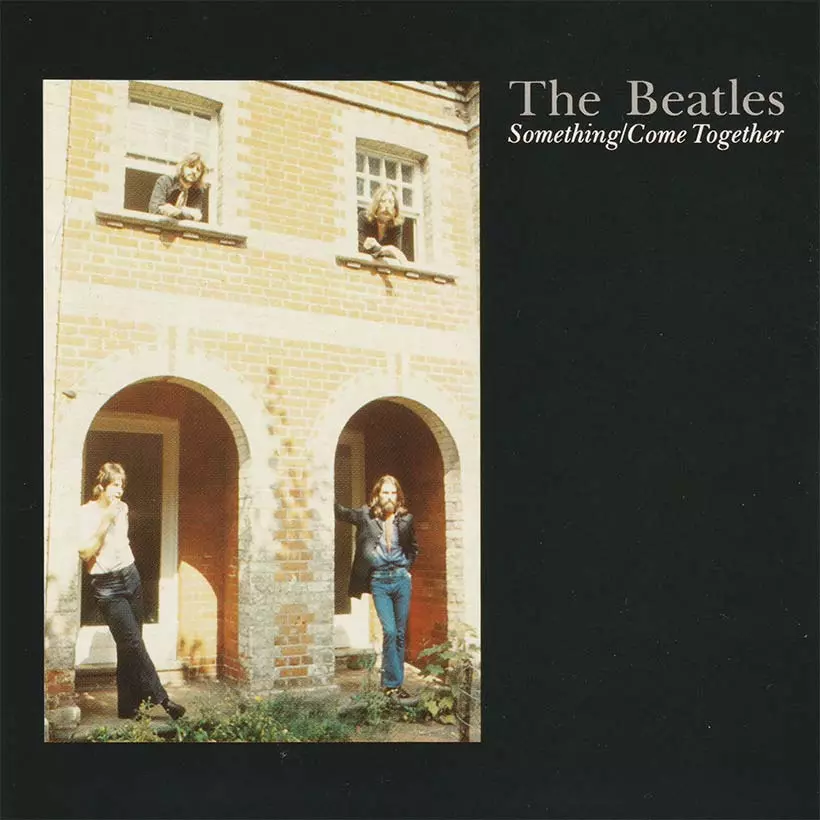
1969: The Beatles release the first single with the A-side vredited to George Harrison
George Harrison's song ’Something’ was released as the "A" side of a Beatles' 45, a first for Harrison.
Along with Lennon and McCartney's 'Come Together', the single went on reach No.1 on the US chart the following month. Both tracks were lifted from the Abbey Road album.
Owing to the difficulty he faced in getting more than two of his compositions onto each Beatles album, Harrison first offered the song to Joe Cocker.
'Something' received the Ivor Novello Award for the "Best Song Musically and Lyrically" of 1969. By the late 1970s, it had been covered by over 150 artists, making it the second-most covered Beatles composition after 'Yesterday'.
⚡ On This Day in Bowie History — 06 October
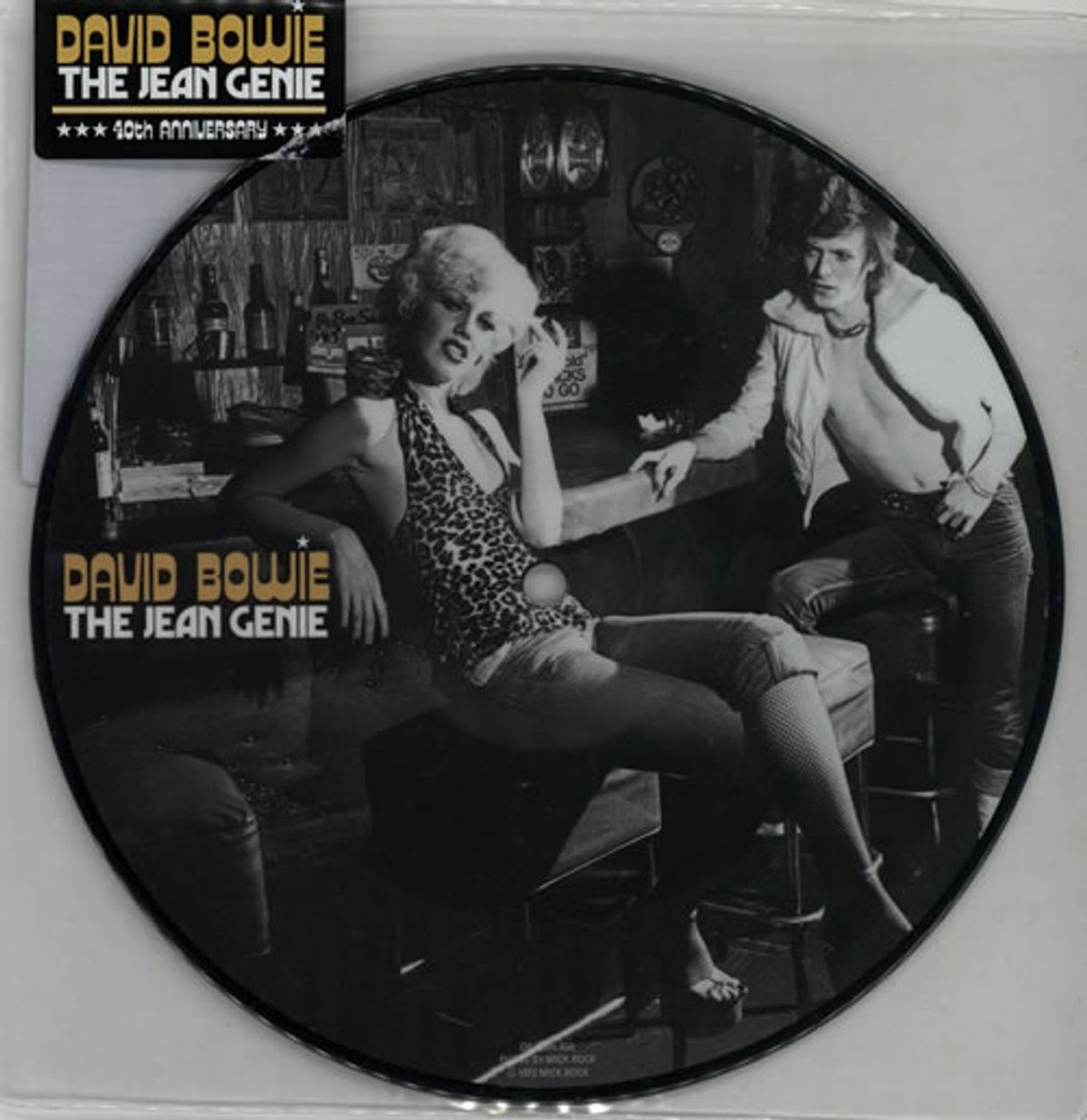
1972: The Jean Genie is Recorded in New York
"The Jean Genie" is a song by the English singer-songwriter David Bowie, originally released in November 1972 as the lead single to his 1973 album Aladdin Sane. Co-produced by Ken Scott, Bowie recorded it with his backing band the Spiders from Mars − comprising Mick Ronson, Trevor Bolder and Mick Woodmansey.
According to Bowie, it was "a smorgasbord of imagined Americana", with a protagonist inspired by Iggy Pop, and the title being an allusion to author Jean Genet. One of Bowie's most famous tracks, it was promoted with a film clip featuring Andy Warhol associate Cyrinda Foxe and peaked at No. 2 on the UK Singles Chart.
"The Jean Genie" originated on the Ziggy Stardust Tour as an impromptu jam, titled "Bussin'", on the tour bus between the first two concerts in Cleveland and Memphis, when Mick Ronson began playing the Bo Diddley-inspired guitar riff on his new Les Paul. It subsequently became the first song Bowie composed for Aladdin Sane, in autumn 1972 during his 1972 US tour, completing the song in New York City, where he spent time with the Warhol set's Cyrinda Foxe. Bowie later asserted, "I wrote it for her amusement in her apartment. Sexy girl." Bowie later in the 1990s described the song as "a smorgasbord of imagined America" and "my first New York song."
The recording took place at New York's RCA Studios on 6 October 1972. "I had a really great conversation with [bassist] Trevor Bolder," recalled Def Leppard's Joe Elliott. "I said, 'You remember when you were doing The Jean Genie?' He said, 'No. We did it in an hour and a half.'
✍️ Word of the Day — 06 October
Lateritious
of the color of brick; brick-red
A brick wall on a sunny afternoon can take on a distinctive reddish hue, making lateritious a fitting word for its color. Think terracotta tiles, brick-colored pottery, or anything else with that warm, earthy look. Talk about a word with a solid foundation!
📜 History
Events from this day
⚡ Bowie
Moments & milestones
✍️ Word of the Day
Language & Etymology
📜 On This Day in History — 05 October
1942: Budy Massacre
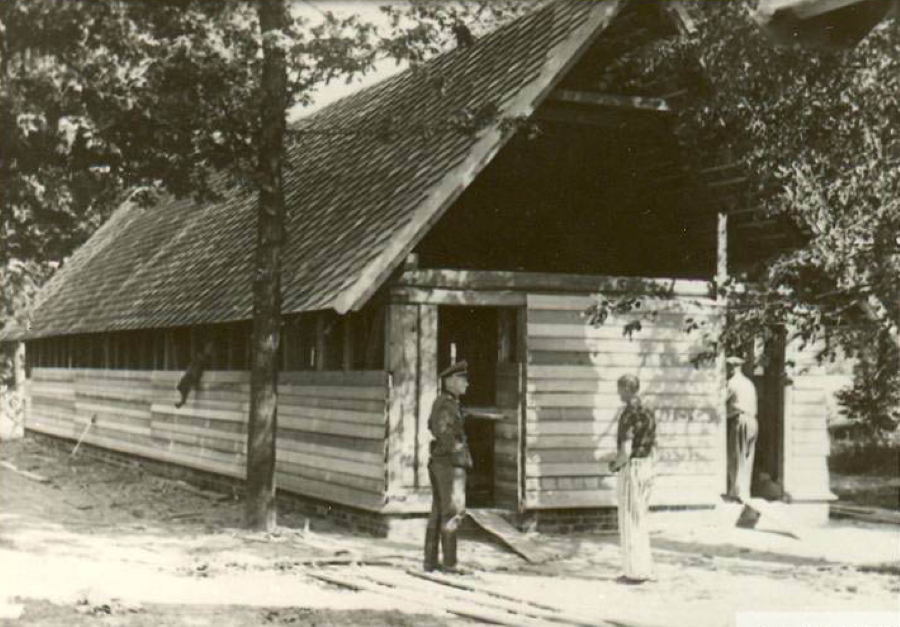
The penal company for women prisoners in Budy, about 7 km. from Oświęcim, was founded in June 1942 in reprisal for an escape from Auschwitz by a Polish woman prisoner. 400 women of various ethnic backgrounds were imprisoned in Budy. Their living conditions were lamentable, and the Germans forced them to perform backbreaking labor. German women criminals and prostitutes made up the cadre in charge of the penal company.
One night in early October 1942, German women prisoner functionaries battered 90 French Jewish women to death at a Women's Penal Company, part of Auschwitz, at Budy, outside Oświęcim.
Using clubs, hatchets, and rifle butts—and throwing some of their victims from the windows in the loft of the building—female prisoner functionaries and SS guards butchered 90 women.
The camp administration investigated the incident, but failed to discover the cause. Commandant Rudolf Hoess defined the massacre as “a revolt instigated by prisoners who used stones and clubs in an attempt to terrorize the capo and make their way out of the camp.”.
SS man Pery Broad claimed that a German woman noticed a stone in the hand of Jewish woman returning from the toilet to the dormitory room. Broad felt that this was a “hysterical illusion.” Nevertheless, the German woman called for help and shouted that the Jewish woman had struck her. At that point, the female supervisors and guards began slaughtering the French Jews.
The following day, the Germans exterminated all the women who remained alive after being injured in the massacre. They also killed six German women functionaries who had taken part in the incident.
⚡ On This Day in Bowie History — 05 October
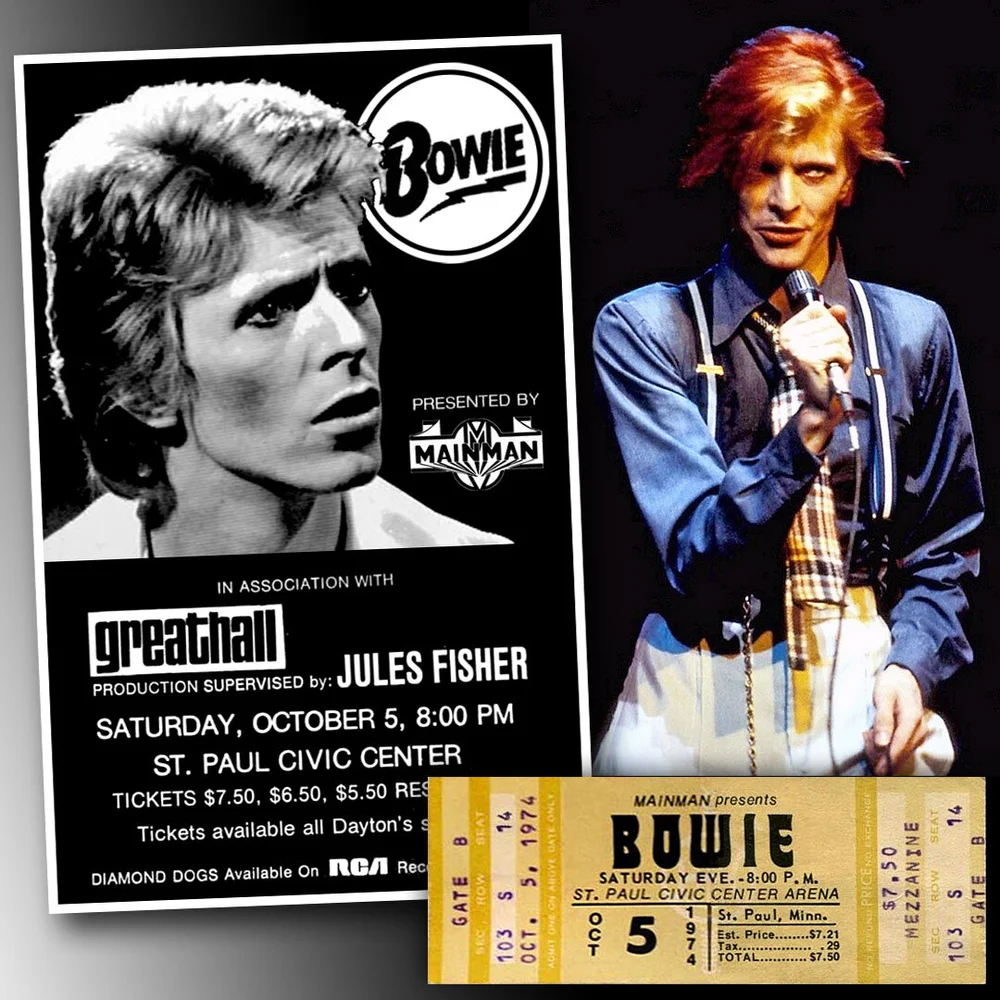
1974: The Start of The Philly Dogs Tour
After a break of almost three weeks away from the stage, on 5th of October 1974 David Bowie recommenced his The Year Of The Diamond Dogs tour of North America, which had kicked off in Montreal on the 14th of June.
By this point he had dispensed with the trappings of the theatrical spectacle that was Hunger City and had stripped back the show to a simpler presentation, for what became affectionately known as The Soul Tour or Philly Dogs Tour, a reference to the new setlist which included songs from the forthcoming Young Americans album, mostly recorded in Philadelphia during the August break from the tour.
The musicians for these shows were: Mike Garson (piano, Mellotron), Carlos Alomar (guitar), Earl Slick (lead guitar), Emir Ksasan (bass guitar), Dennis Davis (drums), Pablo Rosario (percussion), David Sanborn (alto sax, flute), Richard Grando (baritone sax flute), Michael Kamen (electric piano, moog, oboe), Geoff McCormack, Ava Cherry, Robin Clark, Jean Fineberg, Anthony Hinton, Diane Sumler and Luther Vandross (backing vocals).
Source: David Bowie’s official website — davidbowie.com.
✍️ Word of the Day — 05 October
déjà vu
the illusion of having previously experienced something encountered for the first time
Ever visited a place for the first time but felt strangely certain you'd been there before? That's déjà vu, a French phrase that literally means "already seen." For a scientific synonym of déjà vu, try out "promnesia." But you may get some confused looks in return.
📜 History
Events from this day
⚡ Bowie
Moments & milestones
✍️ Word of the Day
Language & Etymology
📜 On This Day in History — 04 October
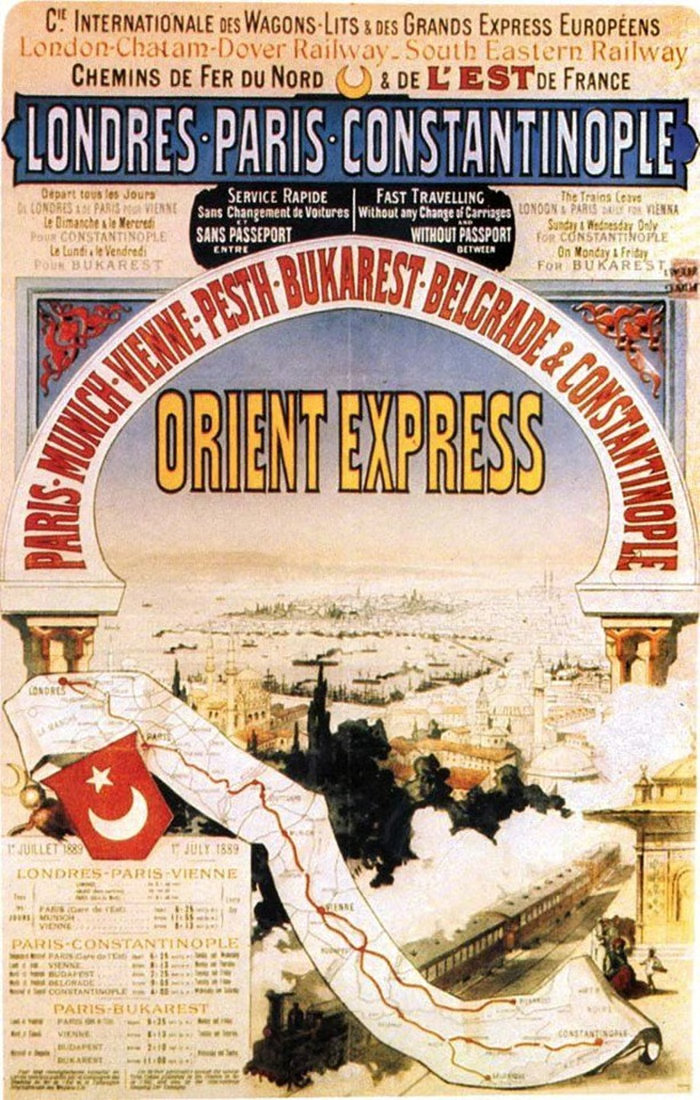
1883: The Orient Express departs on its first official journey from Paris to Constantinople
AThe Orient Express was a by-word for luxurious train travel and had its heyday in the 1920s and 1930s.
The service was created by Belgian Georges Nagelmackers who set up Compagnie Internationale des Wagons-Lits, a luxury travel service that included trains. Their most famous was the Orient Express.
In 1883 the route began in Paris and ended in Istanbul, passing through Vienna and Munich. Over the years the route changed many times and was famed for the luxury of its sleeping and dining cars.
From the 1960s its service was gradually reduced and finished completely in 1977. The railway journey features often in literature and film; one of its most famous in the Agatha Christie novel "Murder on the Orient Express" was not actually set on the original Orient Express but a parallel service called the Simplon Orient Express.
⚡ On This Day in Bowie History — 04 October
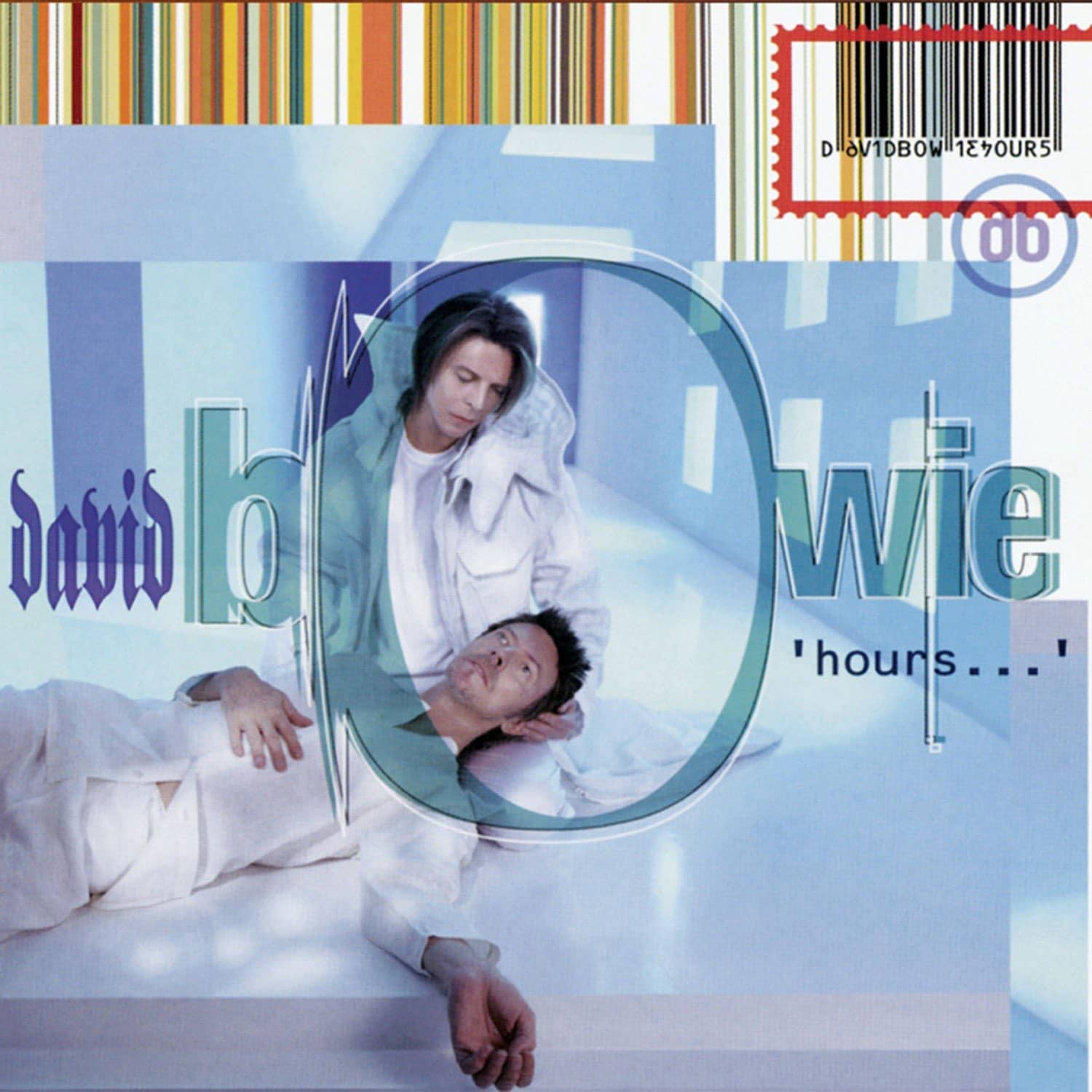
1999: 'hours...' Album Released
In a departure from conventional marketing practice, David Bowie chose to release ‘hours…’ online prior to its scheduled release date. Beginning on 6 August 1999, the album was unveiled track-by-track, with 45-second song snippets posted at a time. The artwork was similarly revealed piece-by-piece.
On 21 September a notice was posted on BowieNet: For the first time in the history of the music business, a major recording artist and a leading record company are joining with retailers to bring a complete album to music fans via download from the internet. I am hopeful that this small step will lead to greater steps by myself and others, ultimately giving consumers greater choices and easier access to the music they enjoy. - David Bowie
‘Thursday’s Child’ was released on 20 September 1999 as the first single from ‘hours…’. It was BBC Radio 2’s record of the week, and reached number 16 in the UK, becoming Bowie’s 56th top 40 hit. The various formats included the additional tracks ‘We All Go Through’, ‘No One Calls’, ‘Thursday’s Child’ (Rock Mix), ‘We Shall Go To Town’, and ‘1917’, as well as the full-length video for ‘Thursday’s Child’ in QuickTime format. ‘hours…’ followed two weeks later, on 4 October. It reached number five on the UK albums chart, before swiftly dropping down. In Japan it contained the bonus track ‘We All Go Through’. The album failed to enter the top 40 in America, peaking at number 47, although it was a top 10 hit in France, Germany, and Italy.
✍️ Word of the Day — 04 October
Asseverate
to affirm or declare positively or earnestly
To asseverate is to declare something in a way that leaves no doubt about where you stand. The word goes beyond simply stating an opinion because it carries a sense of deep conviction. When you asseverate something, you are making your position unmistakably clear.
📜 History
Events from this day
⚡ Bowie
Moments & milestones
✍️ Word of the Day
Language & Etymology
📜 On This Day in History — 03 October
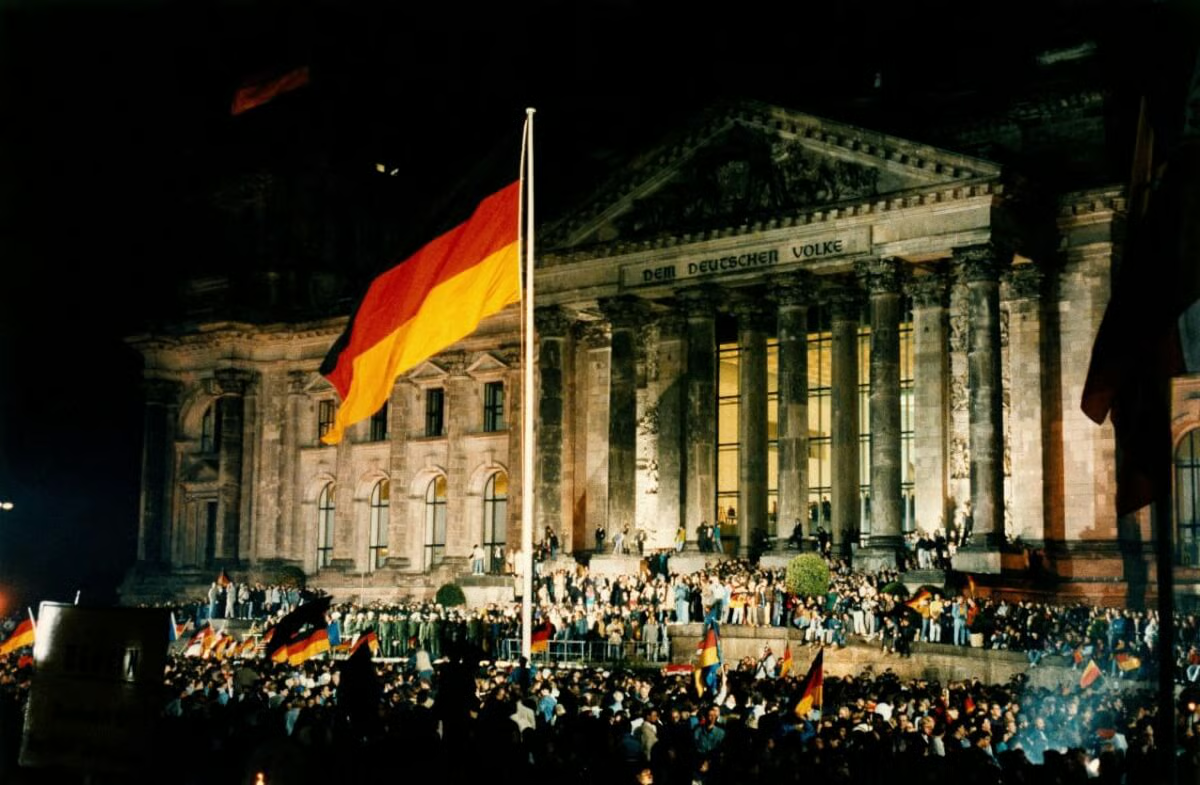
1990: Official Reunification Of Germany
After four decades of Cold War division and with pressure from the German chancellor Helmut Kohl, Soviet leader Mikhail Gorbachev agreed to a unified Germany within NATO, leading to Germany’s reunification this day in 1990.
The process put a formal end to World War II, guaranteed the western borders of Poland, inspired a drive to greater European integration, and ensured the election of Helmut Kohl as the first democratically chosen chancellor of a united Germany since 1932. The process was rushed, largely to stem the hemorrhage of young people and skilled workers from East Germany who poured westward at the rate of about 2,000 per day after the Berlin Wall was opened on November 9, 1989
The Berlin Wall was in effect breached in the summer of 1989 when a reformist Hungarian government began allowing East Germans to escape to the West through Hungary’s newly opened border with Austria. By the fall, thousands of East Germans had followed this route, while thousands of others sought asylum in the West German embassies in Prague and Warsaw, demanding that they be allowed to emigrate to West Germany. At the end of September, West German Foreign Minister Hans-Dietrich Genscher arranged for their passage to West Germany, but another wave of refugees from East Germany soon took their place. Mass demonstrations in the streets of Leipzig and other East German cities defied the authorities and demanded reforms.
⚡ On This Day in Bowie History — 03 October
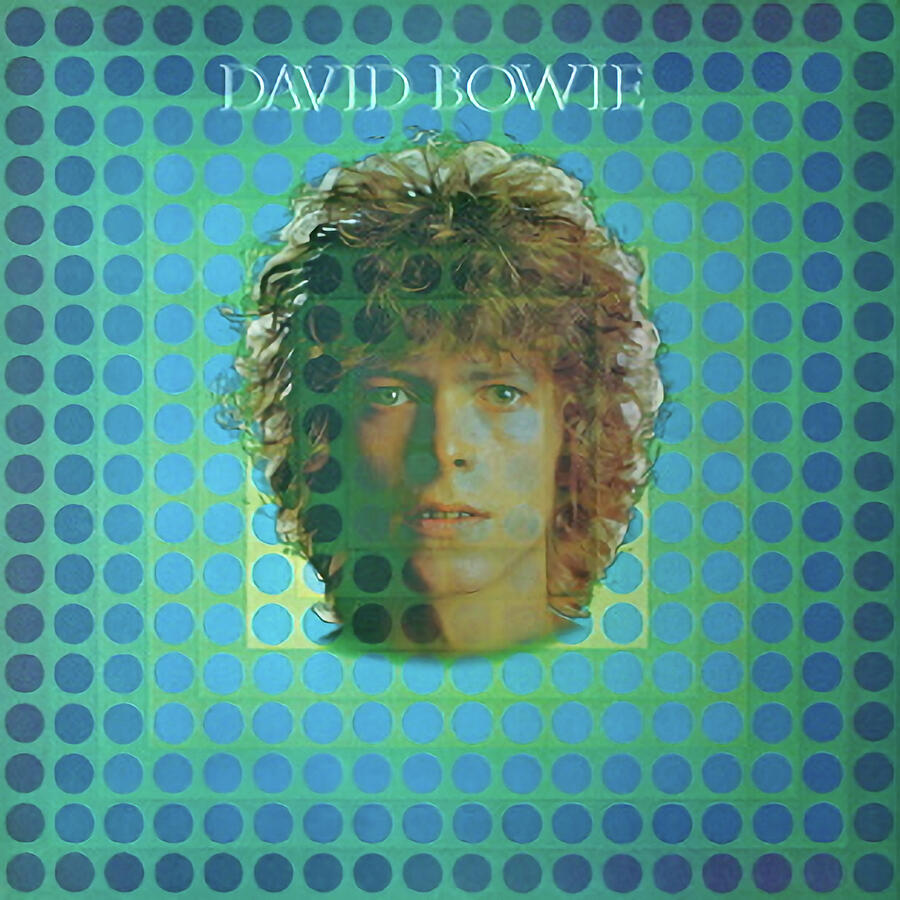
1969: Editing Session for David Bowie AKA: Space Oddity
Tony Visconti oversaw an editing and sequencing session for David Bowie’s second album on 3 October 1969.
Another session to complete the running order took place on 6 October. The album David Bowie (sometimes known as Space Oddity) was released on 14 November 1969.
✍️ Word of the Day — 03 October
Spagyric
pertaining to or resembling alchemy
Something that's spagyric resembles alchemy. Thought to be coined by the physician and alchemist Paracelsus, it involves purifying substances by separating, extracting, and recombining them. You won't find spagyric remedies at your doctor's office, but the term offers a glimpse into the alchemical roots of early medicine..
📜 History
Events from this day
⚡ Bowie
Moments & milestones
✍️ Word of the Day
Language & Etymology
📜 On This Day in History — 02 October
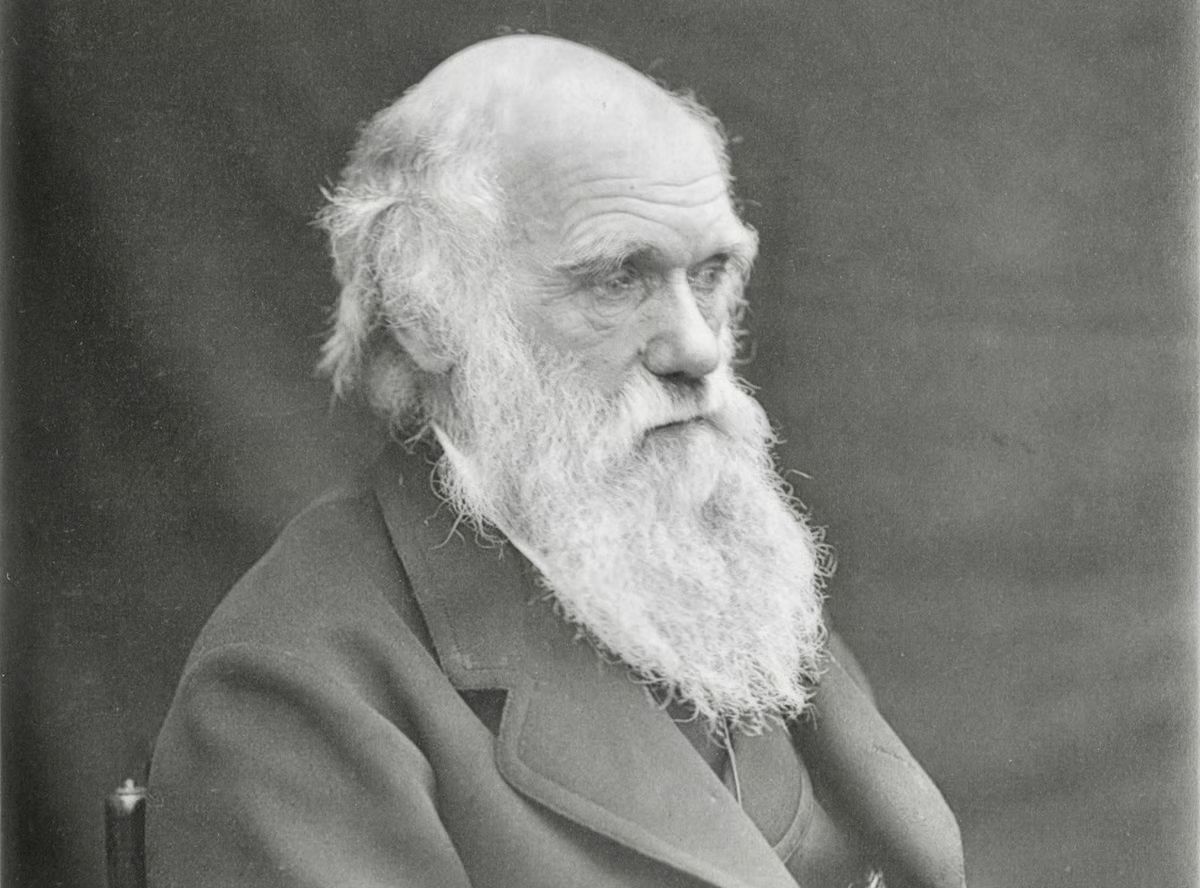
1836: Charles Darwin Returns To England After 5 Years At Sea
Charles Darwin is most famous for his theory of evolution by natural selection. He wrote "On the Origin of Species" (1859), which changed scientific understanding of how living things develop over time.
Darwin showed an early interest in nature and science. He studied medicine at Edinburgh University but found it comparatively uninteresting. In 1831, he joined a five-year voyage on HMS Beagle as the ship's naturalist. During this trip, Darwin observed many plants and animals, collecting specimens and making notes.
On This Day in 1836, Darwin returned to England aboard HMS Beagle.
After returning to England, Darwin began developing his ideas about evolution. He married his cousin Emma Wedgwood in 1839, and they had TEN children. Darwin worked on his theory for over 20 years, gathering evidence to support it.
20 years after his return, Darwin published his work. "On the Origin of Species" was released in 1859 and sold out quickly.
In 1860, a debate on Charles Darwin's theory of evolution was held at Oxford University Museum, dominated by arguments between Thomas Henry Huxley and Bishop Samuel Wilberforce
You may not know: The ashes of Physicist Professor Stephen Hawking are buried between the remains of Sir Isaac Newton and Charles Darwin at Westminster Abbey, London.
⚡ On This Day in Bowie History — 02 October
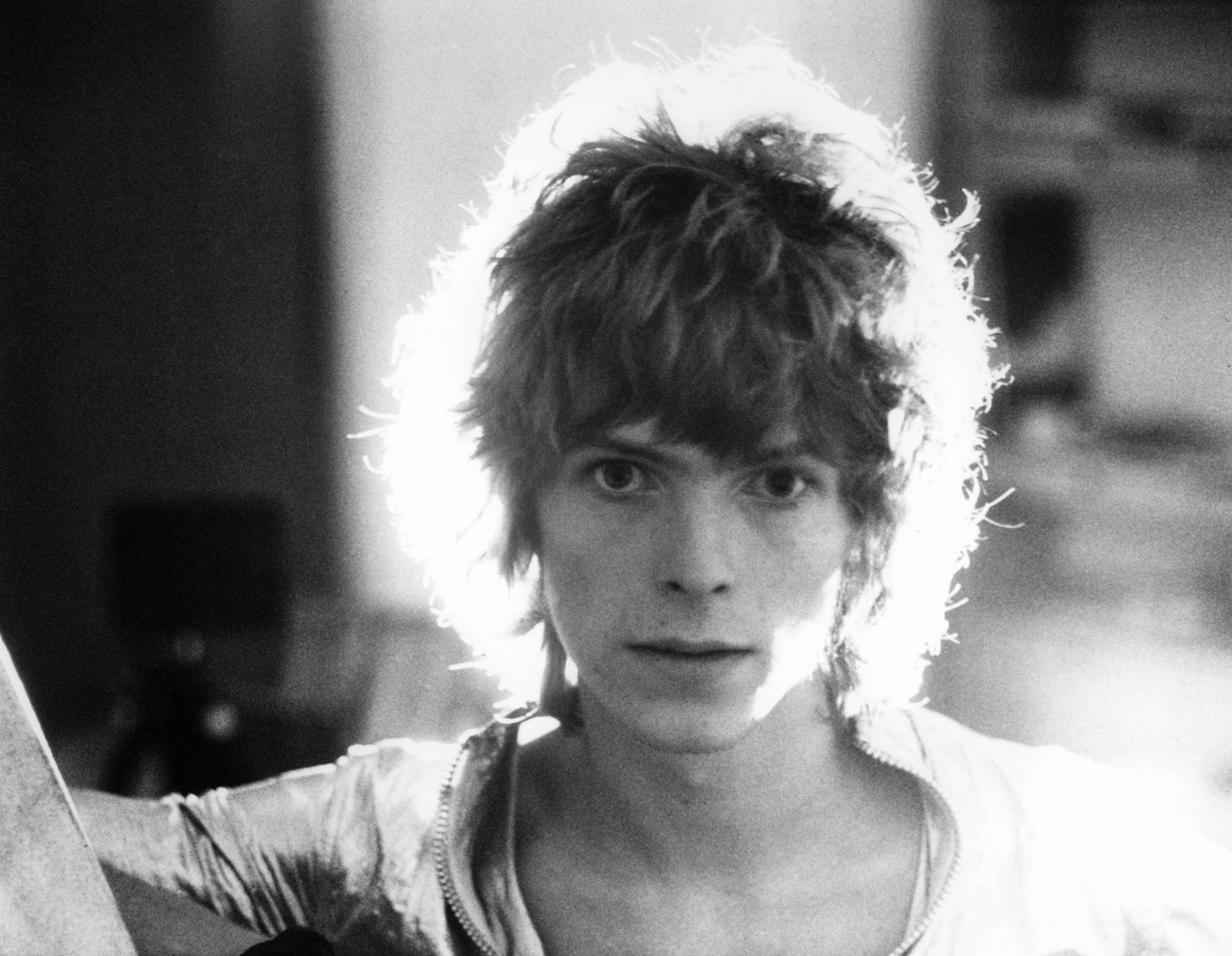
1969: Bowie performs "Space Oddity" on Top Of The Pops
The filming took place at the corporation’s Lime Grove Studios in London. Bowie was accompanied by his mother Peggy and his manager Kenneth Pitt.
"Once it was established that ‘Space Oddity’ was not a one-week wonder, Johnny Stewart booked David for Top of the Pops for October 9, the recording of which was to take place on the 2nd. Meanwhile, David, now poised on the very brink of success, was busy with the usual requirements of that position, giving interviews, being photographed, going to Philips at Stanhope Place to meet the sales staff and continuing to record his album…" - Kenneth Pitt, The Pitt Report.
Sadly, the edition of the Top Of The Pops programme was later wiped by the BBC, however, the audio was preserved.
✍️ Word of the Day — 02 October
Behindhand
Late
If you've ever fallen behind on a deadline or arrived late to an appointment, you've found yourself behindhand. The word dates back to the 16th century and is thought to have developed as a counterpart to "beforehand." While "beforehand" is comfortably early, behindhand is decidedly not.
✍️ Bonus Word of the Day — 02 October
Overmorrow
The day after tomorrow.
I first became aware of "overmorrow" whilst studying German. In German, übermorgen is the day after tomorrow, with "über" meaning over, above, or beyond. I wondered why we didn't have an English equivalent, so I looked it up. And of course, "overmorrow" was the word I was looking for!
📜 History
Events from this day
⚡ Bowie
Moments & milestones
✍️ Word of the Day
Language & Etymology
📜 On This Day in History — 01 October
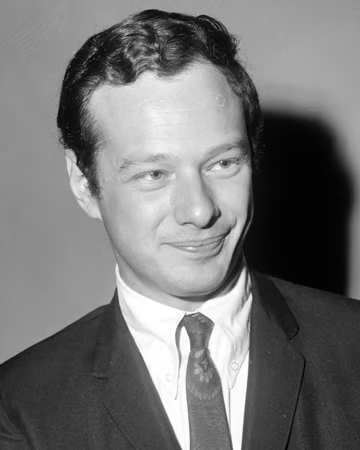
1962: Brian Epstein signs The Beatles
After being discharged from the army, in part due to his homosexuality, and then pursuing training as an actor, Brian Epstein joined his family's retail business, running their North End Music Store (known as NEMS). He expanded the inventory from pianos and radios to include records, while also writing a column in 'Mersey Beat' a local music magazine.
After a customer request for an early recording that the Beatles made backing Tony Sheridan in Germany, Epstein went to see the group perform. He immediately saw their potential and with no experience in the business, became their manager. He polished their image and secured a proper record contract. The success he had with the Beatles enabled him to expand his roster of clients to include other Liverpudlian acts: Gerry and the Pacemakers, Cilla Black, and Billy J. Kramer and The Dakotas.
On This Day in 1962, Epstein signed a revised contract to manage the Beatles all the way to 1977.
As the Beatles ceased touring, Epstein's role with the band diminished. His dependence on amphetamines and sleeping pills caught up with him and he died from an accidental combination of alcohol and sedatives, on 27 August 1967
⚡ On This Day in Bowie History — 01 October
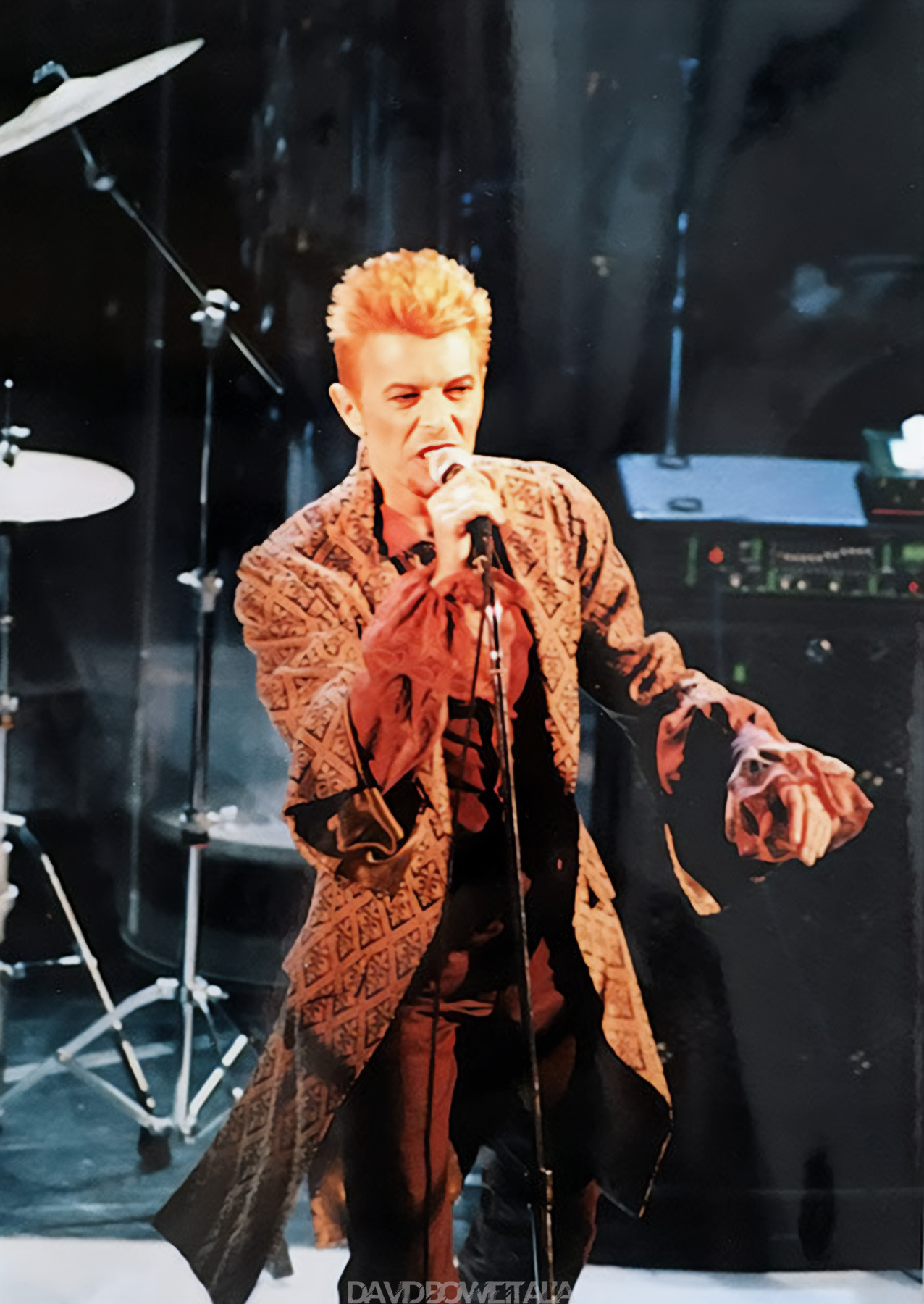
1997:Bowie undertakes the First Ever Live Internet Cybercast
At the beginning of the Cybercast, Bowie took part in a Pre-show fan-only live chat, joining online conversations in Rocktropolis' "Buzz Cafe
Then the live show was broadcast worldwide using RealAudio, RealVideo, VDO, and Microsoft NetShow. By modern standards, video was small-window & choppy, however, audio was crisp 16kbps–28kbps stream — revolutionary for dial-up era
It is estimated that tens of thousands of listeners tuned in, which was unprecidented in 1997
The extensive playlist as follows: Quicksand, Queen Bitch, Always Crashing in the Same Car (Concert debut of this version), I'm Waiting for the Man, My Death, Outside, The Jean Genie, Panic in Detroit, I'm Afraid of Americans, The Voyeur of Utter Destruction (As Beauty), Seven Years in Tibet, The Last Thing You Should Do, Strangers When We Meet, Fashion, Looking for Satellites, Under Pressure (Gail Ann Dorsey shared lead vocals, of course), Telling Lies, Hallo Spaceboy, Scary Monsters, Little Wonder, Fame, Battle for Britain (The Letter), Time, V-2 Schneider, White Light/White Heat, O Superman (Laurie Anderson cover — performed by Gail Ann Dorsey), Moonage Daydream
Not the absolute first internet music broadcast ever, but the first major artist full-concert live webcast — the one that proved the medium's potential. Bowie saw the internet early as direct-to-fan distribution: "Telling Lies" was released exclusively online in 1996, and this cybercast cemented his vision.
✍️ Word of the Day — 01 October
Ephemeral
Lasting only a short time.
Some things are here today and gone tomorrow, making them truly ephemeral. Think of a bubble that's about to pop or a delicate snowflake on the verge of melting in your hand. If it's fleeting, it's ephemeral.
📜 History
Events from this day
⚡ Bowie
Moments & milestones
✍️ Word of the Day
Language & Etymology
📜 On This Day in History — 30 September
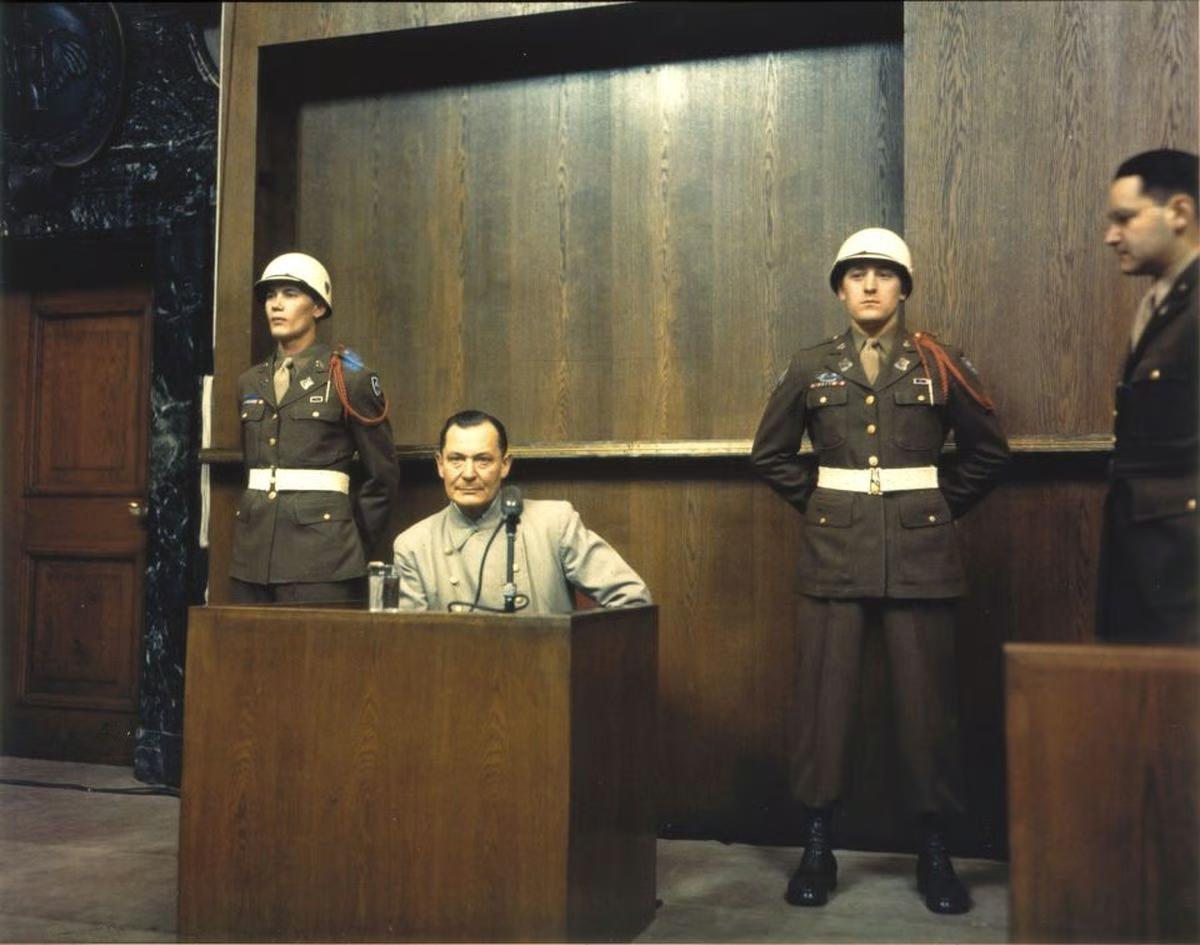
1946: Hermann Goering On Trial at Nuremberg
At the end of World War II in Europe, the victorious Allied powers created the first international court to try war criminals from Nazi Germany. Headquartered in the German city of Nuremberg, the first and most famous trials of the major war criminals were held between November 20, 1945 and October 1, 1946, with verdicts announced on September 30 and October 1.
In the end, a large number of senior Nazi leaders were sentenced to death, including Hermann Goering (who killed himself with cyanide the night before his sentence was to be carried out), Karl Dönitz, Martin Bormann (who was missing but sentenced to death in abstentia), Alfred Jodl, Joachim von Ribbentrop and various others. Some leaders, like Rudolf Hess and Albert Speer, were given prison terms in Spandau Prison. The death sentences were carried out on October 16, 1946.
Described as "the greatest trial in history" by one of the presiding judges, Nuremberg was a leap in international law, and would set a precedent for trying war crimes in an international court. The effect of Nuremberg can be seen in the modern-day International Criminal Court and with the prosecution of criminals for actions during wars in Yugoslavia and beyond.
⚡ On This Day in Bowie History — 30 September
2025: The "I Can't Give Everything Away" Box Set Released
Can't Give Everything Away (2002–2016) is a box set by David Bowie, released on 12 September 2025. It is the sixth and final installment in a collection of era box sets that cover Bowie's music career, starting with Five Years (1969–1973). The box set covers the period from 2002 to 2016, spanning the return of Tony Visconti as producer for the first time since 1980's Scary Monsters (and Super Creeps) and Bowie's death from liver cancer two days after the release of Blackstar.
The name of the box set comes from the closing track on Bowie's final studio album Blackstar (2016) and was compiled with his long term producer and collaborator Tony Visconti.
It comprises 13 CDs, which features new remasters of the studio albums Heathen (2002), Reality (2003), and The Next Day (2013) and of the EP The Next Day Extra. Blackstar (2016) and the EP No Plan (2017) are also included, but are not remastered. It also features previously unreleased material, single mixes and demos in an exclusive compilation album called Re:Call 6.
The box set's exclusive content includes 2010's A Reality Tour in remastered and resequenced form, and Montreux Jazz Festival, a previously unreleased live album recorded at the eponymous event in July 2002.[7] The release also comes with a 128 page booklet, which covers previously unreleased notes, drawings, and handwritten lyrics from Bowie himself, as well as photos, images of memorabilia, and notes on the albums written by Visconti.

✍️ Word of the Day — 30 September
Deipnosophist
a person who is an adept conversationalist while dining.
A deipnosophist is someone who excels at conversation over a meal. The word has a distinctly old-world flavor, but the idea is familiar: A good dinner companion can keep the table lively without dominating it. A true deipnosophist knows that the best dinners depend on more than what is served.
📜 History
Events from this day
⚡ Bowie
Moments & milestones
✍️ Word of the Day
Language & Etymology
📜 On This Day in History — 29 September
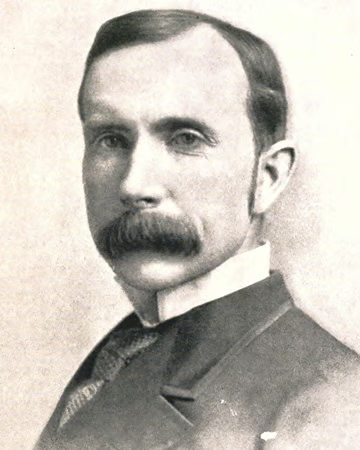
1916: American Oil Tycoon John D. Rockefeller Becomes The World's First Billionaire
John D. Rockefeller was one of the most influential figures in American business history, known primarily as a co-founder of Standard Oil Company. His innovative and ruthless business practices revolutionized the petroleum industry and established him as a leading figure in the American industrial era.
Rockefeller started his business career as a bookkeeper before venturing into business with his own commodities brokerage. He moved into the oil business in the early 1860s, co-founding Standard Oil in 1870 with his brother William, along with a group of other investors. The company grew rapidly and soon dominated the U.S. oil industry, thanks in part to Rockefeller's use of horizontal integration, which involved buying out competitors to monopolize the market.
Standard Oil's immense success and its virtual monopoly on the oil industry resulted in extensive scrutiny and led to a landmark U.S. Supreme Court decision in 1911 that dismantled the company due to its violation of federal anti-trust laws. Despite this, Rockefeller retained enormous wealth and influence, using his fortune to make significant contributions to philanthropic causes.
On 29th September, 1916, Rockefeller's wealth passed the $Billion mark.
Rockefeller was born in 1839, and died of Arteriosclerosis on May 23rd 1937 (aged an astonishing 97 years old).
⚡ On This Day in Bowie History — 29 September
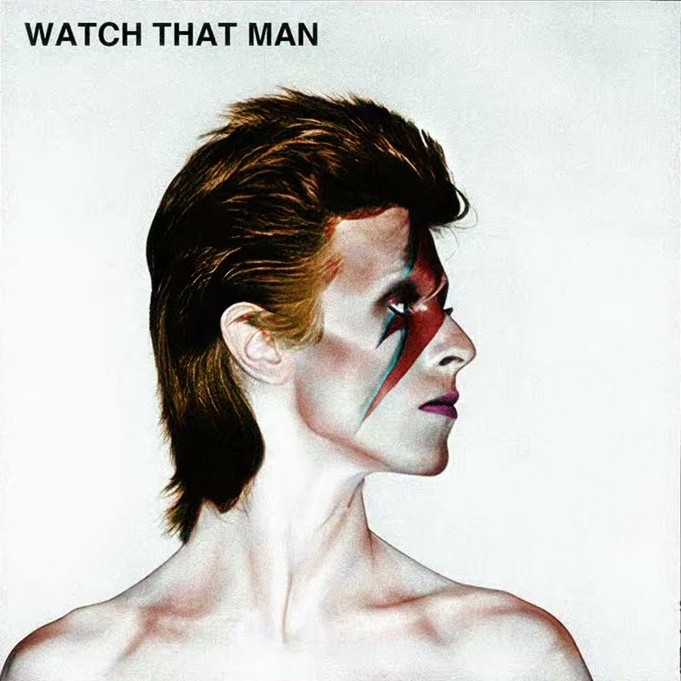
1972: David Bowie pens "Watch That Man"
The song was inspired by the after-show party after the previous day's sell-out show at New York's Carnegie Hall.
On the face of it, Bowie’s song took the listener back to the roaring Twenties: a party with high spirits and flowing alcohol, soundtracked by the jazz standard Tiger Rag, and a roll-call cast of guests including Lorraine (Cyrinda Foxe) who “shimmied and she strolled like a Chicago moll”, the Reverend Alabaster who “danced on his knees”, a “Benny Goodman fan” with painted stigmata, an “old fashioned band of married men”, and assorted others.
Bowie also paraphrased a line from John Lennon’s 1970 song ‘I Found Out’. “The freaks on the phone won’t leave me alone” was respun as “The girl on the phone wouldn’t leave me alone/A throwback from someone’s LP”.
The song became the opening track on the "Ziggy in America" album, Aladdin Sane (1973).
✍️ Word of the Day — 29 September
Embosk
To embosk is to hide or conceal something with foliage or greenery. The word brings to mind a bench tucked behind tall hedges or a cottage wall disappearing behind climbing vines. When plants do the hiding, embosk gives the scene a poetic touch.
📜 History
Events from this day
⚡ Bowie
Moments & milestones
✍️ Word of the Day
Language & Etymology
📜 On This Day in History — 28 September
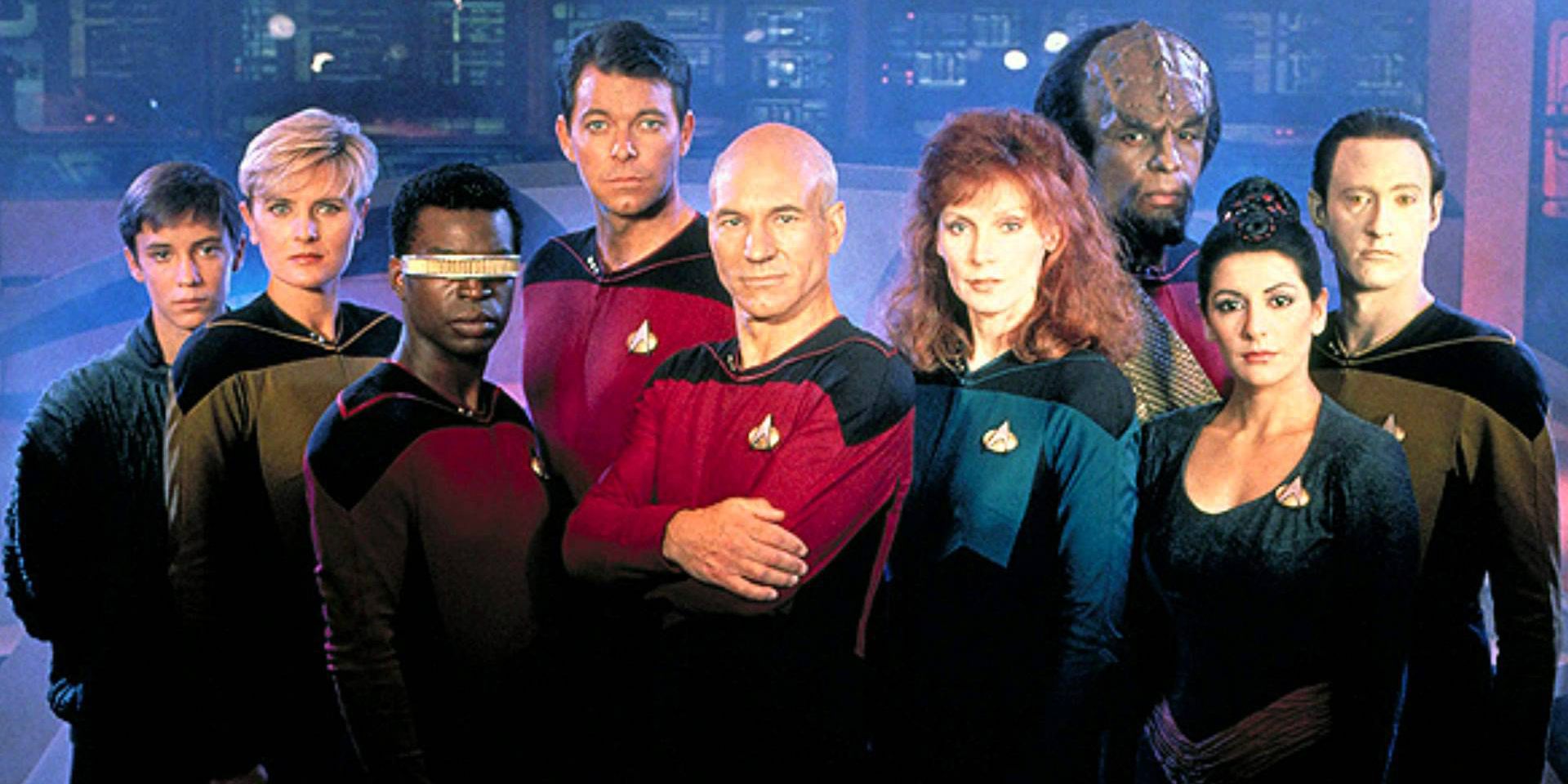
1987: Star Trek The Next Generation Debuts on Syndicated TV
Star Trek: The Next Generation (TNG) is an American science fiction television series created by Gene Roddenberry. It originally aired from September 28, 1987, to May 23, 1994, in syndication, spanning 178 episodes over seven seasons.
In the 1980s, Roddenberry—who was responsible for the original Star Trek, Star Trek: The Animated Series (1973–1974), and the first of a series of films—was tasked by Paramount Pictures with creating a new series in the franchise. He decided to set it one century after the events of his original series.
The Next Generation featured a new crew: Patrick Stewart as Captain Jean-Luc Picard, Jonathan Frakes as William Riker, Brent Spiner as Data, Michael Dorn as Worf, LeVar Burton as Geordi La Forge, Marina Sirtis as Deanna Troi, Gates McFadden as Dr. Beverly Crusher, Denise Crosby as Tasha Yar, Wil Wheaton as Wesley Crusher, and a new Enterprise.
The series begins with Encounter At Farpoint, in which the crew of the Enterprise-D are put on trial by an omnipotent being known as Q, who became a recurring character. The god-like entity threatens the extinction of humanity for being a race of savages, forcing them to solve a mystery at nearby Farpoint Station to prove their worthiness to be spared. After successfully solving the mystery and avoiding disaster, the crew departs on its mission to explore strange new worlds.
Subsequent stories focus on the discovery of new life and sociological and political relationships with alien cultures, as well as exploring the human condition. Several new species are introduced as recurring antagonists, including the Ferengi, the Cardassians, and the Borg. Throughout their adventures, Picard and his crew are often forced to face and live with the consequences of difficult choices.
⚡ On This Day in Bowie History — 28 September
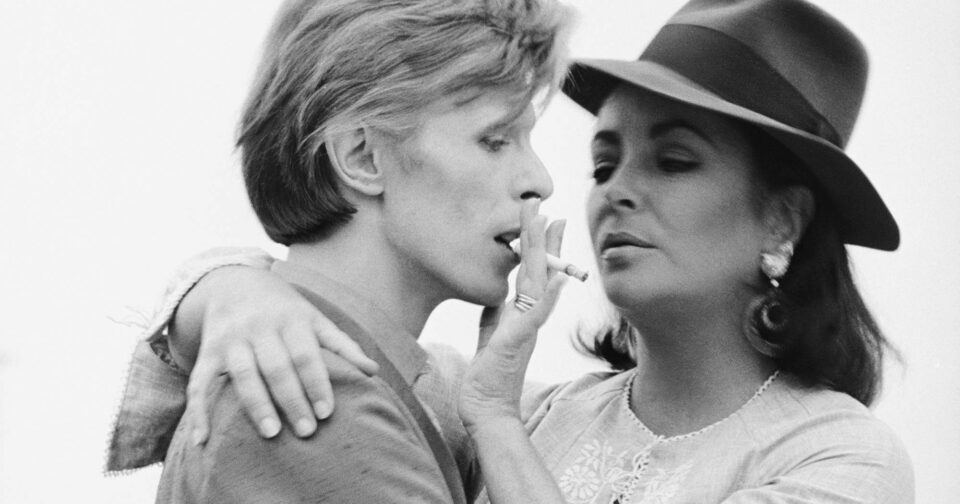
1974: Bowie and Elizabeth Taylor Photoshoot with Terry O'Neill
The shoot, for People magazine, took place at film director George Cukor’s Bel Air home, at 9166 Cordell Drive just above the Sunset Strip.
"David was two and a half hours late for his first meeting with Liz. He arrived dishevelled and out of it. Liz was pretty annoyed and on the verge of leaving, but we managed to persuade her to stay. She was thinking of asking him to appear in The Blue Bird, but she went off the idea after that." — Terry O’Neill, 2003
The photographs were to have been used for the announcement that Cukor was to direct Bowie and Taylor in The Blue Bird, to be shot the following year in Russia. Bowie later expressed relief that the role fell through.
"That was a rotten film she wanted me to do, and a rotten part. She’s finding out about it now. She’s in Russia stuck out there. The thing she’s in is a very dry, high French fairytale with nothing to say. It is being directed by a wonderful director. But the whole film stinks and I turned it down." — David Bowie, 26 July 1975
✍️ Word of the Day — 28 September
Hoopla
Hoopla is the lively buzz that builds around an exciting event. It can accompany any occasion that gets everyone talking, such as a big celebration or a grand opening. Sometimes the hoopla is as memorable as the event itself!
📜 History
Events from this day
⚡ Bowie
Moments & milestones
✍️ Word of the Day
Language & Etymology
📜 On This Day in History — 27 September
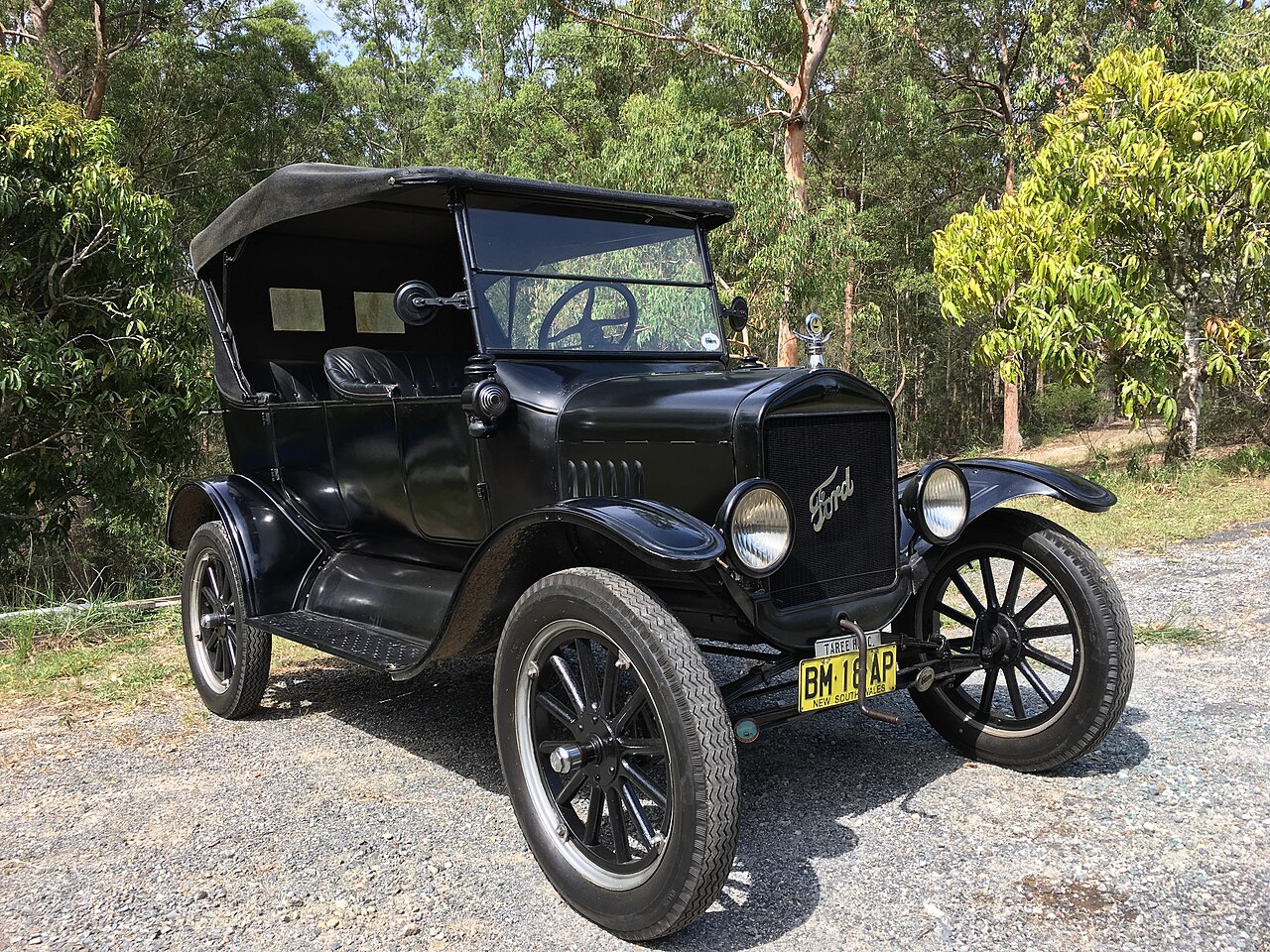
1908: The First FORD MODEL T Rolls Off The Production Line
The Ford Model T is an automobile that was produced by the Ford Motor Company from October 1, 1908, to May 26, 1927. It is generally regarded as the first mass-affordable automobile, which made car travel available to middle-class Americans.
The Ford Model T was named the most influential car of the 20th century in the 1999 Car of the Century competition, ahead of the BMC Mini, Citroën DS, and Volkswagen Beetle. With over 15 million sold, it was the most sold car in history before being surpassed by the Volkswagen Beetle in 1972.
Being the first reliable, easily maintained, mass-market motorized transportation turned the Model T into a great success: Within 2 days after release, 15,000 orders were placed. The first production Model T was built on August 12, 1908, and left the factory on September 27, 1908, at the Ford Piquette Avenue Plant in Detroit, Michigan.
The Model T was Ford's first automobile mass-produced on moving assembly lines with completely interchangeable parts, marketed to the middle class.
Henry Ford said of the vehicle:
"I will build a motor car for the great multitude. It will be large enough for the family, but small enough for the individual to run and care for. It will be constructed of the best materials, by the best men to be hired, after the simplest designs that modern engineering can devise. But it will be so low in price that no man making a good salary will be unable to own one – and enjoy with his family the blessing of hours of pleasure in God's great open spaces."
⚡ On This Day in Bowie History — 27 September
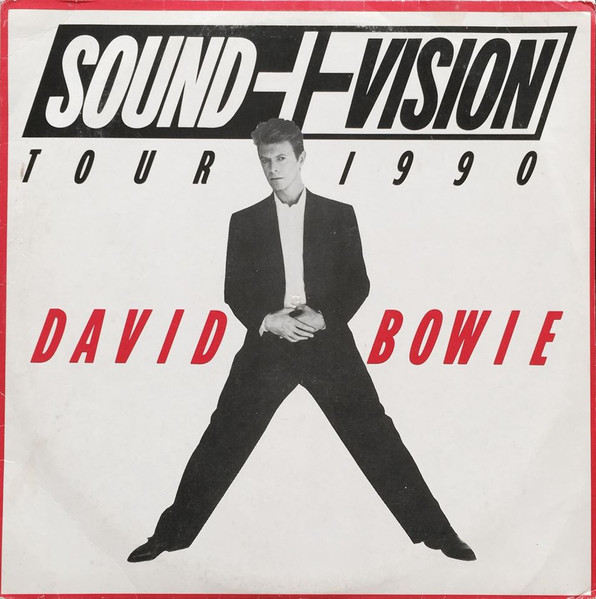
1990: Bowie Appears At The Rock In Chile Festival
David Bowie performed at the Rock in Chile Festival in Santiago, Chile, on 27 September 1990, as part of the Sound+Vision Tour.
The festival took place at the Estadio Nacional. Bowie returned to the venue on 5 November 1997 during the Earthling Tour.
Bowie’s guitarist was Adrian Belew, who was also the musical director. Erdal Kızılçay played bass guitar, Rick Fox was on keyboards, and Michael Hodges was on drums.
The setlist: Space Oddity, Life On Mars?, Rebel Rebel, Ashes To Ashes, Stay, Pretty Pink Rose, Blue Jean, Let’s Dance, Sound And Vision, Ziggy Stardust, China Girl, Panic In Detroit, Young Americans, Suffragette City, Fame, "Heroes", Changes, White Light/White Heat, The Jean Genie, Fashion, Modern Love.
✍️ Word of the Day — 27 September
Silvicolous
Silvicolous describes something that lives or grows in woodlands. The word is especially useful when discussing habitats, since it distinguishes woodland species from those found in open fields or other environments. A patch of moss on a shaded forest floor and a hungry bear poking its nose in a tree are both silvicolous.
E.G. Many silvicolous birds build their nests high up in the canopy.
📜 History
Events from this day
⚡ Bowie
Moments & milestones
✍️ Word of the Day
Language & Etymology
📜 On This Day in History — 26 September
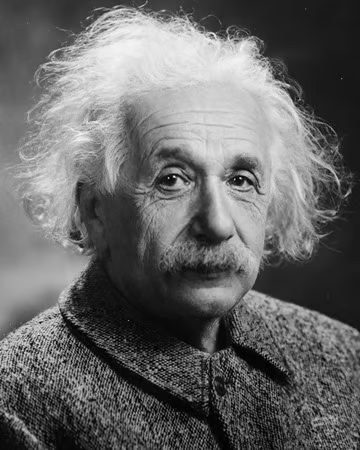
1905: Albert Einstein's annus mirabilis papers are published in Annalen der Physik
As major contributions to the foundation of modern physics, these scientific publications were the ones for which he gained fame among physicists. They revolutionized science's understanding of the fundamental concepts of space, time, mass, and energy.
The first paper explained the photoelectric effect, which established the energy of the light quanta E = hf, and was the only specific discovery mentioned in the citation awarding Einstein the 1921 Nobel Prize in Physics.
The second paper explained Brownian motion, which established the Einstein relation D = μkBT and compelled physicists to accept the existence of atoms.
The third paper introduced Einstein's special theory of relativity, which proclaims the constancy of the speed of light c and derives the Lorentz transformations. Einstein also examined relativistic aberration and the transverse Doppler effect.
The fourth, a consequence of special relativity, developed the principle of mass–energy equivalence, expressed in the equation E = mc² and which led to the discovery and use of nuclear power decades later.
These four papers, together with quantum mechanics and Einstein's later general theory of relativity, are the foundation of modern physics.
In 1939, Einstein wrote a letter to President F.D. Roosevelt, warning of the potential dangers of nuclear chain reactions, and how they could lead to the commissioning of nuclear weapons.
⚡ On This Day in Bowie History — 26 September
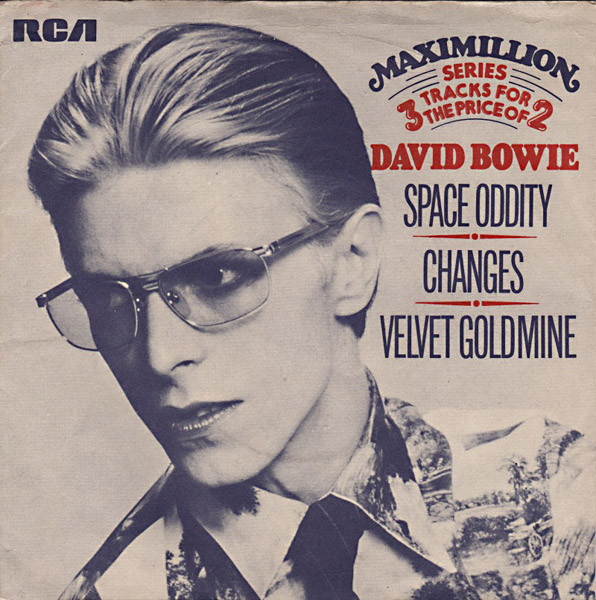
1975: 3‑track "Space Oddity" Maxi EP released
The EP, released on the Maximillion Series from RCA, featured Space Oddity on side A, and Changes and Velvet Goldmine on the flip side.
The EP was released, riding the wave of popularity from David Bowie in the US following his first US No. 1 with "Fame".
"Space Oddity" was the version from 11th July 1969, and later that year included on the album, "David Bowie", AKA "Space Oddity". It was rush-released to coincide with the Moon Landings in 1969, and was played over the official coverage, despite the lyrics depicting alienation, and an astronaut who fails to come home!
Reissues in 1972 gave him his first hit in the US, and his first UK No.1.
✍️ Word of the Day — 26 September
Peregrination
To peregrinate is to travel or journey, especially on foot. It's a grand-sounding word for something as simple as setting out and seeing where you end up. When you peregrinate, what you discover along the way can matter more than where you finish.
The peregrine falcon (Falco peregrinus), also referred to simply as the peregrine, is a bird of prey (raptor) in the family Falconidae known for its speed. Both the English and scientific names of the species mean "wandering falcon", referring to the migratory habits of many northern populations.
In The Lord of The Rings, there is a character called Pippin "Peregrin" Took. Peregrin comes straight from Latin peregrinus, meaning "traveller, wanderer, foreigner, pilgrim". J.R.R. Tolkien explicitly chose it as the English translation of Pippin's Westron name Razanur, which means "stranger / legendary traveller".
📜 History
Events from this day
⚡ Bowie
Moments & milestones
✍️ Word of the Day
Language & Etymology
📜 On This Day in History — 25 September
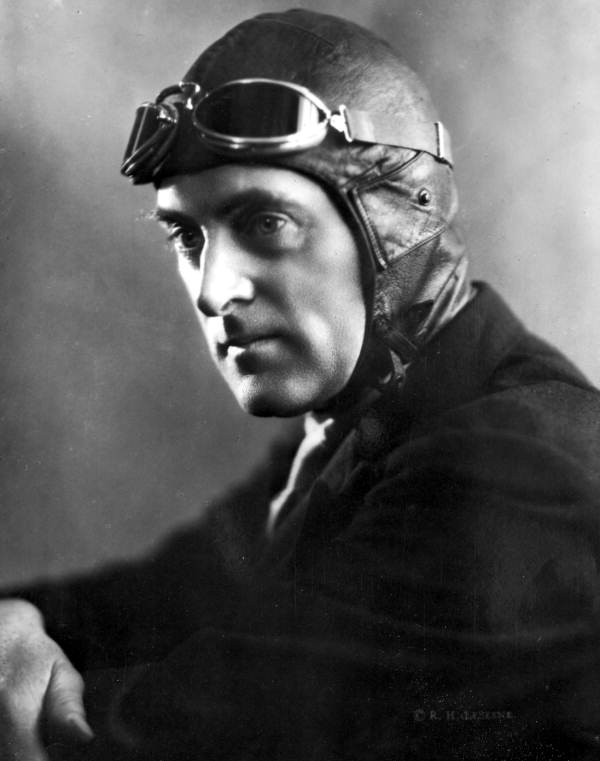
1924: Malcolm Campbell breaks the Land Speed Record for the first time.
Major Sir Malcolm Campbell (11 March 1885 – 31 December 1948) was a British racing motorist and motoring journalist. He gained the world speed record on land and on water at various times, using vehicles called Blue Bird, including a 1921 Grand Prix Sunbeam. His son, Donald Campbell, carried on the family tradition by holding both land speed and water speed records.
Between 1906 and 1908, Campbell won all three London to Land's End Trials motorcycle races. In 1910, he began racing cars at Brooklands. He christened his car Blue Bird, painting it blue, after seeing the play The Blue Bird by Maurice Maeterlinck at the Haymarket Theatre.
Campbell broke the land speed record for the first time in 1924 at 146.16 mph (235.22 km/h) at Pendine Sands near Carmarthen Bay in a 350HP V12 Sunbeam, now on display at the National Motor Museum, Beaulieu.
He broke nine land speed records between 1924 and 1935, with three at Pendine Sands and five at Daytona Beach. His first two records were accomplished whilst driving a racing car built by Sunbeam.
Campbell set his final land speed record at the Bonneville Salt Flats in Utah on 3 September 1935, and was the first person to drive an automobile over 300 mph, averaging 301.337 mph (484.955 km/h) in two passes.

⚡ On This Day in Bowie History — 25 September
1978: David Bowie Releases "Stage"
David Bowie’s live album Stage was released on 25 September 1978. Initial UK copies were on translucent yellow vinyl, with some European countries issuing it on blue vinyl.
The album was a commercial success, reaching number five in the UK and being certified gold by the British Phonographic Industry. It fared less well in the US, where it peaked at number 44. A single, ‘Breaking Glass’, was released from Stage in 1978 as part of a three-track EP. It was not a success, reaching number 54 in the UK.
Bowie had been unhappy with RCA for some years, a dissatisfaction heightened by the label’s unenthusiastic reaction to Low. In 1978 Bowie, keen to fulfil his contract and move on, clashed with RCA over whether the double-disc Stage constituted one or two albums. RCA prevailed, citing David Live as a precedent, but the incident only increased Bowie’s resolve to leave the label.
The track listing is as follows: A1: Hang On To Yourself, Ziggy Stardust, Five Years, Soul Love, Star; A2: Station To Station, Fame, TVC15; B1: Warszawa, Speed Of Life, Art Decade, Sense Of Doubt, Breaking Glass; B2: "Heroes", What In The World, Blackout, Beauty And The Beast.
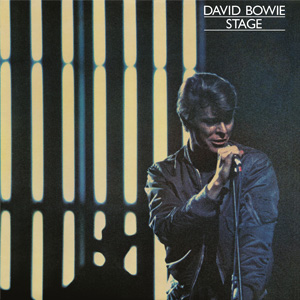
✍️ Word of the Day — 25 September
Avarice
Avarice is an insatiable greed for wealth. The word has a bite that is stronger and more judgmental than simply wanting money. A small fortune may be enough for most people, but someone with avarice always wants more.
📜 History
Events from this day
⚡ Bowie
Moments & milestones
✍️ Word of the Day
Language & Etymology
📜 On This Day in History — 24 September
1952: The first Kentucky Fried Chicken Fast Food Restaurant opens
American fast food restaurant chain Kentucky Fried Chicken (KFC) opened its first franchise in Salt Lake City, Utah, after Colonel Harland Sanders franchises his recipe to friend Pete Harman.
KFC was founded by Colonel Harland Sanders, an entrepreneur who began selling Southern fried chicken from his roadside restaurant in Corbin, Kentucky, during the Great Depression.
After leaving the family home at age 13, Sanders pursued several professions including railroad worker and insurance salesman, with mixed success. In 1930, he took over a Shell filling station on U.S. Route 25 at the point it split into east and west spurs outside North Corbin, a small city on the edge of the Appalachian Mountains.
In 1934, Sanders took over the lease of the Pure Oil filling station on the other side of the road, due to its greater visibility for motorists. He then began to sell fried chicken. Sanders was, however, dissatisfied with the 35 minutes it took to prepare his chicken in an iron frying pan, but he did not want to deep fry.
In July 1940, Sanders finalized what came to be known as his Original Recipe of 11 herbs and spices. Although he never publicly revealed the recipe, he admitted to the use of salt and pepper, and claimed that the ingredients "stand on everybody's shelf".
In 1952, he had already successfully franchised his chicken recipe to Pete Harman of South Salt Lake, Utah, the operator of one of the most prominent restaurants in the city. Rodney L. Anderson, a sign painter from Roy, Utah who was hired by Harman, coined the name "Kentucky Fried Chicken". Sanders adopted the name because it distinguished his product from the deep-fried "Southern fried chicken" product found in restaurants. Harman claimed that in his first year of selling "Kentucky Fried Chicken", his restaurant sales more than tripled, with 75 percent of the increase coming from the sale of fried chicken. In Utah, a product from Kentucky was exotic and evoked imagery of Southern hospitality.
As of early 2026, there are at least 31,980 KFC outlets in 150 countries and territories in the world. 10,000 of those stores are in China alone.
⚡ On This Day in Bowie History — 24 September
1984: David Bowie Releases "Tonight"
David Bowie’s 16th studio album, Tonight, was released on 24 September 1984. Tonight was released three weeks after the ‘Blue Jean’ single. The album was given a cautious critical reception, with some writers responding positively, and others complaining that the album lacked the innovation of Bowie’s earlier releases.
Bowie gave just one major interview in support of Tonight, to Charles Shaar Murray of the New Musical Express. Bowie appeared uncertain about his recent recordings, suggesting he was in a transitional phase and looking for a new direction.
"I think this’ll be the last album where I’m involved in this kind of thing. There’s a particular sound I’m after that I haven’t really got yet and I probably won’t drop this search until I get it. I’ll either crack it on the next album or just retire from it. I think I got quite close to it on ‘Dancing With The Big Boys’, which got somewhere near where I wanted it to be. I think I should be a bit more adventurous. That was quite an adventurous bit of writing in the sense that we didn’t look for any standards. I got very musical over the last couple of years; I stayed away from experimentation. It’s not helpful sometimes, although it’s a good discipline." — David Bowie 1984
The track listing comprised nine tracks as follows: Loving The Alien, Don't Look Down, God Only Knows, Tonight (With Tina Turner), Neighborhood Threat, Blue Jean, Tumble and Twirl, I Keep Forgettin'.
Bowie fans nowadays often cite "Tonight" as the nadir of Bowie's recording career, but they miss the quality of work that was around at that time: Absolute Beginners, This Is Not America, Underground, Within You, and the beautiful track As The World Falls Down.
In my opinion, Loving The Alien, Blue Jean, Tonight, and Tumble And Twirl are decent tracks, and should not be considered the lowest that Bowie ever got. (I am aware that Bowie himself dismissed the album as the bottom of his list.)
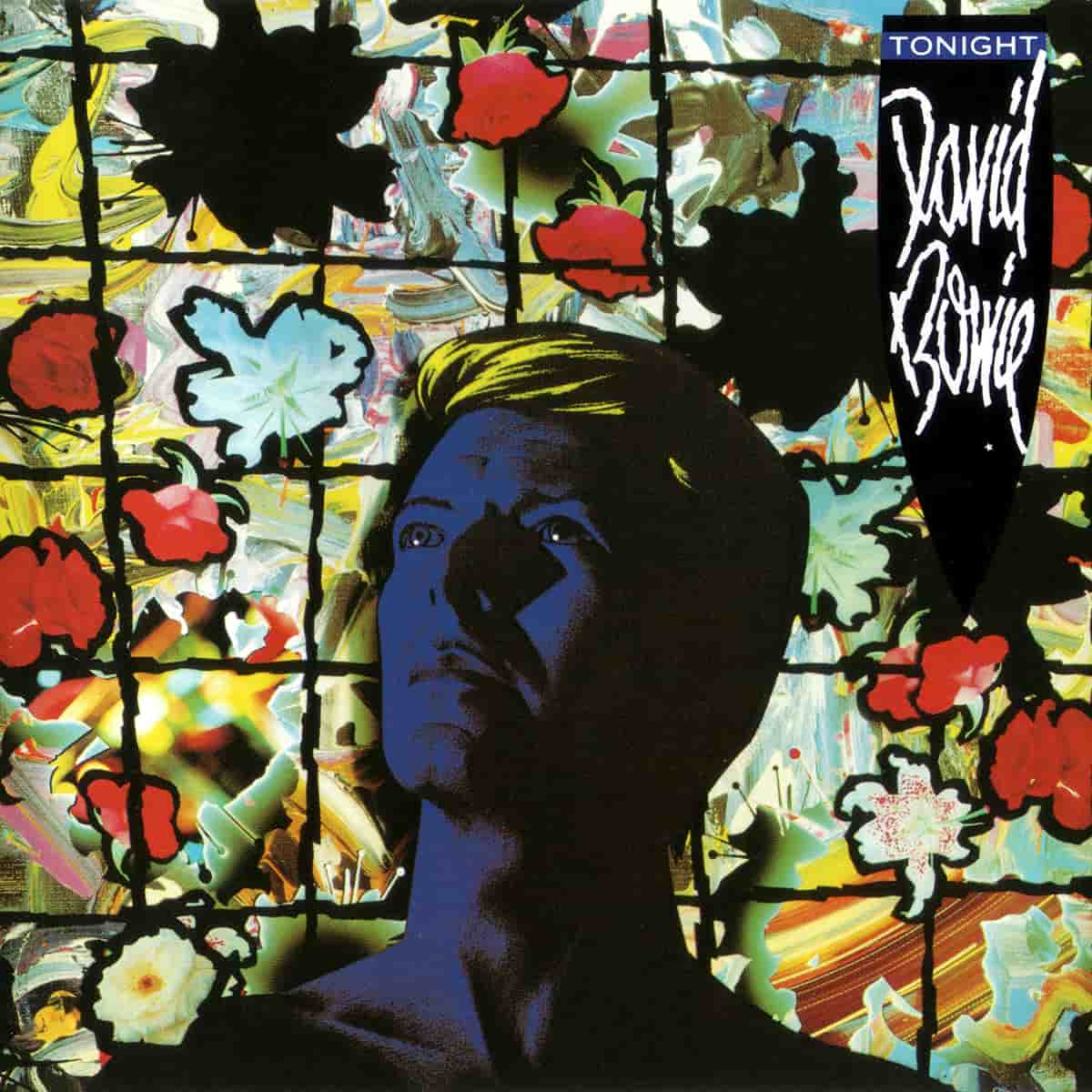
✍️ Word of the Day — 24 September
Interrobang (‽) — punctuation mark combining question mark and exclamation point.
📜 History
Events from this day
⚡ Bowie
Moments & milestones
✍️ Word of the Day
Language & Etymology
📜 On This Day in History — 23 September
1957: The US National Guard escort black students to Little Rock Central High School, Arkansas
In 1954, the US Supreme Court ruled in the famous Brown v Board of Education case that segregation of schools in the American South was unconstitutional. Despite this ruling, integrating the schools was not a simple act.
The conflict over segregation in schools reached its height at Little Rock Central High School in Arkansas. Nine black students attempted to enroll in 1957, prompting a fierce backlash from the pro-segregation state government of Governor Orval Faubus.
On September 4, 1957, the Arkansas National Guard were mobilized by Faubus to prevent the integration of the students. The intervention of President Dwight D. Eisenhower proved decisive: he ordered the National Guard federalized, taking them out of the Governor's control, and ordered the US Army to support the integration of the school. The students were successfully integrated on September 23, 1957.
The nine students did not find it easy at Little Rock — they were regularly abused by white students. Nevertheless integration eventually occurred in schools as a result of the Brown v Board decision.
⚡ On This Day in Bowie History — 23 September
1977: Single "Heroes" released
David Bowie’s "Heroes" was issued as a single on 23 September 1977, ahead of the album’s 14 October release.
The single was an edited version which reduced the running time from 6:07 to 3:32, and omitted the first two and final verses. This shorter version has become a mainstay of Bowie compilations.
Despite being hailed as one of Bowie's best ever songs, "Heroes" was not a major hit upon its release, peaking at number 24 in the UK. In the US it was a commercial failure, going no further than number 126 on the Record World singles chart.
The German and French versions were released in their respective countries as ‘Helden’ and ‘Héros’.
These versions, and some others, were included in the 2017 box set "A New Career In A New Town".
Did you know: The b-side to "Heroes" was the track V2 Schneider. Likely inspired by Kraftwerk's Florian Schneider. It is one of my favourite tracks, hence my online alias "V200.Schneider" (no one would let me have V2Schneider!).
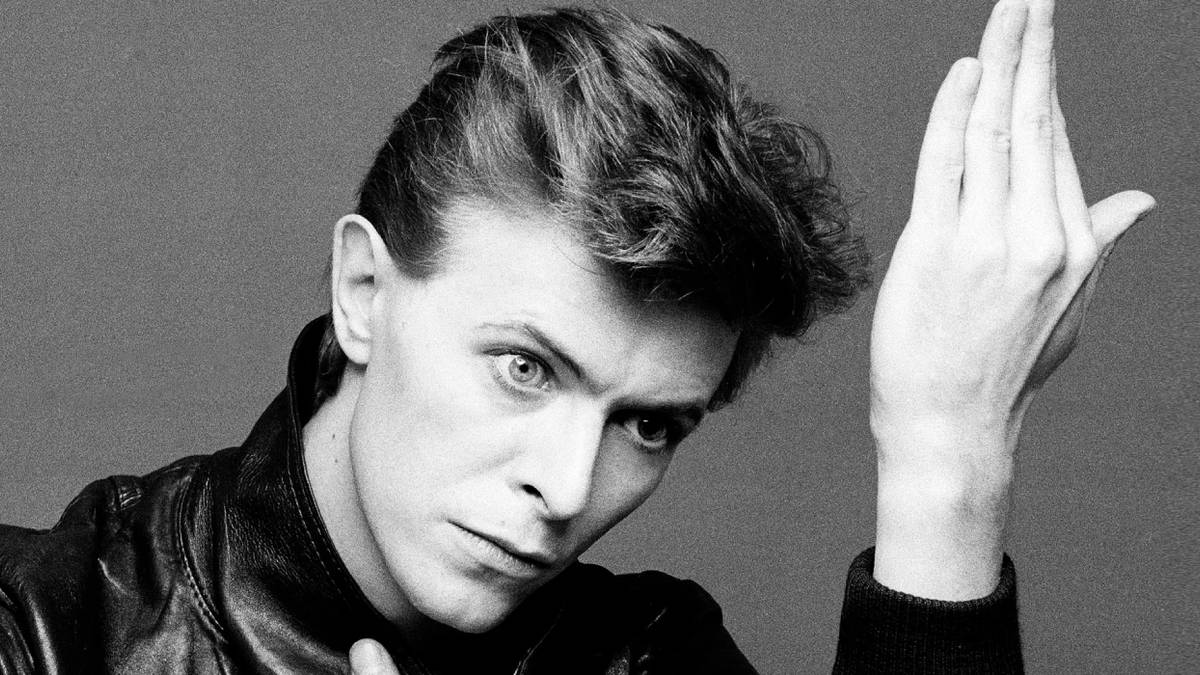
✍️ Word of the Day — 23 September
Frippery
Frippery is flashy finery that's sure to draw attention — for better or worse. The word can refer to clothing loaded with ruffles, jewels, or other details that may be more showy than tasteful. But don't let labels stand in your way, because frippery can be fun! (Not related to Frippertronics — a guitar technique attributed to Robert Fripp!)
📜 History
Events from this day
⚡ Bowie
Moments & milestones
✍️ Word of the Day
Language & Etymology
📜 On This Day in History — 22 September
1955: First ITV broadcast — first UK TV commercial airs
Up until this day in 1955, British TV was monopolised by the BBC, with no competition. But this changed on this day, when the ITV channel was launched.
A celebration of the launch was held at the Guildhall in London, and the event was televised. During the televised event, the advert aired at 8:12pm.
Under the umbrella of the Independent Television Authority, four major companies set about challenging the supremacy of the BBC: Granada, ABC, ATV, and Associated-Rediffusion joined forces to become ITV.
The first TV ad was for Gibbs SR toothpaste — a product described as "tingling fresh". To reinforce the message, the ad showed a tube of the toothpaste enclosed in a block of ice in a shimmering stream. TV presenter Alex Macintosh announced: "The tingling fresh toothpaste that does your gums good too. It's tingling fresh. It's fresh as ice. It's Gibbs SR toothpaste."
It was not only the first TV ad, it was also the first ad to use trickery. Brian Palmer, then a 26-year-old advertising executive who wrote and produced it, admitted years later that although a block of ice was used in the long shots, the "ice" was in fact plastic for closer work.
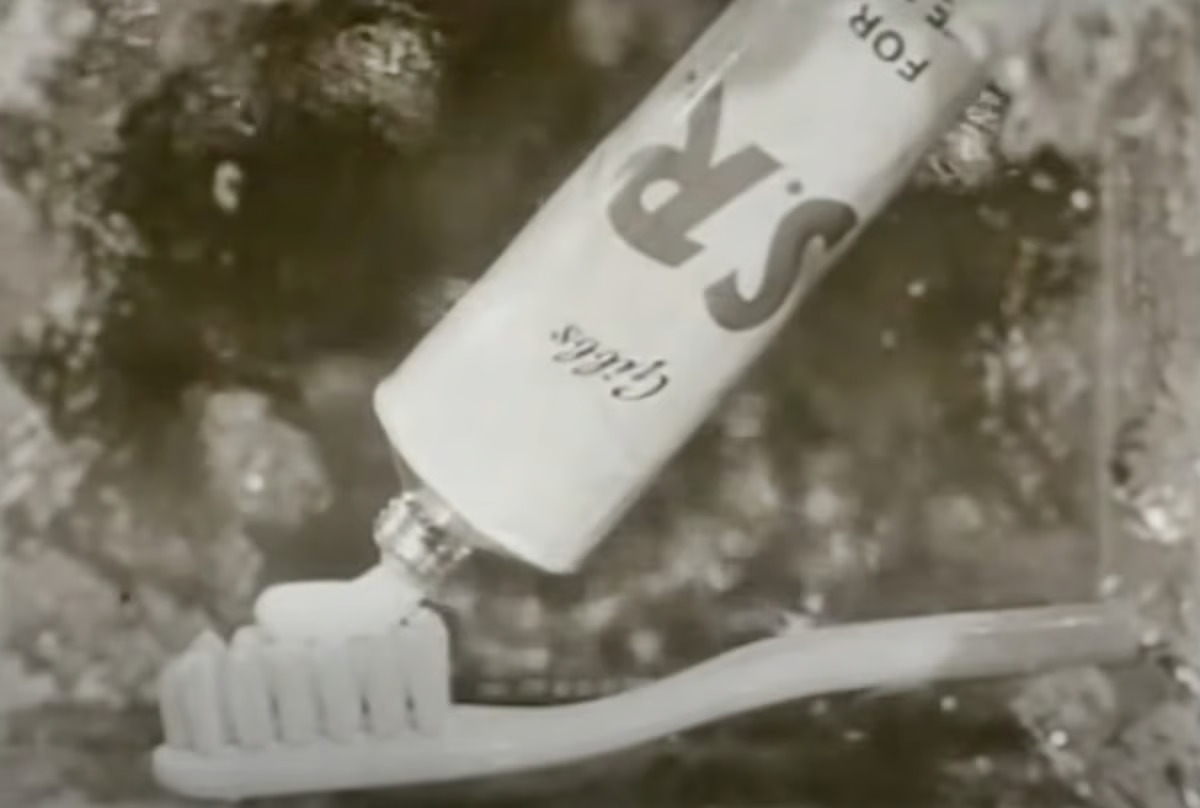
⚡ On This Day in Bowie History — 22 September
1972: Ziggy Stardust Tour — first US show, Cleveland
This was Bowie's very first show on American soil, and it took place at The Music Hall at The Public Auditorium, Cleveland, Ohio on this day in 1972. The Spiders — Mick Ronson, Trevor Bolder, and Mick "Woody" Woodmansey — were joined by new pianist Mike Garson in his first show with The Spiders.
They played a relatively short set of 9 numbers: Hang Onto Yourself, Lady Stardust, Changes, Life on Mars?, Space Oddity, Ziggy Stardust, The Jean Genie, Suffragette City, Rock 'N' Roll Suicide.
Chrissie Hynde (later of The Pretenders) was in the audience that night, and later gave Bowie and Tony DeFries a lift to dinner in her mum's car.
Brian Kinchy, the fan club founder, said of the show, "People were just going crazy. They were singing, they were clapping, they knew the words… I was in awe."
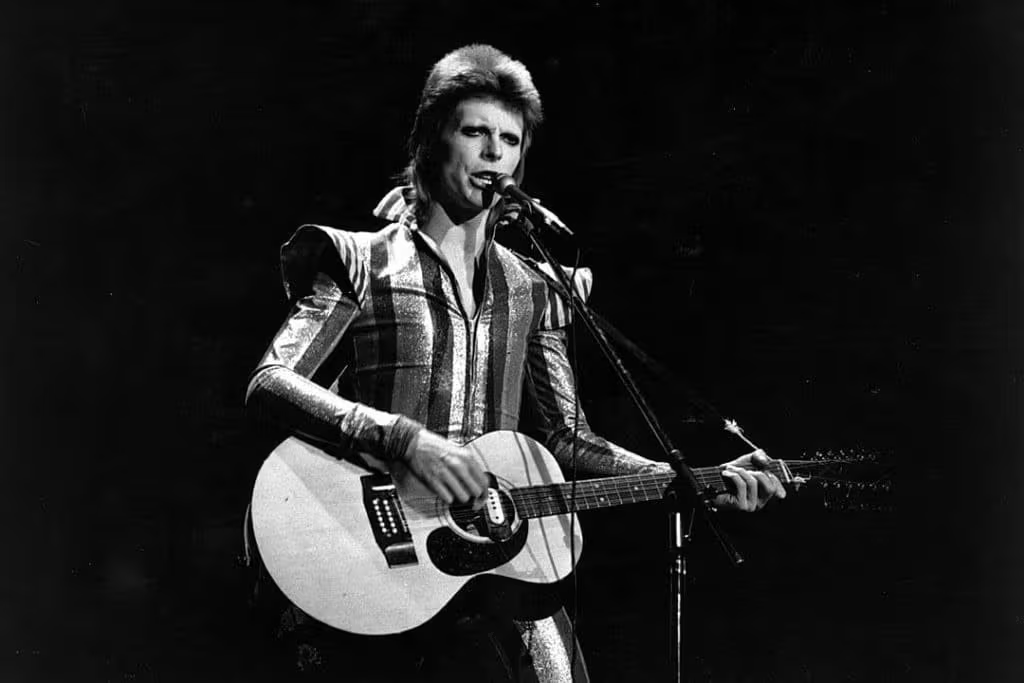
✍️ Word of the Day — 22 September
Fainaigue
To fainaigue is to dodge work or shirk a responsibility. It suggests more than ordinary procrastination, since a person who fainaigues may rely on excuses or clever maneuvering to escape the task altogether. Of course, devising the perfect excuse can become almost as much of a chore as simply getting the job done.
📜 History
Events from this day
⚡ Bowie
Moments & milestones
✍️ Word of the Day
Language & Etymology
📜 On This Day in History — 21 September
1765: Bête du Gévaudan — royal hunt claims success
It all started in June 1764. A 14-year-old shepherd girl was found dead with injuries consistent with a wolf attack — albeit an extremely violent one. This was tragic but not unusual. More attacks followed, raising concerns that there was something different about this predator.
The reporting took the creature from a local monster to a national myth. Even King Louis XV began to pay attention to what was eating his citizens.
Rewards — nearly a year’s salary — were offered. After several high-profile hunters failed, the distressed king sent his personal bodyguard, François Antoine.
Antoine and his troupe returned with the body of a large wolf and claimed the reward. The terror, it seemed, was over. But two months later the attacks roared back. An additional 30 deaths followed — but with no royal support and no press this time.
The danger wouldn’t subside until 1767. A local man (whom Antoine actually had jailed after he led Antoine’s hunting party astray and into a bog) shot a large wolf with a weird mane. There were no further attacks.
Whatever it was, it stopped. Eventually.
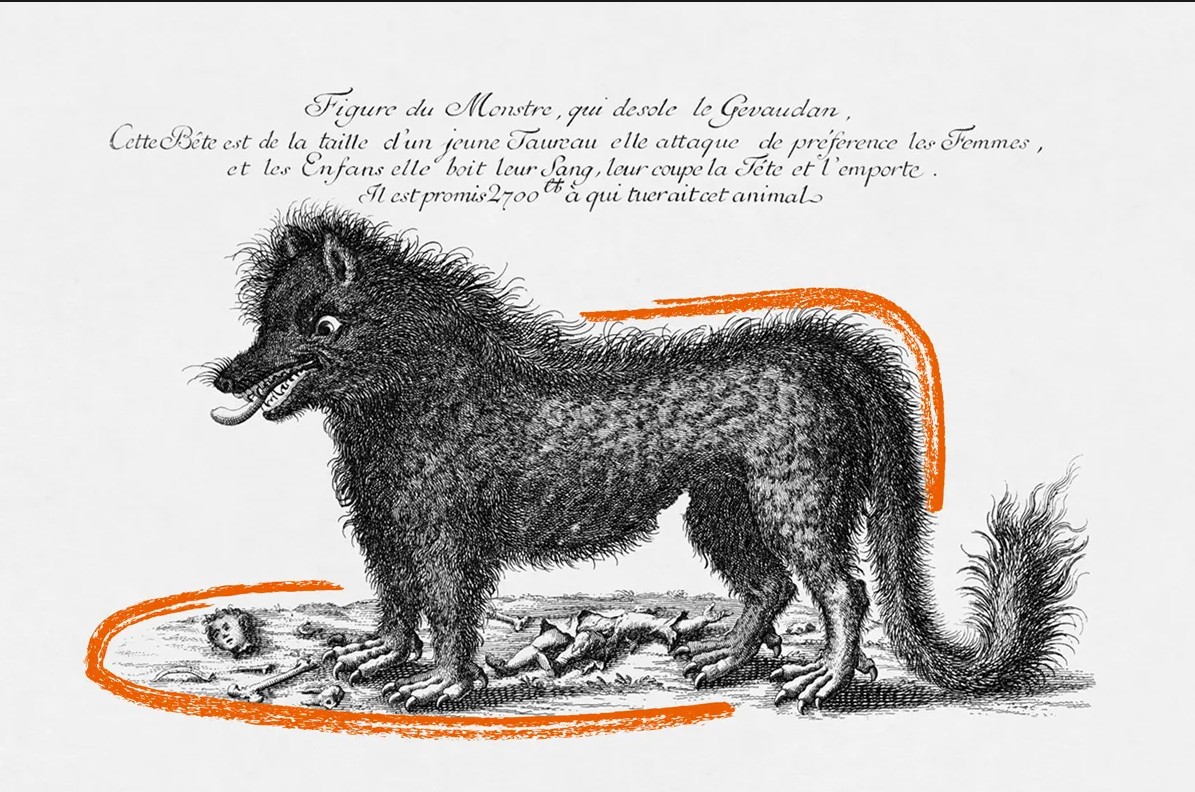
⚡ On This Day in Bowie History — 21 September
1971: Bowie records Sounds of the 70s session for BBC Radio
This would be David Bowie's seventh session for BBC Radio. The session was hosted by "Whispering" Bob Harris. The recording took place at what was then Studio T1 at Kensington House. That venue was later converted to a hotel.
The only session that Bowie did at the BBC that was recorded in stereo. Present were just Bowie (Vocals, Guitar, Piano), and Mick Ronson (Guitar and Bass Guitar).
Tracks: The Supermen, Oh! You Pretty Things, Eight-Line Poem, Kooks, Fill Your Heart, Amsterdam, Andy Warhol.
‘The Supermen’ and ‘Amsterdam’ were not broadcast at the time. The entire session was released on Divine Symmetry in 2021.
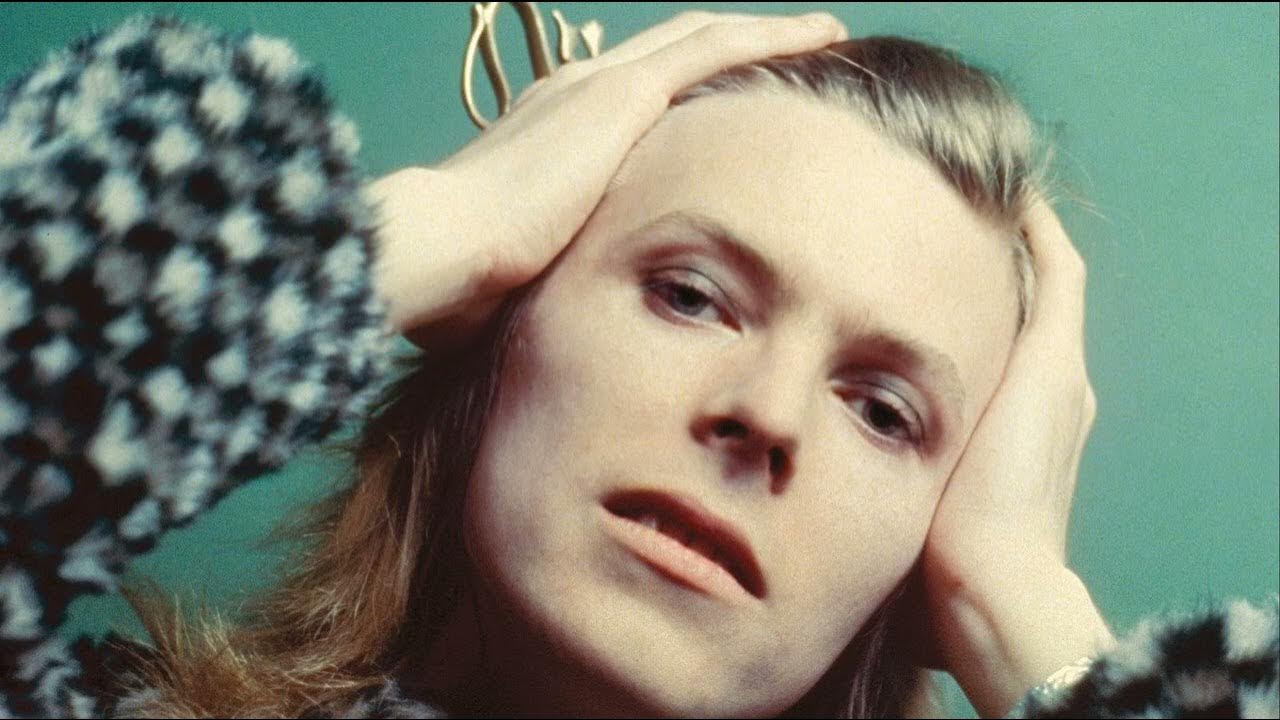
✍️ Word of the Day — 21 September
Whangdoodle
A whangdoodle is a creature whose appearance is left entirely to the imagination. Unlike a dragon or unicorn, there's no standard shape or defining features baked into the word. Your whangdoodle might have feathers or flippers or 300 toes, and nobody could tell you otherwise.
📜 History
Events from this day
⚡ Bowie
Moments & milestones
✍️ Word of the Day
Language & Etymology
📜 On This Day in History — 20 September
Born around 1480 into a family of minor Portuguese nobility, Magellan became a skilled sailor and naval officer in the service of the Portuguese Crown in Asia. However, King Manuel I refused to support Magellan's plan to reach the Moluccas, or Spice Islands, by sailing westwards around the American continent. Magellan then proposed the same plan to King Charles I of Spain, who approved it.
Magellan led the Armada from Sanlúcar de Barrameda southwest across the Atlantic Ocean, to the eastern coast of South America, and south to Patagonia. Despite a series of storms and mutinies, the expedition successfully passed through the Strait of Magellan into the Mar del Sur, which Magellan renamed the Mar Pacifico, or Pacific Ocean. The expedition landed at Guam after an arduous crossing of the Pacific, then reached the Philippines.
On 27 April 1521, Magellan died in the Battle of Mactan after being shot in the neck with a poison arrow. Under the command of Captain Juan Sebastián Elcano, the expedition finally reached the Spice Islands. The fleet's two remaining ships then parted ways: one attempting, unsuccessfully, to reach New Spain by sailing east across the Pacific. The other ship, commanded by Elcano, sailed west across the Indian Ocean and north along the Atlantic coast of Africa, returning to Spain in September 1522.
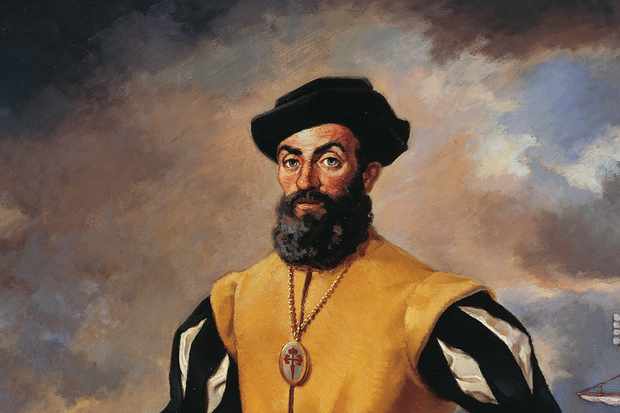
⚡ On This Day in Bowie History — 20 September
1975: Fame hits #1 on Billboard Hot 100
Bowie had met John Lennon exactly a year before, on 20th September 1974. The occasion was a birthday party for Ricci Martin, Dean Martin's son. They had been invited by Elizabeth Taylor. Bowie and Lennon forged a close friendship as a result of this meeting, and early in 1975 recorded ‘Fame’ and ‘Across The Universe’ together.
Fame, written by Bowie, Carlos Alomar & Lennon, was recorded at Electric Lady Studios in New York City in January 1975. It is a funk rock/soul song that represents Bowie's dissatisfaction with the troubles of fame and stardom.
In a studio session at Electric Ladyland, Carlos Alomar had developed a guitar riff for Bowie's cover of "Footstompin'" by the Flares, which Bowie thought was "a waste" to give to a cover. Lennon, who was in the studio with them, came up with the hook when he started to sing "aim" over the riff, which Bowie turned into "Fame" and thereafter, according to Marc Spitz, wrote the rest of the lyrics to the song with Lennon.
Released on 7th March 1975 on the Young Americans album. Fame was released as a single in the US in June 1975, and in the UK in July 1975. Fame was Bowie's first song to reach the top of the Billboard Hot 100, the week of 20th September.
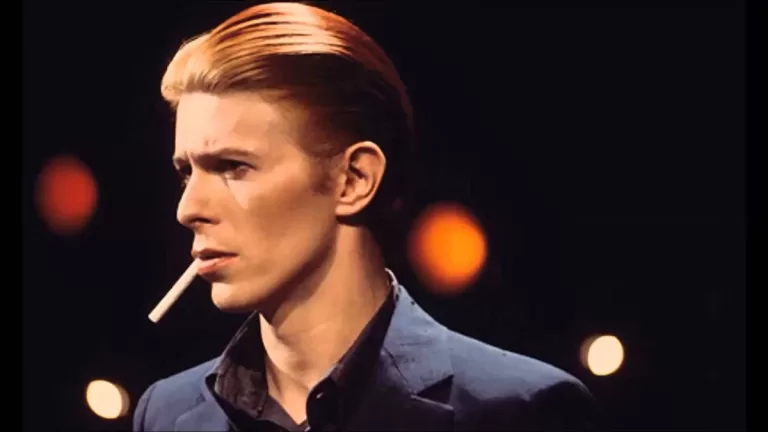
✍️ Word of the Day — 20 September
Eurythmic
Eurythmic describes something that moves harmoniously to a pleasing rhythm. A dancer's steps may feel eurythmic when every motion flows naturally into the next. The word can also apply beyond music and dance, wherever balance and rhythm create a satisfying sense of order. And of course, the word was used as a band name by Annie Lennox and Dave Stewart — The Eurythmics.
📜 History
Events from this day
⚡ Bowie
Moments & milestones
✍️ Word of the Day
Language & Etymology
📜 On This Day in History — 19 September
1975: First episode of Fawlty Towers broadcast
Written by John Cleese and Connie Booth, two seasons were released, each of 6 episodes, the second series airing in 1979.
While some critics initially derided Fawlty Towers, it soon received general acclaim. In 1976 and 1980, it won the British Academy Television Award for Best Scripted Comedy.
The plots are often intricate and farcical, with plenty of room for slapstick, misunderstandings, and cross-purposes — most of which come from Basil's short fuse and lack of "filter".
Basil Fawlty, Sybil, Manuel, and Polly Sampson — played by Cleese, Prunella Scales, Andrew Sachs, and Connie Booth — is perfect casting for the series.
Standout moments: "Basil The Rat", "Don't Mention The War!"
Did you know: Andrew Sachs, who played Manuel, was actually born in Germany; quite a distance from Barcelona!
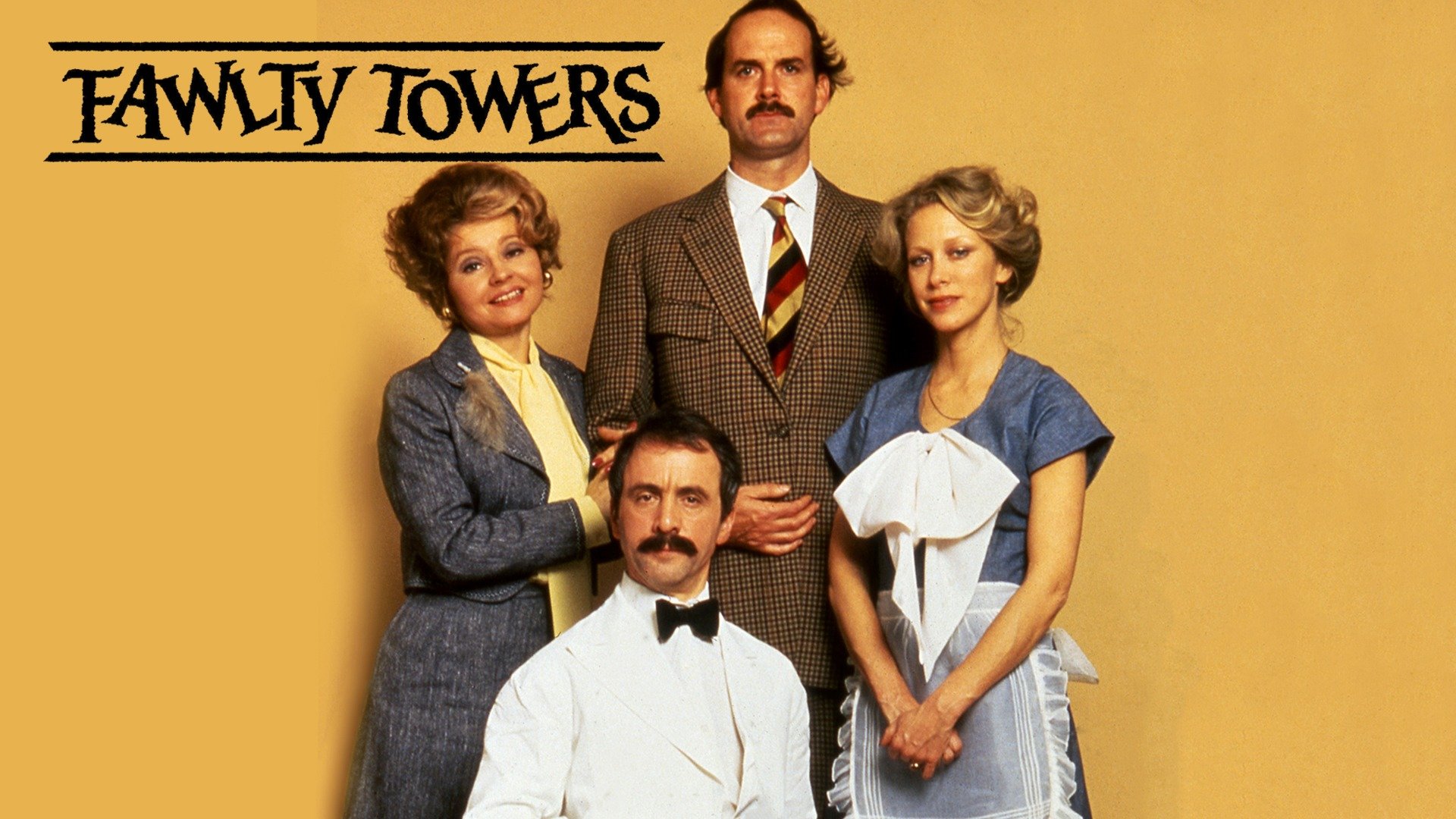
⚡ On This Day in Bowie History — 19 September
1972: Bowie sees New York Dolls at Mercer Arts Center
In between his arrival in New York and the first US dates of the Ziggy Stardust Tour, David Bowie had several days of rest and rehearsal.
On the evening of 19 September 1972 he went to see the New York Dolls perform at the Mercer Arts Center in New York’s Broadway Central Hotel. With him were his wife Angie, plus band members Mick Ronson and Mick ‘Woody’ Woodmansey, plus photographer Mick Rock and his wife Sheila.
Following the show Bowie was introduced to Cyrinda Foxe, the girlfriend of the Dolls’ singer David Johansen. Foxe later worked for MainMan, and she and Bowie had a relationship.
Did you know: Cyrinda Foxe appeared in the video for Bowie's "The Jean Genie".
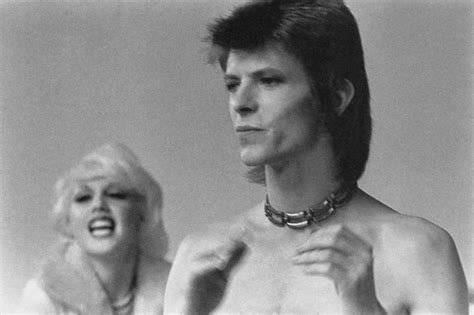
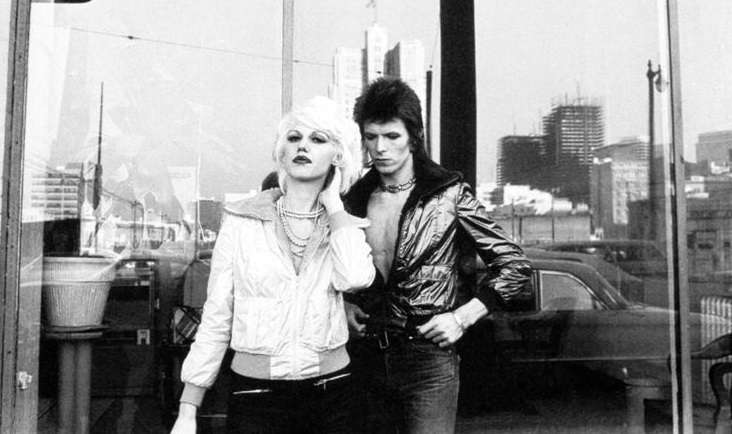
✍️ Word of the Day — 19 September
Verecund
Verecund is a rare but poetic way to describe someone who's bashful or modest. It's one of many fancy synonyms for that trait, including "diffident" and "reticent." There's nothing dull about a verecund person — they're just unlikely to make themselves the centre of attention.
📜 History
Events from this day
⚡ Bowie
Moments & milestones
✍️ Word of the Day
Language & Etymology
📜 On This Day in History — 18 September
1879: Blackpool Illuminations switched on — first time
Blackpool Illuminations is an annual lights festival that started on 18 September 1879, held each autumn in the British seaside resort of Blackpool on the Fylde Coast in Lancashire.
The illuminations are approximately 5 miles long, and now use over 1 million bulbs, plus LED technology, lasers, and video.
The first illuminations were ON This Day in 1879, and consisted of just 8 carbon arc lamps.
The first illuminations that looked similar to today's event were held in 1912 when the British Royal Family visited Blackpool Illuminations for the first time.
People who have switched on the Illuminations include George Formby (1953), Ken Dodd (1966), Matt Busby (1968), Tom Baker as Doctor Who (1975), Red Rum (1977), Robbie Williams (2010), and a group of Britain's Coronavirus NHS Heroes (2020).
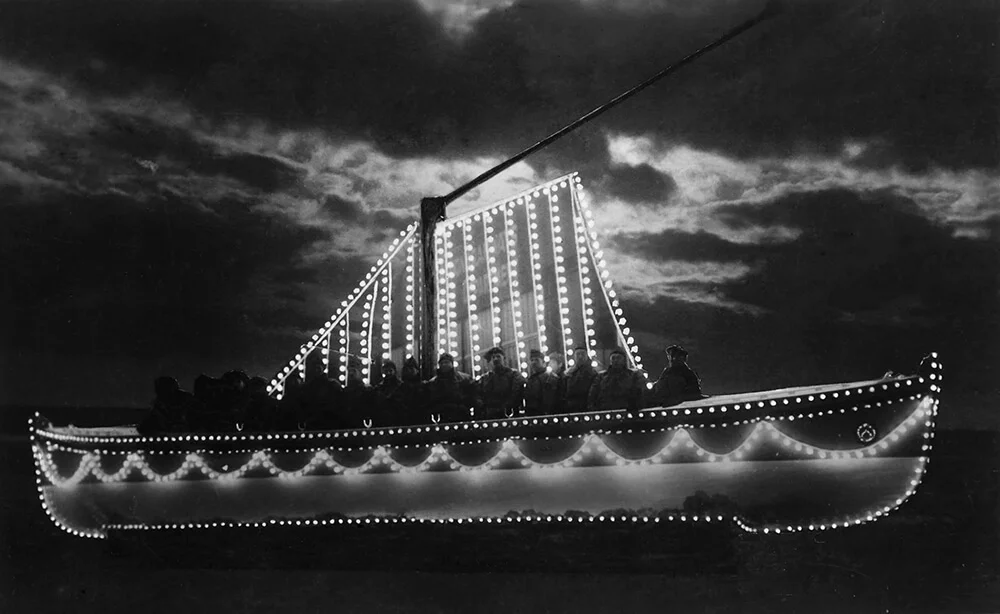
⚡ On This Day in Bowie History — 18 September
1972: Mike Garson auditions — joins Bowie’s band
Bowie had arrived in New York City on 17th September 1972, with the rest of his entourage.
Mike Garson's name came up when Annette Peacock was invited to play with The Spiders From Mars. She declined, but gave Garson's name as a possibility.
Garson was giving a piano lesson when Bowie’s manager Tony Defries called. Remarkably, he left his daughter Jennifer with the pupil and drove straight to RCA Studios at 155 East 24th Street for the audition.
The rest is history — Garson played on 18+ Bowie albums, 8 major tours, and over 1,000 concerts. He played at Bowie's last live appearance in 2006, marking 34 years of service.
"At the piano, greeting me very warmly, was Mick Ronson. The sheet music was ‘Changes’, which meant nothing to me, but having played a thousand weddings and bar mitzvahs in New York I could read anything. So I played it. And I swear within seven seconds Mick said, ‘You have the gig.’ Everyone else was smiling." — Mike Garson
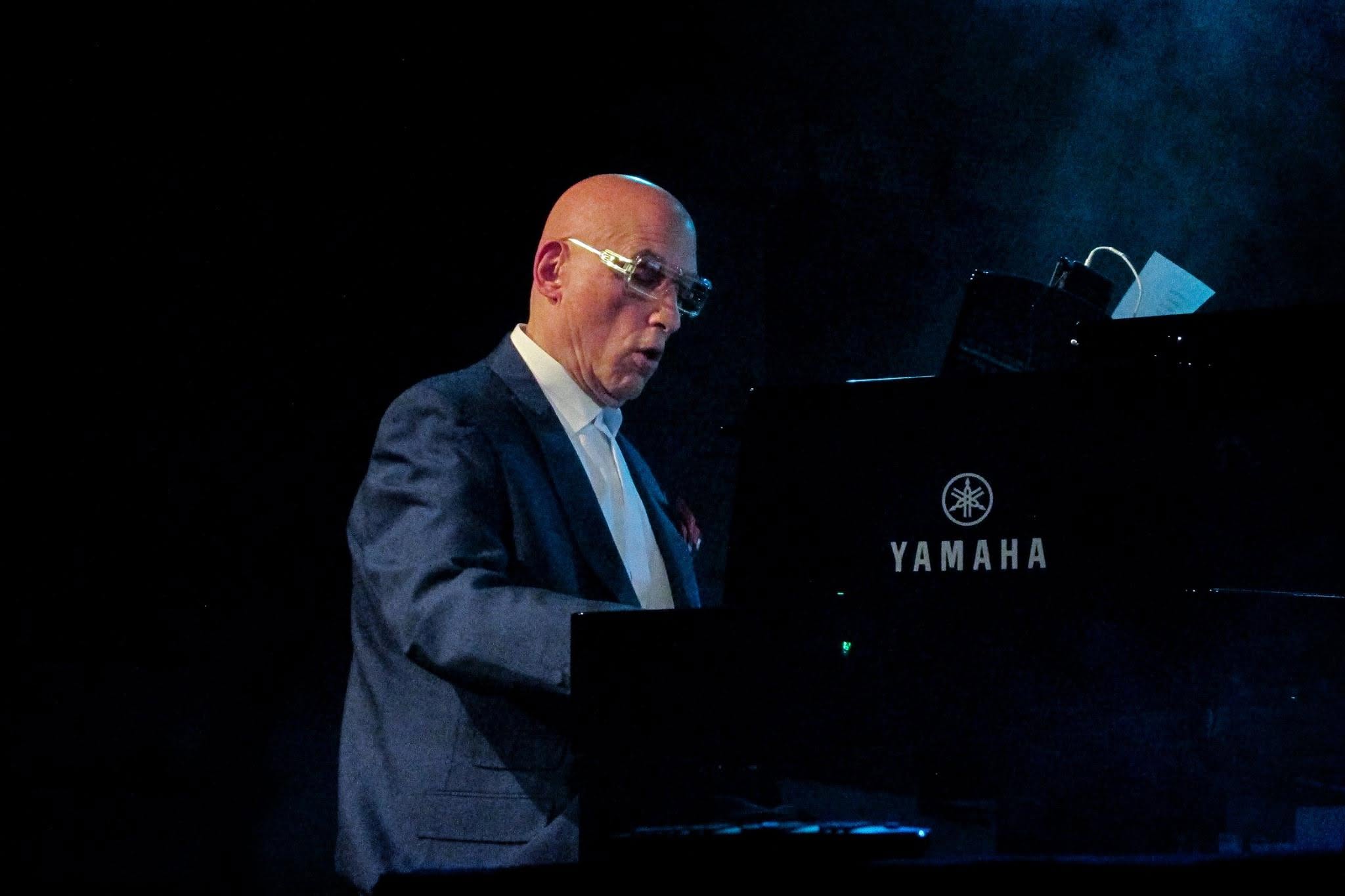
✍️ Word of the Day — 18 September
Chimera
A chimera is a fanciful or impossible idea that exists more in the imagination than in reality. The word comes from Greek mythology, where the Chimera was a frightening, fire-breathing creature with parts from several animals. Today, a chimera might not be an actual monster, but it can still be a scary thought!
📜 History
Events from this day
⚡ Bowie
Moments & milestones
✍️ Word of the Day
Language & Etymology
📜 On This Day in History — 17 September
1970: Jimi Hendrix last seen alive
James Marshall Hendrix (born Johnny Allen Hendrix, 27 Nov 1942 – 18 Sep 1970) is regarded as one of the most influential figures in rock music and one of the greatest guitarists of all time.
Hendrix began playing at 15, and enlisted in the US Army in 1961. On discharge, he moved to Clarksville, then Nashville, and began playing on the "Chitlin Circuit", backing The Isley Brothers, Little Richard, and Curtis Knight & The Squires.
In late 1966, Hendrix moved to England when Chas Chandler of The Animals became his manager. Within months he formed The Jimi Hendrix Experience with Noel Redding and Mitch Mitchell. They released three albums, culminating in Electric Ladyland in 1968. As the highest‑paid rock musician of his time, he headlined Woodstock in 1969 and the Isle of Wight Festival in 1970.
Some confusion exists about the date of his death. He was last seen alive ON This Day, 17th September, and died during the night. He was discovered and officially pronounced dead on 18th September. Cause of death was barbiturate‑related asphyxia.
Did you know: Jimi Hendrix was of African‑American and Cherokee descent.
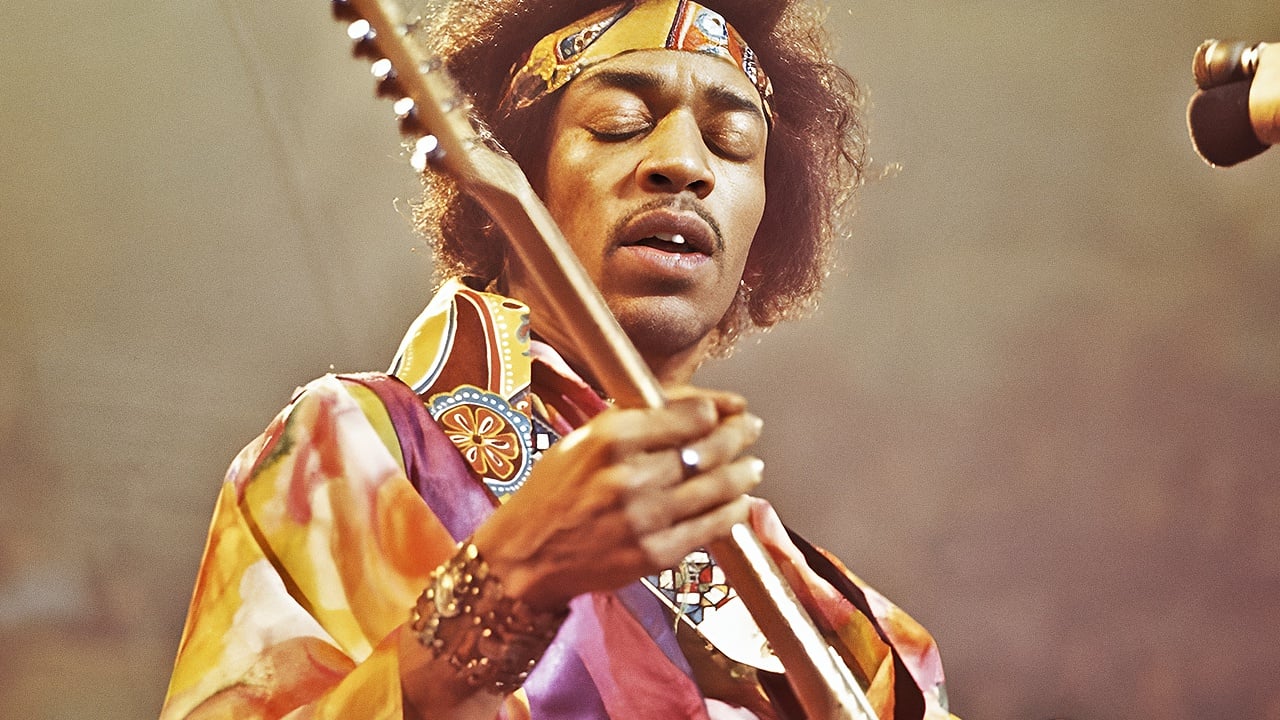
⚡ On This Day in Bowie History — 17 September
1970: David Bowie & The Hype — Scarborough, The Penthouse
On the very evening before Jimi Hendrix died in London (18 September 1970), Bowie was 200 miles north in the Yorkshire coastal town of Scarborough, playing a gig with his band The Hype.
The line‑up that night was David Bowie, Mick Ronson, Tony Visconti, and Woody Woodmansey — the core of what would soon become The Spiders From Mars. They were in the middle of recording The Man Who Sold the World, and the gig was described as a "heavy, electric set characteristic of this period," despite "growing internal tensions between David and the band members."
"I deliberately chose the name [The Hype] in favour of something that sounded perhaps heavy because now no one can say they're being conned… I suppose you could say I chose Hype deliberately with tongue in cheek." — David Bowie, March 1970
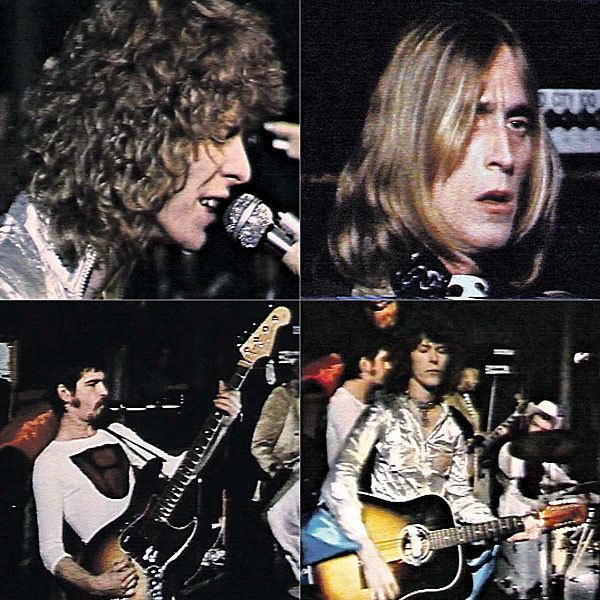
✍️ Word of the Day — 17 September
Oppidan
Oppidan can be used to describe anything that belongs to or is characteristic of a town. It gives a name to that in‑between place that doesn't quite fit "urban" or "rural." A classic main street is the quintessential place to enjoy the oppidan life.
✍️ Bonus Word of the Day — 17 September
Hippopotomonstrosesquippedaliophobia n.
Hippopotomonstrosesquippedaliophobia refers to the phobia or fear of long words. Feelings of shame or fear of ridicule for mispronouncing long words may cause distress or anxiety.
📜 History
Events from this day
⚡ Bowie
Moments & milestones
✍️ Word of the Day
Language & Etymology
📜 On This Day in History — 16 September
1935: Nazi Germany adopts swastika flag as national standard
The word swastika comes from the Sanskrit svastika, meaning "good fortune," and the symbol has been used for over 7,000 years. It remains sacred in Hinduism, Buddhism, Jainism, and Odinism.
Today, however, the symbol is overwhelmingly associated with Hitler's Third Reich.
The Nazi Party was not alone in using the swastika in Germany; a number of far‑right nationalist movements adopted it, linking it to the idea of a racially "pure" state. By the time the Nazis gained power, its meaning had been permanently altered.
Until 1920, the old national flag was flown alongside the swastika flag. The so‑called Nuremberg Race Laws and the Reich Flag Law of 1935 made the swastika the sole national flag of Germany.
People today need to consider carefully the context in which they use the symbol.
Did you know: a newly elected Reform councillor in Barnsley had a swastika tattooed on his arm. He claimed it dated from a teenage exploration of Buddhism. He has had to cover it to continue in office; his explanation has not been widely accepted.
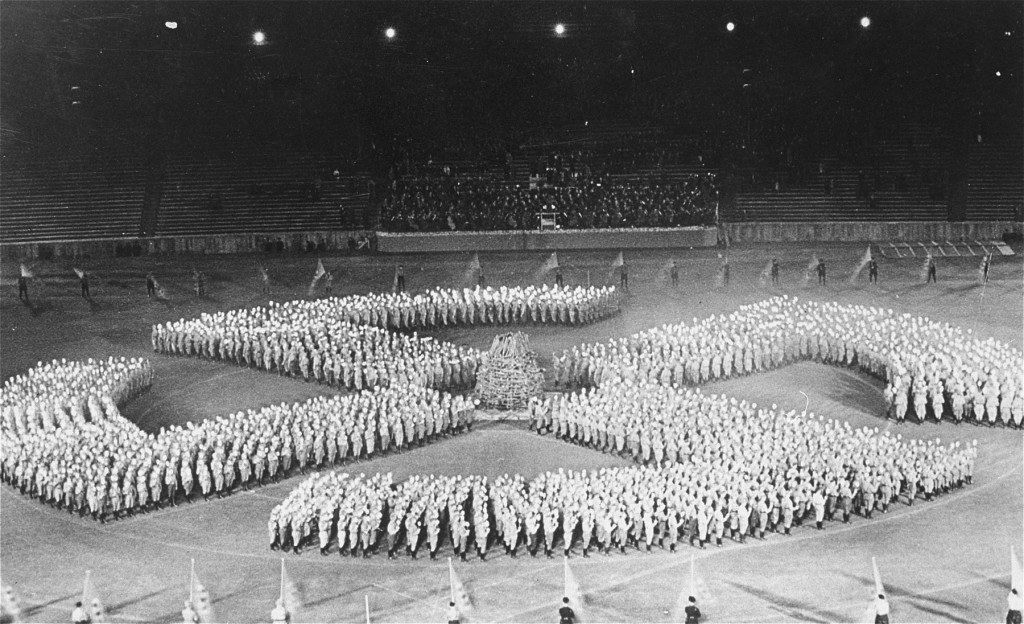
⚡ On This Day in Bowie History — 16 September
1965: Davie Jones officially becomes David Bowie
In September 1965, Davie Jones and The Lower Third were managed by Ralph Horton.
On 15th September 1965, Horton approached the experienced manager Kenneth Pitt, who declined to take over the band but offered advice: the rising American actor/singer Davy Jones was becoming well‑known, and the British singer should avoid confusion.
Davie Jones chose the name Bowie, in part as a homage to the 19th‑century American pioneer Jim Bowie.
"I wasn't making any money as Davy Jones. I've read everything I can get hold of about the pioneering times in the States and I picked the name Bowie after Jim Bowie — the bloke who invented that knife and died at the Alamo."
✍️ Word of the Day — 16 September
Macaronic
Something macaronic combines two or more languages in the same piece of writing or speech. As you may have guessed, the word connects to Italian maccheroni — originally associated with everyday folk speech. Macaronic writing often has a humorous effect, blending languages in unexpected ways.
Did you know: The word "macaroni" in the song Yankee Doodle is related — it described someone foppish, likely part of a subculture using mixed, playful language.
📜 History
Events from this day
⚡ Bowie
Moments & milestones
✍️ Word of the Day
Language & Etymology
📜 On This Day in History — 15 September
1830: Liverpool & Manchester Railway opens — George Stephenson
George Stephenson was an English civil and mechanical engineer, known as "The Father of the Railways".
His first steam locomotive, The Blücher, was designed to haul coal on the Killingworth Wagonway and entered service in July 1814.
In September 1825, Locomotion No. 1 became the first locomotive to carry passengers on the Stockton & Darlington Railway. In 1829, The Rocket was built for the Rainhill Trials.
On This Day in 1830, the Duke of Wellington opened Stephenson's Liverpool & Manchester Railway.
Also On This Day in 1830, William Huskisson became the first person recorded killed by a railway train — struck by The Rocket during the opening ceremony.
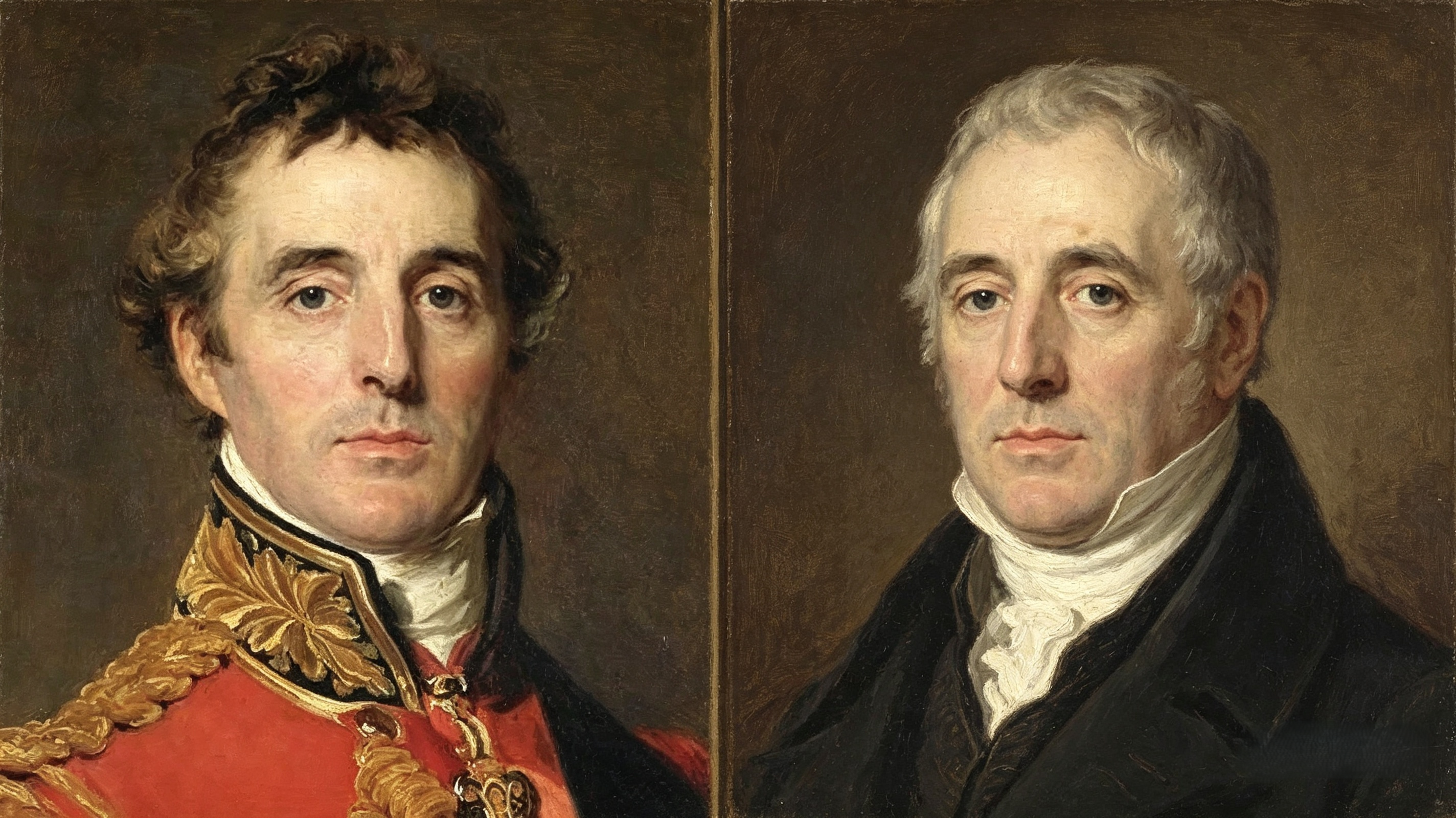
⚡ On This Day in Bowie History — 15 September
1966: Southampton's Adam & Eve Club — David Bowie & The Buzz
One of Bowie's early backing bands was The Buzz: Derek Fearnley (bass), John Eager (drums), Derek Boyes (piano), Billy Gray (guitar), and John "Hutch" Hutchinson (guitar). Hutch later played with Bowie in the trio Feathers alongside Hermione Farthingale.
The band played two sets On This Day in 1966 at Southampton's Adam & Eve Club, having appeared there on 4th and 18th August earlier that year.
Also On This Day in 2003, Bowie released his 25th studio album, Reality, in Europe (released the following day in the USA). In my opinion as a devoted Bowiephile, it's far from his strongest — but then again, a mediocre Bowie album is often better than another artist's best! I know many will disagree — and that's fine!
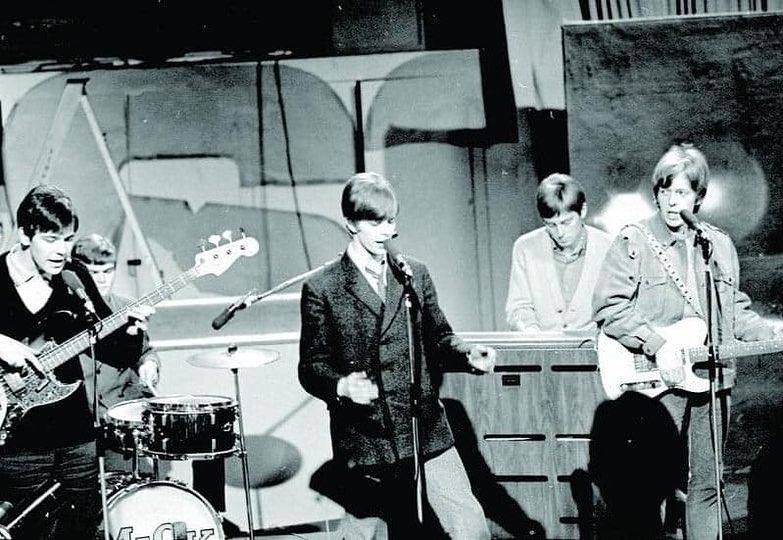
✍️ Word of the Day — 15 September
Diegetic
If something is diegetic, it exists within the world of a story. The word comes from Greek meaning "pertaining to a narrative," and is widely used in film and media studies. When a character hears music in a scene, that music is diegetic — it's happening in their world, not just on the soundtrack.
📜 History
Events from this day
⚡ Bowie
Moments & milestones
✍️ Word of the Day
Language & Etymology
📜 On This Day in History — 14 September
1752: Great Britain adopts the Gregorian Calendar
In 46 BC, Julius Caesar introduced the Julian Calendar, but it miscalculated the solar year by roughly 11 minutes — a small error that accumulated over centuries.
By the 16th century the drift amounted to 10 days. Pope Gregory XIII introduced a corrected calendar in 1582, removing 10 days and revising leap‑year rules.
Britain held back until On This Day in 1752, when 3–13 September were skipped entirely to align with the rest of Europe. The British Empire — including the American colonies — switched over.
Did you know: July and August are both named after Roman leaders — Julius Caesar and Augustus Caesar.

⚡ On This Day in Bowie History — 14 September
1995: Outside Tour begins — Bowie & Nine Inch Nails
Bowie's album 1.Outside — The Nathan Adler Diaries: A Hyper‑cycle was released on 25th September 1995, but the tour began earlier — On This Day in Hartford, Connecticut.
Nine Inch Nails opened, then joined Bowie for a shared mid‑set, before Bowie closed with his own band. The US leg ran through October; the European leg began in November, including a show at Wembley Arena which I attended — standing near the sound desk, where Iman was also watching.
Morrissey was scheduled to support on the UK dates but left the tour amid disagreements. As a Bowie fan, I'll say it was entirely his own fault!
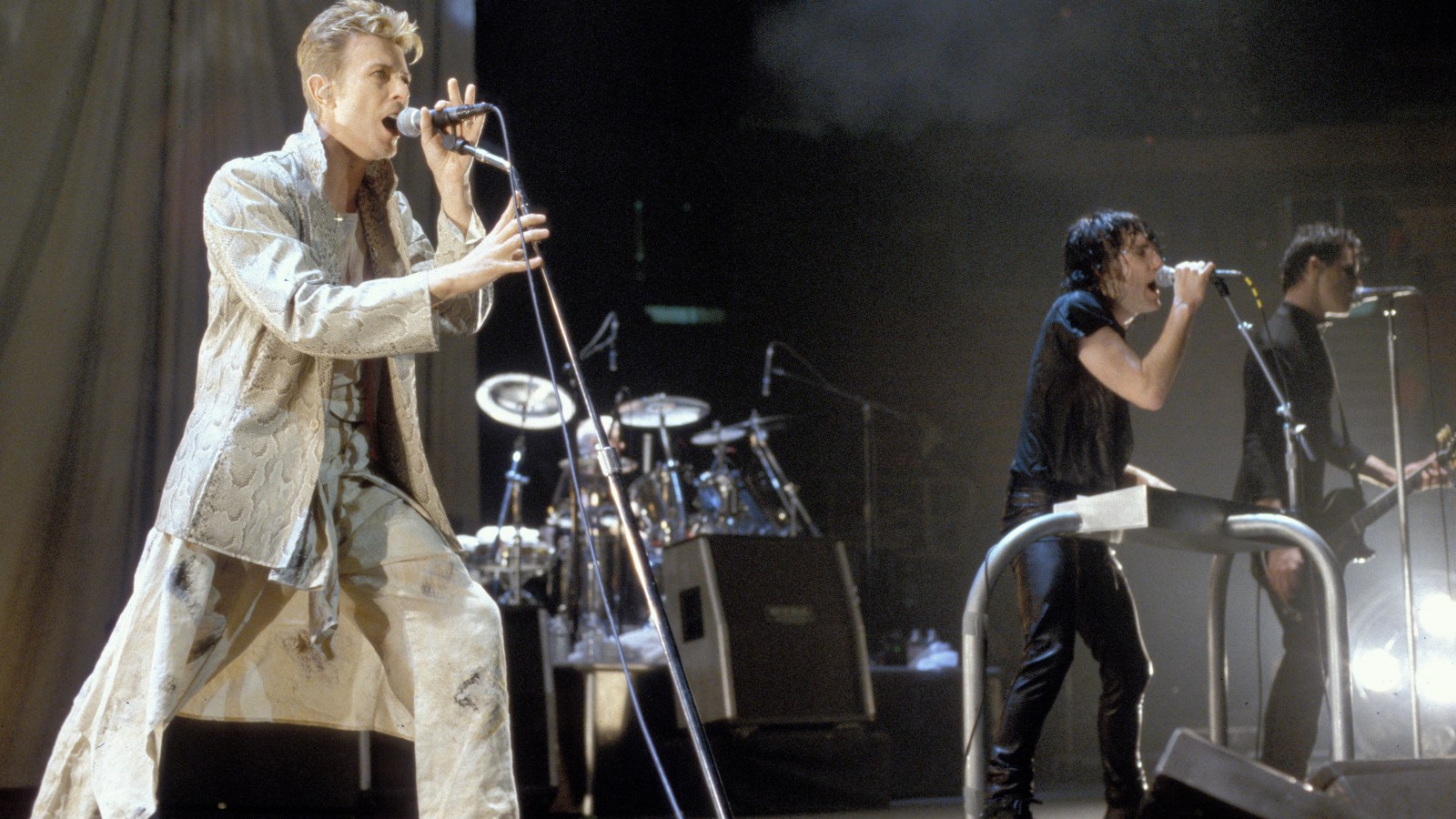
✍️ Word of the Day — 14 September
Hunky Dory
"Hunky dory" means everything is fine or in good order. It appears to derive from older American slang — from "hunk," meaning in a safe position — and may connect to Dutch honk meaning "home." Bonus: It's also the title of Bowie's 1971 album, widely regarded as one of his finest.
📜 History
Events from this day
⚡ Bowie
Moments & milestones
✍️ Word of the Day
Language & Etymology
📜 On This Day in History — 13 September
1959: Priscilla Beaulieu meets Elvis Presley
Elvis Presley, aged 24 and serving in the US Army in Germany, met 14‑year‑old Priscilla Beaulieu at a private gathering. They began a relationship and married in 1967 when she was 22.
Priscilla later recalled that before they met, her stepfather had brought home an Elvis record, saying, "Everybody wants this — half the armed forces were queuing for it."
They married in 1967 and divorced in 1973. Priscilla has maintained they did not live together fully until their marriage.
Family note: There's a good chance I share distant ancestry with Elvis — his family name and mine appear in the same small Shropshire village records.
⚡ On This Day in Bowie History — 13 September
2025: David Bowie Centre opens at V&A East
The David Bowie Centre opened at the V&A East Storehouse, Queen Elizabeth Olympic Park, London, on this day in 2025.
It houses over 90,000 items from the Bowie archive — stage costumes, handwritten lyrics, instruments, sketches, and unreleased material — displayed on rotation (only about 200 items can be shown at a time).
The space functions as both a public gallery and an active research facility; visitors may see curators and researchers at work.

✍️ Word of the Day — 13 September
Adiaphorous
Something adiaphorous makes no significant difference — neither good nor bad. From Greek meaning "indifferent," the word is sometimes used in medicine to describe a treatment that produces no noticeable effect.
📜 History
Events from this day
⚡ Bowie
Moments & milestones
✍️ Word of the Day
Language & Etymology
📜 On This Day in History — 12 September
1975: Pink Floyd releases Wish You Were Here
Released in the UK On This Day in 1975, Wish You Were Here was recorded at EMI Studios, London. The album weaves together themes of artistic compromise — notably "Have a Cigar," sung by Roy Harper — and themes of absence and friendship.
Syd Barrett visited the studio during recording, his appearance having a profound effect on the band, though Roger Waters later clarified the album was not literally about Barrett.
Did you know: Stéphane Grappelli's violin contribution to the title track was mixed so low most listeners never notice it.
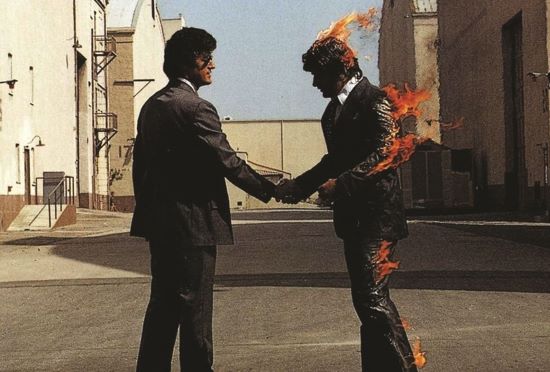
⚡ On This Day in Bowie History — 12 September
1983: Serious Moonlight Tour opens in Vancouver
The tour began at the Pacific National Exhibition Coliseum, Vancouver. The show was filmed and released in 1984 on VHS/Laserdisc — five tracks were cut due to runtime limits, though the full concert was later released on DVD.
Setlist highlights: "Look Back in Anger", "'Heroes'", "Fashion", "Let's Dance", "China Girl", "Rebel Rebel", "Ashes to Ashes", "Space Oddity", "Young Americans", "Fame"
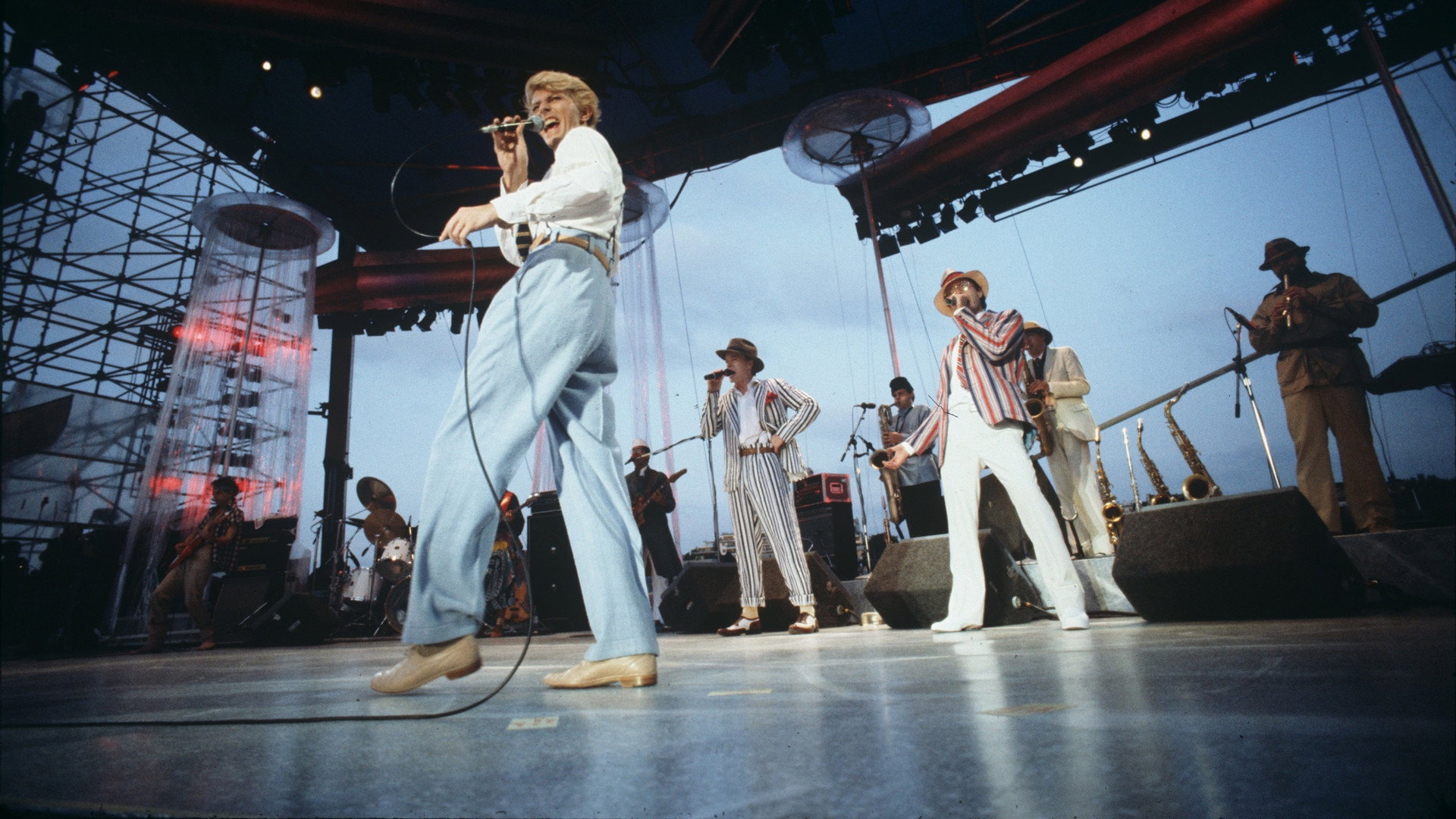
✍️ Word of the Day — 12 September
Stigma
A stigma is a mark of disgrace or negative judgement attached to a person, group, or condition. The word comes from Greek stizein meaning "to tattoo" — originally a physical mark branded onto someone to show status. Today it refers to social exclusion rather than a physical mark.